The PVL Challenge System: Rules, Limits, and Signals Explained
If you watch the Premier Volleyball League (PVL), you know the suspense when a coach raises a red card for a review. The video challenge system helps make sure close calls are fair and accurate. Its rules also shape how teams plan during a match.
A volleyball challenge happens when the head coach asks for a review of a decision made by the first referee, who still makes the final call. Cameras around the court help officials look at the play from different angles.
Before we get into the details, it’s helpful to know which types of plays coaches can challenge in the PVL.
The PVL challenge system has clear limits. Coaches cannot question every play and can only challenge certain decisions. Here are the types of calls that can be reviewed:
• In/Out: Coaches can challenge whether the ball landed outside the boundaries or touched the line.
• Net Faults (Net Touch): Coaches can challenge if a player made illegal net contact during play.
• Antenna Touch: Coaches can challenge whether a player touched the antenna or if the ball crossed over it or its extension.
• Center Line Penetration (Foot Fault): This checks if a player’s foot completely crossed the center line, which can be hard to see during live play.
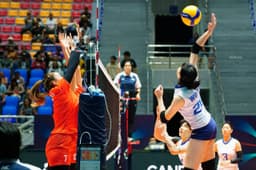
• Block Touch (Ball Out of the Block): Coaches can ask for a review to see if a blocker touched the ball before it went out of bounds. This affects who gets the point and the next serve.
Judgment calls like ball handling, rotational faults, or disputes over sportsmanship cannot be challenged under current PVL rules.
The Dynamics of Challenge Rights
Coaches have to think carefully because each team only gets a limited number of challenges at the start of every set.
Each team gets two challenges per set. If a challenge is unsuccessful, the team loses one chance for that set. If the challenge is successful, the team keeps its challenge. The count resets at the start of each new set.
Timing matters. Coaches must make a challenge right after the rally, within a few seconds. If they wait too long, referees can turn down the request. To signal a challenge, the coach holds up a red card to the second referee and the scorer’s table.
The Signal and Review Process
When a challenge is accepted, the game stops. Officials in the review booth watch the play from different camera angles, using zoom and slow motion. They look at all the information before making a decision.
After the review, the challenge official tells the first referee, who then announces the decision. If the challenge is successful, the call is changed. If it is unsuccessful or there is not enough evidence, the original call stands. The referee uses hand signals and sometimes shows a card at the scorer’s table.
The challenge system can make each set a bit longer, but PVL values prioritize getting the calls right and being fair over speed. Making sure important calls are correct helps keep the sport honest.
Summary: Accuracy Over Pace
The PVL challenge system is a big step forward for the sport, bringing together human referees and technology. It helps make sure matches are decided by skill and strategy, not by mistakes from officials. The limits on challenges add another layer of strategy, but the main goal is always a fair and accurate game. As the league grows, the challenge system will stay an important part of PVL volleyball in the Philippines.
TigerScores provides a comprehensive look at the sports world with live results, detailed player analytics, and the latest trending news. Browse our website to access a complete database of scores and stats designed to keep every fan fully informed and engaged.


How Basketball Tie-Breakers Determine Seeding
Single Elimination Basketball Tournaments vs Multi-Game Series
San Juan Knights Hand Batang Kankaloo First Defeat
The Analytical NBA GOAT Debate: Michael Jordan vs LeBron James
Understanding the PVL Points System Ranking
The PVL Challenge System: Rules, Limits, and Signals Explained
Sparks Hold Off Angels, One Win From Semifinals
Jovic Tops Eala Again to Reach HSBC Championships Quarterfinals
Abarrientos and Brownlee Sweep PBA Commissioner's Cup Top Honors for Ginebra
Gilas Boys Roll Past Vietnam by 93, Start SEABA Qualifiers in Style