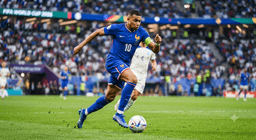
The Hamstring Curse in Elite Soccer: Why Star Players Face Weeks Sidelined
Every soccer fan knows the sinking feeling: your team’s star winger is in a full sprint, suddenly clutches the back of their thigh, and drops to the turf. Hamstring strains remain one of the most common and persistent injuries in professional and amateur soccer alike.
For fans tracking injury updates and coaches looking for a safe, durable return, understanding the mechanics of sports science recovery is essential. By moving away from outdated treatment methods and applying dynamic, criteria-based hamstring rehabilitation protocols, modern clubs turn a volatile recovery timeline into a precise science.
What is the Best Hamstring Rehabilitation Protocol for Soccer Players?
The Gold Standard: Modern sports medicine has transitioned away from passive, time-based healing toward dynamic, criteria-based hamstring rehabilitation protocols. By combining early active mobilization under the PEACE & LOVE framework with progressive eccentric strength training and GPS-monitored running exposure, medical staff can rebuild tissue capacity and significantly reduce re-injury risks before clearing an athlete for competition.
The Terminal Swing: Why Soccer’s Elite Pull Up Mid-Sprint
To understand why a player is sidelined for three weeks versus three months, we must examine high-speed biomechanics. The vast majority of hamstring injuries in soccer occur during two distinct phases of running:
1. The Terminal Swing Phase: Just before the foot strikes the ground, the hamstring muscles lengthen under intense tension (eccentric contraction) to decelerate the forward-swinging lower leg. This rapid lengthening under high forces—particularly affecting the biceps femoris—is where most acute tears occur.
2. The Initial Stance Phase: Immediately after foot contact, the hamstrings switch to concentric contraction to extend the hip and propel the athlete forward.
When neuromuscular fatigue, improper pelvic positioning, or an inadequate neural warm-up collide with these mechanical demands, the muscle tissue fails.
Out with RICE, In with "PEACE & LOVE"
Recommending the classic RICE (Rest, Ice, Compression, Elevation) protocol is now recognized as outdated practice. Modern sports science shows that complete rest and prolonged ice application disrupt the body's natural inflammatory cascade, impairing long-term tissue regeneration and angiogenesis (new blood vessel formation).
Elite sports medicine departments adhere to the British Journal of Sports Medicine's PEACE & LOVE framework:
Immediate Care: Immediate Post-Injury (Days 1–3)
P - Protect: Restrict movement for 1–3 days to minimize bleeding and tissue disturbance, while avoiding total immobilization.
E - Elevate: Raise the affected leg higher than the heart to promote interstitial fluid drainage.
A - Avoid Anti-Inflammatories & Ice: Skip NSAIDs and ice baths during early healing; natural inflammation delivers vital repair cells to the tissue.
C - Compress: Apply compressive taping or wraps to restrict intra-tissue swelling.
E - Educate: Teach the player to embrace active recovery rather than relying on passive "fixes" or over-investigation.
Subsequent Care: Subacute Rehabilitation (Day 4 Onward)
L - Load: Introduce pain-guided mechanical stress early to stimulate tissue repair (mechanotransduction) and rebuild load tolerance.
O - Optimism: Reframe recovery expectations; a positive psychological state correlates with superior clinical outcomes.
V - Vascularisation: Perform pain-free aerobic cardio (e.g., stationary cycling) to increase blood circulation to damaged structures.
E - Exercise: Implement active movement patterns to restore strength, mobility, and dynamic trunk control.
Criteria-Based Hamstring Rehabilitation Protocols
Top-tier clubs avoid arbitrary calendar timelines (such as "out for 4 weeks"). Instead, they use standardized criteria-based pathways—such as the updated Aspetar Hamstring Protocol—where players progress only after achieving clear physical benchmarks.
| Rehab Phase | Primary Clinical Focus | Key Exercise Streams | Objective Progression Benchmark |
|---|---|---|---|
| Phase 1: Early Loading | Promote tissue healing & restore pain-free motion | Isometric bridges, pain-free dynamic mobility, light vascular cardio | Pain-free daily walking & full passive straight-leg raise symmetry |
| Phase 2: Progressive Strengthening | Rebuild high-load capacity & lengthen fascicles | Eccentric strength training (Nordic hamstring curls, single-leg slider extensions, cable hip extensions) | Dynamometer strength symmetry >90% compared to uninjured leg |
| Phase 3: High-Velocity Running & Sport Drills | Recondition sprinting mechanics & load tolerance | Linear sprint progressions, high-deceleration cuts, worst-case scenario match simulations | Unrestricted max-speed sprinting (>95% pre-injury peak speed) with zero discomfort |
Eccentric Strength Training & Load Management: The Twin Pillars of Prevention
If rehabilitation repairs the tear, a comprehensive approach to injury prevention in soccer ensures the tissue can withstand the modern game's physical threshold.
1. Eccentric Strength via Nordics: Incorporating the Nordic Hamstring Exercise (NHE) into weekly training routines lengthens muscle fascicles and increases force capacity while the muscle is extending. Research shows consistent eccentric loading can reduce hamstring strain occurrence by up to 50% across professional squads.
2. GPS-Monitored Max-Speed Exposure: Modern sports scientists track every sprint using GPS vests. Unprecedented spikes in high-speed running volume—as well as total absence of max-speed exposure—both elevate strain risks. Regularly exposing players to short, controlled "micro-doses" of maximal velocity (>95% top speed) during weekly training sessions protects the nervous system and musculature against competitive match demands.
Rehabilitating a hamstring injury demands patience, objective data, and progressive movement. By abandoning passive rest in favor of early loading, structured mechanics, and targeted strength work, medical staff give players the fastest and safest path back to peak performance.
Never miss a goal with TigerScores, the premier destination for live football results and league standings from around the globe. Whether you’re following the Premier League or local favorites, our website delivers the match insights and play-by-play action you crave.


Sazon leads Risers to ninth win, keeps playoff hopes alive
Clark makes return as FiberXers seek to snap skid vs Dyip
Alas Girls’ comeback bid falls short against Peru
Knights cruise past Batang Quiapo
Chasing History: The Longest Winning Streaks in PBA History
The Hamstring Curse in Elite Soccer: Why Star Players Face Weeks Sidelined
2026 Las Vegas Summer League Standings: Key Takeaways and Roster Battles
Heroes overwhelm Patriots, keep pace in South
Gilas Boys bolster roster for U18 Asia Cup
Govs’ Cup shifts to Ynares Antipolo following NAS issues