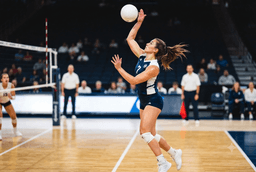
Mastering the Jump Float Serve: Volleyball Float Serve Mechanics & Guide
The jump float serve is a tactical weapon in modern volleyball. Unlike the heavy topspin serve, which relies on velocity and dip, the jump float relies on deception and unpredictable movement. It forces opponents into chaotic serve-receive situations, often leading to free balls or overpasses. Executing this serve consistently requires precise coordination, specific hand contact, and a clear understanding of the biomechanics involved.
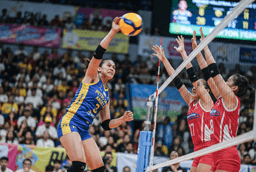
Whether you are a recreational athlete or analyzing high-level play in professional leagues like the PVL, mastering volleyball float serve mechanics requires breaking down every phase of the skill—from the initial toss to actionable practice routines.
Jump Float Technique: Approach and Toss Fundamentals
The foundation of a successful jump float technique is a consistent approach and, crucially, a precise toss. The approach should be rhythmic and controlled, typically three or four steps, allowing the server to generate forward momentum without sacrificing accuracy. Your approach speed should be moderate; maximal speed is counterproductive for a float serve, as it makes consistent timing and contact difficult. The goal is to transfer your body weight forward during the jump, not to broad jump deep across the endline.
Approach Rhythm (4-Step): [Right] ... [Left] ... [Right-Left Plant] --> Vertical Explosion
The toss is the most critical component of the serve. According to biomechanics research from USA Volleyball couches resources, a non-spin volleyball serve requires a toss that is relatively low, contacted quickly, and imparts zero rotation on the ball. Any spin created during the toss is amplified upon contact, resulting in a predictable, easy-to-pass ball.
Hand Release: Toss with one or two hands, releasing the ball consistently slightly above your maximum reach.
Trajectory: Catch the ball at the peak of its short trajectory—or just as it begins to descend—ensuring a flat trajectory over the net.
Practice Focus: Perform toss-and-catch reps without serving to build muscle memory for a spin-free release.
Hand Contact & Arm Action: Executing the Non-Spin Volleyball Serve
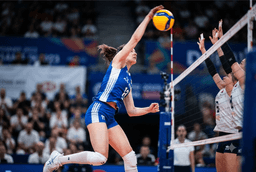
The moment of contact is where the float serve’s unpredictable aerodynamics occur. As you jump, draw your hitting arm back into a high, stable bow-and-arrow position, ready to deliver a forceful yet controlled strike. The hitting elbow must lead forward, and the wrist must remain firm and locked upon impact.
Key Takeaway: The goal of float contact is to transfer maximum forward force while eliminating all rotational torque.
Core Contact Mechanics
1. Solid and Flat Impact: Strike the exact center of the ball with a stiff, open palm. Hitting the bottom creates topspin, while hitting the top drives the ball downward prematurely. Your hand must make contact with the entire back surface of the ball simultaneously.
2. Brief Contact Duration: Think of "punching" or "knocking" the ball rather than driving through it. The contact time should be extremely short. Avoid a long follow-through; stopping your hand shortly after contact preserves the float effect.
3. Contact Point: Aim to strike the ball slightly in front of your hitting shoulder at the peak of your jump. This ensures you hit through the ball toward the target rather than pushing up at it.
Sequence: [ Flat Hand Strike ] --> [ Zero Spin Ball Trajectory ] --> [ Aerodynamic Knuckle/Dip ]
The absence of spin causes the ball to interact dynamically with air currents (the Magnus effect in reverse). It may dip sharply, knuckle, or shift laterally late in its flight, forcing passers into poor positioning. For more on court positioning and offensive strategy, review our comprehensive Volleyball Rotations & Base Formations Guide.
Generating Power through the Kinetic Chain
While accuracy and zero-spin contact are paramount, a high-level serve requires sufficient velocity to reduce the receiver's reaction time. Power is generated through the efficient use of your body's kinetic chain:
Leg Drive: Initiates force through the approach plant and vertical jump.
Core Rotation & Stability: Torso rotation transfers lower-body force to the upper extremity while stabilizing your mid-air position.
Shoulder & Arm Acceleration: The final link that converts rotational force into a sharp forward strike.
To maximize accuracy, target specific court zones rather than serving generally over the net. Aim for the seams between two passers, isolate weaker receivers, or alter depth between short-court drops (Zone 2/3/4) and deep-line drives (Zone 1/5).
Essential Volleyball Serving Drills for Consistency
Translating mechanics into match conditions requires dedicated volleyball serving drills. Incorporate these three structured exercises into your practice routine:
Drill 1: The Wall Punch Drill (Mechanics & Contact Focus)
Objective: Develop a stiff wrist and flat hand contact without spin.
Setup: Stand 5–7 feet from a brick or concrete wall.
Execution: Toss the ball lightly above your head. Jump and "punch" the ball directly into the wall using a flat palm and a quick, arrested follow-through. The ball should bounce straight back without spinning. Perform 3 sets of 15 repetitions.
Drill 2: Deep-to-Short Seam Target Drill (Accuracy)
Objective: Control depth and lateral direction under fatigue.
Setup: Place floor mats or cones in Zone 1 (deep corner), Zone 5 (deep corner), and Zone 3 (short drop).
Execution: Serve 20 jump floats in sets of 5. You must hit designated targets sequentially (e.g., Deep Zone 1 --> Short Zone 3). Score 1 point for landing in the target area and 2 points if the serve exhibits visible knuckling/floating motion.
Drill 3: Pressure Target Ladder
Objective: Simulate end-of-set pressure conditions.
Setup: Full court practice.
Execution: Attempt to hit 5 consecutive jump float serves into distinct zones without making an error or imparting topspin. If a serve rotates or hits the net, reset the count to zero.
Track every spike and set with TigerScores, your go-to source for live volleyball scores and tournament updates. Visit our site to stay informed on the latest match results, team rankings, and player performances across the professional and collegiate circuits.


Classic PVL Out-of-Town Matches: A History of Provincial Volleyball in the Philippines
Evaluating NBA Draft Lottery Protections: Front Office Trade Strategy and Roster Construction
Mastering the Jump Float Serve: Volleyball Float Serve Mechanics & Guide
The Commercial Rise of Philippine Volleyball: PVL Professionalization and Industry Growth
Macau Giant Pandas vs. San Miguel Beermen Post-Match Analysis: PBA Governors' Cup Review
Paolo Banchero Usage Rate & Scoring Efficiency: Orlando Magic Stats Analysis
TNT vs Titan Ultra: Post-Match PBA Analysis & Key Takeaways
Breaking the Press: Master Football Build-Up Phase Tactics
PBA Philippine Cup Preview: Magnolia Hotshots vs. Meralco Bolts Tactical Breakdown