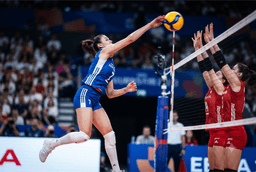
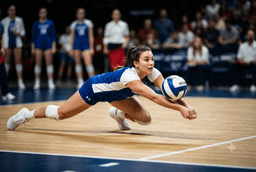
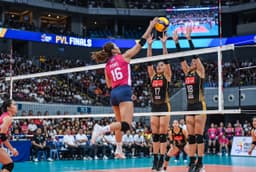
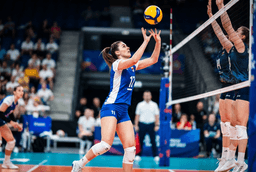
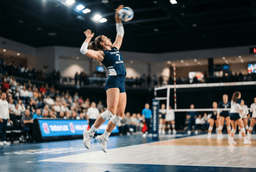
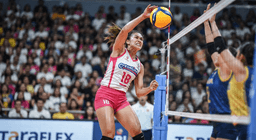
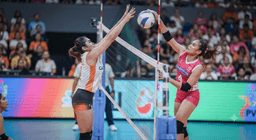
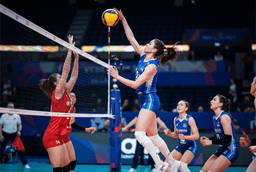
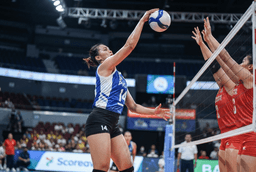
Mastering the Biomechanics of the Volleyball Overhand Serve: A Technical Masterclass
The serve initiates every play in volleyball, serving as the primary offensive weapon. Among the various serving strategies, the overhand serve stands out for its versatility and power. Mastering it requires a deep understanding of the underlying volleyball mechanics. A successful overhand serve is not merely about brute force; it is a complex, coordinated physical sequence that begins at the feet and culminates in a precise point of contact with the ball.
Athletes who understand and execute this sequence effectively can generate significant velocity and control, making them formidable assets on the court. When analyzing the movement patterns of elite servers, several key phases emerge: preparation, the ball toss, the approach and arm swing, contact, and the follow-through. Each phase is critical, and a breakdown in any single phase can compromise the entire serve.
What is the Role of the Kinetic Chain in Volleyball Serving?
Atomic Answer
The kinetic chain in volleyball is a sequential coordination of muscle groups that transfers energy from the ground up to generate maximum serving velocity. By pushing off the floor and rotating the hips and torso, players transfer rotational energy to the shoulder and arm, which acts like a whip to maximize force production while minimizing shoulder injury.
[Insert Diagram: Biomechanical Force Vector Flow from Leg Drive to Ball Contact]
Deconstructing the Force Generation
The power in a premier volleyball serving technique is not generated solely by the arm. Instead, it is a direct product of kinetic energy translation. The mathematical principle of kinetic energy can be expressed as: $E_k = \frac{1}{2}mv^2$
To maximize the velocity ($v$) imparted to the ball without risking acute shoulder strain, the server must maximize the effective mass ($m$) involved in the movement by engaging the entire body.
1. The Ground Foundation: The process begins with a powerful leg drive, pushing off the back foot and driving the body forward.
2. Torso Rotation: This linear force initiates the rapid rotation of the hips and torso, creating torsional energy.
3. The Whip Effect: This energy is sequentially transferred to the chest, shoulder, and finally the arm. The arm accelerates rapidly, functioning like a whip to transfer the accumulated energy directly to the ball upon contact.
A breakdown in this sequence—such as failing to use the legs or initiating the arm swing too early—significantly reduces the serve’s power and efficiency.
How Do You Perfect Your Overhand Serve Form and Ball Toss?
Atomic Answer
To optimize overhand serve form, a player must master a consistent and well-placed ball toss. The ideal toss travels slightly in front of the hitting shoulder and reaches a peak height that allows a completely unrestricted, fully extended arm swing. This stability allows the athlete to accurately time their approach and maximize momentum.
[Insert Video Placeholder: Elite Server Ball Toss Consistency Cues (e.g., Yuji Nishida Technique)]
The Geometry of the Ideal Toss
The foundation of a powerful and accurate serve is a consistent and well-placed ball toss. Without a reliable toss, the rest of the movement sequence cannot be executed correctly. A stable toss allows the server to predict the ball's trajectory and prepare for the approach and arm swing.
Variations in the toss force the server to make constant, micro-muscular adjustments during the swing phase, leading directly to structural inconsistency and a loss of terminal power.
• Shoulder Alignment: The optimal toss is typically slightly in front of the server's hitting shoulder.
• Vertical Apex: The ball must be thrown high enough to allow for a full, unrestricted arm swing at maximum extension.
• The "Freeze" Technique: Coaches often emphasize "freezing" the tossing arm in an extended upright position after release. This structural cue ensures posture consistency and avoids imparting unwanted spin on the ball before it is struck.
What Core Mechanics Optimize Contact and Follow-Through?
Atomic Answer
Perfecting contact and follow-through requires hitting the ball at the absolute peak of the server's reach with an open, high-surface-area hand. Snapping the wrist upon contact applies the necessary topspin to force a steep downward trajectory, while a natural downward cross-body follow-through protects the rotator cuff from deceleration injuries.
[Insert Diagram: Hand Placement and Wrist Snap Mechanics for Topspin Generation]
Executing Terminal Point of Contact
The point of contact is where all the energy generated by the kinetic chain is transferred to the ball. For optimal results, contact should occur at the highest possible point of the server's reach, with a fully extended arm. This maximizes the serve's trajectory over the net and allows for a steeper downward angle, making it much more difficult for the opposing defensive line to track and pass.
The hand should be completely open with fingers spread wide, making solid contact with the dead center of the ball. The server should aim to "snap" the wrist upon contact, imparting forward topspin.
This topspin creates a pressure differential—known fluid-dynamically as the Magnus Effect—causing the ball to drop sharply into the opponent's court.
The follow-through is the final phase of the serve, allowing the body to decelerate safely and naturally. The arm should continue its downward motion across the body, and the server should transition smoothly into a low, active ready position on the court. A proper follow-through prevents common chronic injuries and ensures the server is instantly prepared for the next defensive play.
Biomechanical Phase Breakdown Matrix
| Serving Phase | Primary Muscle Groups Engaged | Elite Performance Cue | Real-World Benchmark |
|---|---|---|---|
| Preparation & Toss | Anterior Deltoids, Core Stabilizers | Toss from the fingers without spin; keep the non-dominant shoulder tracking the ball. | Used by technical maestros to ensure a predictable ball trajectory. |
| Kinetic Activation | Quadriceps, Gastrocnemius, Obliques | Drive through the back foot; rotate the hips before initiating the arm forward path. | Seen in the explosive power serves of elite players like Wilfredo León. |
| Contact Phase | Pectoralis Major, Triceps Brachii, Wrist Flexors | Strike with an open, rigid palm at maximum vertical reach extension; snap the wrist forward. | Maximizes the downward velocity and angle, forcing defensive errors. |
| Follow-Through | Rotator Cuff (Eccentric Deceleration), Latissimus Dorsi | Guide the arm across the torso naturally; land balanced on both feet to transition to defense. | Prevents shoulder impingement syndromes and ensures instant court coverage. |
The Technical Edge in Competitive Volleyball
Mastering the intricacies of the overhand serve is a deliberate journey of consistent practice and biomechanical refinement. It requires a disciplined approach to the ball toss, a keen awareness of the body's internal power transfer, and a hyper-focus on precise hand-to-ball contact. By dedicating deliberate training time to understanding and practicing each distinct phase of the sequence, club and school athletes can unlock their latent potential to become dominant point-scorers.
Consistent, powerful serving puts immense psychological and structural pressure on the opposing team, creating immediate opportunities for easy points and setting a dominant tone for the entire match. While the serve may seem like a simple, isolated action to the casual observer, it is a complex athletic feat that rewards those who invest the time to perfect its physics. The ability to consistently execute a technically sound overhand serve remains a cornerstone of a winning team strategy.
Track every spike and set with TigerScores, your go-to source for live volleyball scores and tournament updates. Visit our site to stay informed on the latest match results, team rankings, and player performances across the professional and collegiate circuits.


The Ultimate Guide to UEFA Super Cup History and Stats
Mastering the Biomechanics of the Volleyball Overhand Serve: A Technical Masterclass
Typhoon Pablo Sweeps Capital1: Nxled Dominates PVL On Tour Showdown
Point Guard Performance Analysis: How Playmaker Efficiency Metrics Define Elite Ball-Handlers
Volleyball Back-Row Attack Guide: Mastering Modern Offensive Strategy
Unpacking the Numbers: How Victor Wembanyama's Defense Is Rewriting NBA History
FIFA World Cup Extra Time: Golden Goals, Sudden Death Rules, and Historic Match Winners
PBA Conference Openers: The Longest Winning Streaks in PBA History
Soccer Groin Injury Prevention: The Science-Backed Guide
Spain National Football Team: Recapping the Historic 2026 World Cup Triumph