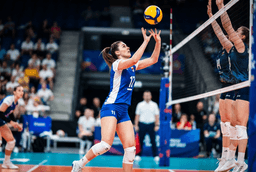
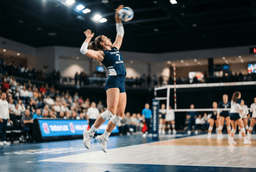
Volleyball Floor Defense: Essential Backcourt Drills & Training Guide
Key Takeaways
Posture First: Elite digging relies on early anticipation, weight distribution on the balls of the feet, and keeping the chest forward before attacker contact.
Read, Don't React: Top backcourt defenders watch the hitter’s approach angle and shoulder orientation rather than reacting to the ball after it is struck.
Systematic Drill Progressions: Isolating platform stability (Toss & Freeze), lateral speed (Shuttle Movement), and rapid reaction (Reaction Wall & Pepper) builds muscle memory for game-day scrambles.
Effective floor defense separates good teams from championship contenders. While powerful spikes dominate highlight reels, matches are ultimately won by the squad that refuses to let the ball touch the court. Developing this tenacity requires systematic physical and mental conditioning.
This comprehensive volleyball training guide outlines the exact progressions and backcourt techniques necessary to build a formidable defense—moving your team beyond raw instinct and into refined execution.
Volleyball Floor Defense: Posture and Movement Mechanics
Before attempting complex digs against high-velocity attacks, players must master body control, spatial awareness, and pre-contact positioning.
1. The Dynamic Ready Position
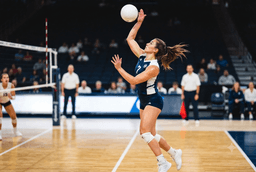
A successful dig begins long before the opponent swings. Defenders must establish an athletic stance precisely as the opposing setter connects with the ball.
Footwork Base: Position feet slightly wider than shoulder-width apart, with the lead foot offset 2–3 inches forward to enable explosive multi-directional movement.
Weight Distribution: Keep weight centered firmly on the balls of the feet with heels slightly elevated. Static, flat-footed defenders cannot react to deflections or tool-shots.
Torso & Hips: Bend knees deeply, push hips back, and keep the chest leaning slightly forward over the toes. This aggressive angle prevents players from getting knocked backward by high-velocity hits.
Platform Readiness: Extend hands comfortably in front of the torso, unclasped and ready to lock into a solid platform in a fraction of a second.
2. Reading the Hitter's Cues
Elite defensive specialists do not guess; they read visual cues to anticipate the attack angle.
Approach Angle: A hitter taking an aggressive outside approach is naturally biased toward cross-court or sharp cut-shots. A straight approach opens up line shots.
Shoulder & Wrist Contact: A high elbow and broad hand contact signal a deep-court attack. A drop in shoulder height or slowing arm speed typically indicates an incoming tip or roll shot.
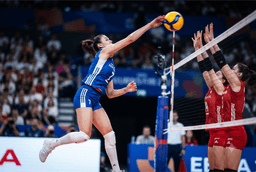
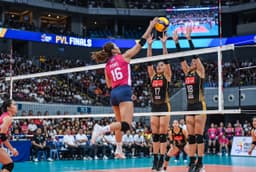
Block Alignment: Trust the front row. A defender’s core responsibility is covering the court angles left exposed by the block's perimeter wall.
Foundational Defensive Volleyball Drills
These isolated drills establish technical discipline and build the muscle memory required for high-pressure, chaotic rallies.
1. Toss and Freeze Drill
Focus: Platform stability, arm angle, and absorbing momentum.
Setup: Pair up players facing each other 10 feet apart. The defender starts in a low ready posture.
Execution: The tosser throws firm, targeted balls to the defender’s midline, hip levels, or short zones.
Response: The defender moves behind the ball, seals their platform (hands clasped, thumbs aligned, elbows locked), and "freezes" position upon contact to track the ball's rebound path.
Coaching Cue: Absorb the ball's force using leg flexure rather than swinging the arms upward. Angle the platform directly toward the target area (Position 2/3).
2. The Lateral Shuttle & Transition Drill
Focus: Speed, directional changes, and recovery footwork.
Setup: Line up defenders along the end line facing the net.
Execution: On the whistle, the lead defender shuffles laterally across the court while maintaining a low center of gravity. Upon reaching the sideline, they sprint forward to cover a short drop-ball before backpedaling quickly back to the end line.
Variation: Integrate a partner at the net who slaps a ball at random intervals, forcing the defender to dive or sprawl out of the shuttle movement.
3. Tip Defense and Recovery
Focus: Rapid transition from deep defense to short-court coverage.
Setup: A coach or player stands on a hitting box at the net. A defender positions themselves at the 10-foot line.
Execution: The hitter simulates a hard attack swing but converts to a short tip over the block. The defender must read the drop in elbow speed, sprint forward, and pop the ball up before it hits the floor.
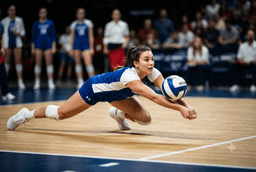
Coaching Cue: Arrest forward momentum using a controlled lunging action or a smooth drop to the chest/knees to keep the platform level.
Advanced Backcourt Techniques and Reaction Drills
Once basic posture is solid, training must increase in speed to simulate live match tempo.
1. Reaction Wall Digging
Focus: Hand-eye reaction time, foot adjustment, and rapid platform creation.
Setup: The defender stands 4 feet away from a flat, solid concrete wall.
Execution: The player repeatedly throws a volleyball at varying speeds and angles against the wall, reacting immediately to dig the rebounding ball back against the wall continuously.
Coaching Cue: Keep footwork active. Make micro-adjustments to center the body behind unpredictable bounces.
2. Multi-Ball Rapid-Fire Pepper
Focus: High-intensity ball control, recovery under fatigue, and spatial awareness.
Setup: Form a triangle with three players. Player A holds two volleyballs; Players B and C act as defenders.
Execution: Player A rapidly spikes balls in alternating fashion to B and C. As soon as Player B digs back to Player A, Player A immediately attacks Player C.
Coaching Cue: Reset your base posture instantly after every contact. Clear communication is critical if a ball lands in the seam between defenders.
Integrating Floor Defense into Team Systems
Individual skills must integrate seamlessly into team defensive schemes and transition plays.
1. Setter Penetration Digging
When a team's primary setter digs the ball from the backcourt, secondary systems must activate immediately to ensure a smooth attack transition.
Setup: Position an outside hitter and a setter on court. An attack is launched into the setter's backcourt zone.
Execution: If the ball travels toward the setter, the nearest defensive player calls out "Help!" and steps in to execute the secondary set, freeing the rest of the team to transition to hitting approaches.
Coaching Cue: Crisp, assertive vocal communication prevents double-touches and confusion during out-of-system plays.
2. Scramble Drills (Controlled Chaos)
Focus: Unpredictable rally management, high-effort plays, and grit.
Setup: The coach feeds difficult, erratic balls into the backcourt to simulate broken plays.
Execution: Players rally out-of-system balls using any legal contact method (one-handed digs, pancakes, kick saves) to keep the ball alive and return it over the net.
Coaching Cue: Reward pure effort and aggressive floor pursuit. Cultivating a "never-let-it-drop" mindset builds an elite team defensive identity.
Frequently Asked Questions
What is the most common mistake made during a volleyball dig?
Swinging the arms upward upon ball contact is the most frequent error. Swinging destroys target accuracy and causes hard-driven balls to fly out of bounds. Always create a stationary, angled platform and absorb the ball's force using your leg muscles.
How do defenders dig hard-driven spikes without getting hurt?
Proper weight distribution prevents injury. By keeping your torso tilted forward and sinking your hips low to the court, you direct the impact force across your lower body base rather than taking the shock straight into your upper torso or wrists.
How does a defensive specialist differ from a libero?
While both excel at backcourt technique, the libero wears a contrasting jersey, operates under specific substitution rules, and cannot block or complete an attack hit when the ball is entirely above the net height. In international (FIVB) and professional leagues (such as the PVL), the libero is restricted from serving entirely (though US high school NFHS and NCAA rules permit serving in one rotational spot). Additionally, if a libero executes an overhead finger set while inside the 10-foot (3-meter) attack zone, teammates are restricted from attacking the ball above net height. A defensive specialist follows regular substitution limits and standard playing rules across all zones.
Track every spike and set with TigerScores, your go-to source for live volleyball scores and tournament updates. Visit our site to stay informed on the latest match results, team rankings, and player performances across the professional and collegiate circuits.


Mastering Basketball Defense Strategy: The Physics of Box-Out Technique & Rebounding
Volleyball Back-Row Tactics: How to Master the Pipe Attack & Elevate Your Offense
Top Classic Premier Volleyball League Provincial Tour Matches
Volleyball Floor Defense: Essential Backcourt Drills & Training Guide
Mastering Volleyball Setter Strategy: Advanced Setter Distribution Tactics & Offensive Tempo
LeBron James Workout Regimen: Inside His Fitness Routine & NBA Recovery Methods
PBA All-Time Steals List: Ranking the Greatest Defensive Legends in History
Kevin De Bruyne's Attacking Midfielder Evolution: Stats, Tactics, and Legacy
Jayson Tatum: Career Stats, Playing Style Analysis, and the Legacy of a Boston Celtics Superstar
Sudden Death Soccer History: The World Cup’s Most Dramatic Golden Goals