Mastering Volleyball Setter Strategy: Advanced Setter Distribution Tactics & Offensive Tempo
Controlling the court starts and ends with the setter. As the strategic playmaker, a setter’s execution goes far beyond basic placement—it hinges on timing, tactical awareness, and split-second decision-making. Executing a high-level volleyball setter strategy requires a master-level understanding of how offensive tempo in volleyball manipulates opposing blockers. By implementing structured setter distribution tactics and clear volleyball playcalling, a setter can systematically dismantle an opponent's defense regardless of their physical size or athleticism.
Whether you are designing a high-efficiency 5-1 offensive scheme or refining modern transition offenses off a defensive dig, mastering the relationship between ball speed, spatial awareness, and blocker reading is fundamental. For coaches and analysts looking to elevate team performance, exploring advanced volleyball playcalling systems and court drills provides the foundational framework needed for elite execution.
The Mechanics of Offensive Tempo in Volleyball
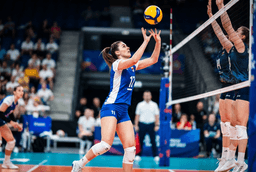
Offensive tempo defines the speed and arc of the set relative to the hitter's approach timing. Establishing precise tempo synchronization turns an average attack into an unblockable rhythm. In modern volleyball, tempo is categorized into three distinct operational tiers.
| Tempo Classification | Height Above Net | Trajectory & Speed | Standard Play Calls | Primary Tactical Purpose |
|---|---|---|---|---|
| First Tempo | 0 to 1.5 feet | Ultra-fast / Flat | Quick, 1, A-Quick, Back-1 | Freeze opposing middle blocker before jump |
| Second Tempo | 3 to 5 feet | Fast / Driven | Go, Gap (31), Slide, Pipe / BIC | Beat pin blocks before double-block forms |
| Third Tempo | 8 to 10+ feet | High arc / Slow | Hut, High Ball (4), Out-of-System | Allow hitter time to approach off-net passes |
First Tempo (In-System Speed)
First-tempo sets are the fastest balls in the sport. Designed primarily for middle blockers in front of or directly behind the setter (e.g., a "1" or "A-Quick"), the hitter is already launching off their approach before the setter makes physical contact with the ball. This forces the opposing middle blocker to commit jump early or abandon their assignment entirely.
Second Tempo (Paced Directional Attacks)
Second-tempo sets travel at a moderate, driven trajectory around three to five feet above the net tape. Common second-tempo calls include a "Go" to the outside pin, a "Slide" behind the setter, or a "Pipe" (BIC) attack from the back row.
Technical Clarification: A "Go" set is a fast, second-tempo set to the outside antenna—it should not be confused with a high, third-tempo ball (often called a "Hut" or "4"). Modern tactical systems also run the Pipe (BIC) as an aggressive second-tempo play rather than a slow safety net, triggering the back-row hitter's approach on setter contact to create a relentless 4-hitter attack.
Third Tempo (Out-of-System Recovery)
Often referred to as a "Hut" or standard "High Ball," third-tempo sets reach eight to ten-plus feet above the net. These sets are used primarily during out-of-system (OOS) play when a pass or dig forces the setter five or more feet off the net tape. The high trajectory gives the hitter adequate time to adjust their approach angle, assess the double block, and aim for high-hands wiping, tool shots, or sharp cross-court angles.
Master Class in Setter Distribution Tactics
While tempo controls speed, distribution dictates location. Advanced setter distribution tactics require balancing hitterHere is the complete.
Mastering Volleyball Setter Strategy: Advanced Setter Distribution Tactics & Offensive Tempo
Controlling the court starts and ends with the setter. As the strategic playmaker, a setter’s execution goes far beyond basic placement—it hinges on timing, tactical awareness, and split-second decision-making. Executing a high-level volleyball setter strategy requires a master-level understanding of how offensive tempo in volleyball manipulates opposing blockers. By implementing structured setter distribution tactics and clear volleyball playcalling, a setter can systematically dismantle an opponent's defense regardless of their physical size or athleticism.
Whether you are designing a high-efficiency 5-1 offensive scheme or refining modern transition offenses off a defensive dig, mastering the relationship between ball speed, spatial awareness, and blocker reading is fundamental. For coaches and analysts looking to elevate team performance, exploring advanced volleyball playcalling systems and court drills provides the foundational framework needed for elite execution.
The Mechanics of Offensive Tempo in Volleyball
Offensive tempo defines the speed and arc of the set relative to the hitter's approach timing. Establishing precise tempo synchronization turns an average attack into an unblockable rhythm. In modern volleyball, tempo is categorized into three distinct operational tiers.
| Tempo Classification | Height Above Net | Trajectory & Speed | Standard Play Calls | Primary Tactical Purpose |
|---|---|---|---|---|
| First Tempo | 0 to 1.5 feet | Ultra-fast / Flat | Quick, 1, A-Quick, Back-1 | Freeze opposing middle blocker before jump |
| Second Tempo | 3 to 5 feet | Fast / Driven | Go, Gap (31), Slide, Pipe / BIC | Beat pin blocks before double-block forms |
| Third Tempo | 8 to 10+ feet | High arc / Slow | Hut, High Ball (4), Out-of-System | Allow hitter time to approach off-net passes |
First Tempo (In-System Speed)
First-tempo sets are the fastest balls in the sport. Designed primarily for middle blockers in front of or directly behind the setter (e.g., a "1" or "A-Quick"), the hitter is already launching off their approach before the setter makes physical contact with the ball. This forces the opposing middle blocker to commit jump early or abandon their assignment entirely.
Second Tempo (Paced Directional Attacks)
Second-tempo sets travel at a moderate, driven trajectory around three to five feet above the net tape. Common second-tempo calls include a "Go" to the outside pin, a "Slide" behind the setter, or a "Pipe" (BIC) attack from the back row.
Technical Clarification: A "Go" set is a fast, second-tempo set to the outside antenna—it should not be confused with a high, third-tempo ball (often called a "Hut" or "4"). Modern tactical systems also run the Pipe (BIC) as an aggressive second-tempo play rather than a slow safety net, triggering the back-row hitter's approach on setter contact to create a relentless 4-hitter attack.
Third Tempo (Out-of-System Recovery)
Often referred to as a "Hut" or standard "High Ball," third-tempo sets reach eight to ten-plus feet above the net. These sets are used primarily during out-of-system (OOS) play when a pass or dig forces the setter five or more feet off the net tape. The high trajectory gives the hitter adequate time to adjust their approach angle, assess the double block, and aim for high-hands wiping, tool shots, or sharp cross-court angles.
Master Class in Setter Distribution Tactics
While tempo controls speed, distribution dictates location. Advanced setter distribution tactics require balancing hitter strengths, offensive rotations, and defensive tendencies in real time.
1. Exploiting Defensive Blocking Schemes
Opposing teams typically utilize one of two blocking strategies:
Commit Blocking: The opposing middle blocker jumps with your middle hitter on every in-system pass regardless of where the ball is set. Counter-tactics: Discard the middle and push second-tempo balls to the pins or back row, leaving your wing hitters with one-on-one matchups.
Read Blocking: The middle blocker waits to see the ball leave the setter's hands before tracking sideways. Counter-tactics: Run ultra-fast first-tempo quicks and internal combination plays (like Stacks or Gaps) to penalize their delayed lateral movement.
2. Utilizing the Full Width of the Net
Effective distribution forces defenders to defend all 30 feet of the net. If a setter over-indexes on the left-side pin, the opposing middle blocker can hedge toward that side, forming a stable double block. Spreading sets horizontally across front-row pins and vertically via back-row Pipe attacks forces middle blockers to cover maximum distance, creating high-percentage seams for your attackers.
3. Backsetting as a Defensive Freeze
A clean, consistent backset to the right-side (opposite) hitter is one of the most effective tools in elite volleyball setter strategy. Because backsetting requires setting against the setter's forward body momentum, a sharp backset catches middle blockers flat-footed. Threatening the backset consistently keeps the defense honest and prevents early shifting.
Tactical Volleyball Playcalling & Court Vision
Mastering volleyball playcalling requires pre-play analysis combined with real-time observation during the rally phase. Elite setters operate like chess grandmasters, planning two to three contacts ahead.
Pre-Serve Tactical Evaluation
Before the whistle blows, an elite setter conducts a four-step check: First, identify opposing blockers to spot any weak or undersized blocker in the front row. Second, track opposing middle position to see if the middle blocker is favoring one side or leaning toward a specific hitter. Third, assess team personnel to confirm which hitters are in rhythm and who is currently in the front or back court. Fourth, determine pass feasibility to know what play call is feasible if the pass is perfect versus off-net.
Disguising Intentions and Hand Placement
Top-tier setters maintain an identical physical posture on every set until the moment of touch. Key elements of setting disguise include:
Neutral Body Alignment: Square shoulders to the left antenna on every contact, whether setting forward, setting back, or dumping.
Consistent Contact Point: Contact the ball directly above the forehead at full hand extension to prevent defense-reading.
The "Look-Off": Turn head and eyes toward the outside pin while setting a back-1 or slide to mislead the opposing middle blocker's jump timing.
Adapting In-System vs. Out-of-System Distribution
A setter's decision-making matrix shifts depending on pass quality and court position.
In-System Strategy (Passes 0–3 feet off the net)
When serve reception is on the tape, the setter holds the ultimate advantage. The playcalling priority should follow this sequence: First, establish the middle by running First Tempo (Quick/1) to force the opponent's middle blocker to jump. Second, isolate the pins—once the middle blocker is committed, distribute second-tempo balls to single-block situations on the outside or opposite pins. Third, incorporate back-row attacks by introducing Pipe/BIC sets to add a third vertical attack vector.
Out-of-System Strategy (Passes 8+ feet off the net)
When passes force the setter away from the net, speed options decrease. Tactical priorities shift to error-minimization: First, deliver a clean, high-arc third-tempo set to your most reliable pin hitter, keeping the ball inside the antenna to give them room to swing off the block. Second, set away from the block density if the opposing team stacks two blockers on your outside hitter by pushing the high-ball set to the opposite side or back-row attack. Third, leverage aggressive setter dumps—if the pass is pushed over the net tape, use a jump-set dump to catch back-row defenders flat-footed.
Sustaining Offensive Synchronization
Achieving mastery in volleyball setter strategy requires a balance of mechanical repeatability, tactical intelligence, and communication. By combining disciplined tempo management, diverse distribution patterns, and precise pre-play reading, setters can dictate the pace of the match, elevate their hitters' efficiency, and consistently outperform opposing defenses.
Track every spike and set with TigerScores, your go-to source for live volleyball scores and tournament updates. Visit our site to stay informed on the latest match results, team rankings, and player performances across the professional and collegiate circuits.


Mastering Basketball Defense Strategy: The Physics of Box-Out Technique & Rebounding
Volleyball Back-Row Tactics: How to Master the Pipe Attack & Elevate Your Offense
Top Classic Premier Volleyball League Provincial Tour Matches
Volleyball Floor Defense: Essential Backcourt Drills & Training Guide
Mastering Volleyball Setter Strategy: Advanced Setter Distribution Tactics & Offensive Tempo
LeBron James Workout Regimen: Inside His Fitness Routine & NBA Recovery Methods
PBA All-Time Steals List: Ranking the Greatest Defensive Legends in History
Kevin De Bruyne's Attacking Midfielder Evolution: Stats, Tactics, and Legacy
Jayson Tatum: Career Stats, Playing Style Analysis, and the Legacy of a Boston Celtics Superstar
Sudden Death Soccer History: The World Cup’s Most Dramatic Golden Goals