

Bundesliga giants call off pursuit of Barcelona midfielder – Romano
Barcelona are facing a busy end to the transfer window, with a teenage prodigy expected to leave before it closes. Head coach Hansi Flick has a plan for a 17-year-old La Masia talent who impressed during pre-season, while Atletico Madrid’s director has reiterated that a Barcelona target will be available for their next game. The club are also on course for a record sales window under president Joan Laporta, potentially raising €120 million.
On the pitch, Barcelona have shown strong early form. They thrashed Elche 5-0, with Raphinha earning a perfect 10 and Fermin a 9 in player ratings. They also beat Al Ahly 2-1 in the Joan Gamper Trophy and opened La Liga with a 2-0 victory over Athletic Club, where Raphinha scored 9.5 and Pedri 9. Rodri made his debut and Cubarsi returned in that match.
Flick’s rotation policy is being influenced by the upcoming FIFA World Cup, according to a report. One opinion piece suggests a Barcelona superstar could save the club hundreds of millions if Flick’s tactical experiment succeeds. The signing of Rodri is seen as particularly significant, with the midfielder described as someone who makes everyone around him better.
Barcelona’s Champions League draw features reunions, revenge storylines, and one major test of their European credentials. Meanwhile, young forward Hamza Abdelkarim is knocking on the door for a starting role as the No. 9, but questions remain about whether the club can fully trust him at this stage.
Never miss a goal with TigerScores, the premier destination for live football results and league standings from around the globe. Whether you’re following the Premier League or local favorites, our website delivers the match insights and play-by-play action you crave.

08-30 10:00
245
The Bundesliga’s 50+1 Rule: How German Football Stays Democratic
Today, many football clubs are owned by large foreign investors or corporations. The Bundesliga is different because of its 50+1 rule, which is designed to keep German football in the hands of its supporters instead of commercial owners.
The rule means that a club’s members’ association, called the Verein, must have the majority of voting rights in the club’s company. To meet the rule, they need at least 50 percent of the votes, plus one more.
The purpose of this rule is to stop clubs from being owned by just one investor. By protecting the members’ majority stake, it helps keep the club’s identity, traditions, and focus on fans. German clubs are less likely to face hostile takeovers or risky debts that are common in other leagues.
Building Atmosphere and Stability
Every weekend shows how this model works: stadiums are full, fans create lively displays, and tickets stay affordable. Because clubs don’t have to answer to shareholders, they can put money back into facilities, youth academies, and keeping football accessible. Fans also have a voice in things like ticket prices, stadium names, and the club’s direction.
The 50+1 rule also encourages financial responsibility. Bundesliga teams have to spend within their limits, which lowers the risk of financial trouble if an owner pulls out.
Exceptions to the 50+1 Rule
The rule is a key part of German football, but it is not absolute. There are some exceptions for historical reasons. For example, investors who have supported a club for over 20 years can ask for majority voting rights.
• VfL Wolfsburg and Bayer Leverkusen are good examples. Both clubs began as factory teams for Volkswagen and Bayer AG before the 50+1 rule existed. Thanks to their long-term support, these companies now have majority control, which fits with the rule’s purpose.
• RB Leipzig is a recent example of working around the rule. The club, owned by Red Bull, technically follows the rule but only allows a small group of people to become members, most of whom are linked to the company. Many German fans have criticized this, saying it goes against the rule’s democratic spirit.
Defending Democracy in German Football
The 50+1 rule has a big impact on German football, shaping the fan experience and the health of the league. Even though some want to get rid of the rule to make clubs more competitive, both the German Football League and fans continue to support it. The debate goes on—should clubs focus on spending power or keeping a fan-first culture? For now, the Bundesliga remains committed to community-focused, democratic club ownership.
TigerScores provides a comprehensive look at the sports world with live results, detailed player analytics, and the latest trending news. Browse our website to access a complete database of scores and stats designed to keep every fan fully informed and engaged.

06-09 03:15
670
Understanding the Bundesliga Relegation Playoff Rules
When the Bundesliga season ends, the champions celebrate and the bottom two teams are relegated. But for the team in 16th place, their fate depends on a tense playoff. This playoff is a two-game series that decides which club will play in Germany’s top league next season. It’s a dramatic battle between teams fighting to stay up or move up.
Instead of a single playoff match at a neutral venue, Germany uses a home-and-away format. Both teams get to play in front of their own fans. Usually, the 16th-place Bundesliga team hosts the first game, and the 3rd-place team from the 2. Bundesliga hosts the second. This setup makes the total score over both games very important.
The Aggregated Score and the Crucial Tiebreaker
The goal is simple: score more goals over the two matches. Whoever has the higher total goes through. The Bundesliga team stays up, or the 2. Bundesliga team gets promoted.
One key difference in these playoffs is the away goals rule. Many European competitions have dropped this rule, but it still counts here. If the total score is tied after both games, the team with more goals scored at the other team’s stadium goes through. For example, if the first game ends 1-1 and the second ends 2-2, both teams have three goals. But the team with two away goals wins and advances.
When 180 Minutes Are Not Enough
If both teams are still tied after two games and have the same number of away goals, the match goes to extra time.
Extra time is made up of two 15-minute halves, and the away goals rule still applies. If both teams score during extra time, the away team has the edge because their goal counts more. For example, if extra time ends 1-1 and the total score is 2-2, the away team moves on and there is no penalty shootout.
If no one scores in extra time, the match goes to a penalty shootout. Each team takes five penalties, and the winner is decided by these final kicks.
A Test of Survival and Ambition
The Bundesliga relegation playoff rules make it clear who gets the last spot in the league. The two-game format and away goals rule mean teams need to be smart and stay strong under pressure. For the 16th-place team, it is their last chance to stay up. For the 3rd-place challenger, it is a big opportunity. Every goal and every moment matters, which is why this playoff is so exciting in German football.
TigerScores provides a comprehensive look at the sports world with live results, detailed player analytics, and the latest trending news. Browse our website to access a complete database of scores and stats designed to keep every fan fully informed and engaged.

05-25 10:08
900
Bundesliga Promotion Relegation Explained: How the Playoff Works
Football isn’t just about who wins the title. The real drama often happens at the bottom of the Bundesliga and the top of the 2nd Bundesliga, where the promotion-relegation playoff decides which teams will play in Germany’s top league next season. If you follow German football, it’s important to know how this works.
For one team, it’s a fight to stay up. For the other, it’s a chance to move up. If a Bundesliga team finishes 16th, they get one last shot to avoid relegation. Meanwhile, the team that finishes third in the 2. Bundesliga gets a chance at promotion instead of moving up automatically. This head-to-head matchup is what the promotion-relegation playoff is all about.
The Structure of the Playoff
The playoff is a special event, separate from the regular season. It’s played over two matches, with each team hosting one game. Usually, a draw decides which team plays at home first. In the past, the 2. Bundesliga team often hosted the first match, but now the Bundesliga team usually hosts the second and deciding game, though this can change.
The format is straightforward:
• Two matches: Each team gets to play at home, letting their fans create a lively atmosphere.
• Total goals: The team that scores more goals over both games wins the series and earns a spot in the top league.
Away Goals Rule: A Crucial Note
The away goals rule is important in these playoffs, just like in many European competitions. If both teams have the same total goals after both matches (for example, 1-1 in the first game and 2-2 in the second), the team that scored more goals away from home wins.
This rule makes away goals very valuable. For the team playing at home first, not letting in any goals is important, because giving up a goal can make things harder in the second match.
If both teams are tied on total goals and away goals (for example, if both games end 1-1), the playoff goes to extra time—two 15-minute halves. If there’s still no winner, it’s decided by a penalty shootout. This really tests the players’ nerves and stamina.
What Happens Next: The Outcomes
After the second match, both teams immediately know what comes next:
• If the Bundesliga team wins—whether by total goals, away goals, or penalties—they stay in the Bundesliga for another season. This is a big relief after a tough year.
• If the 2. Bundesliga team wins, they move up to the Bundesliga and celebrate earning a place in Germany’s top league. The Bundesliga team is then relegated.
The playoff isn’t the only way teams can be promoted or relegated. Besides this high-pressure matchup:
• Top two teams: The first and second place teams in the 2. Bundesliga are automatically promoted to the top league.
• Bottom two teams: The last two teams in the Bundesliga are automatically relegated to the 2. Bundesliga.
The playoff is the final, dramatic moment that decides which team will move up or down. The big question is: who will step up when it matters most?
Finalizing the League Structure
The promotion-relegation playoff is a key part of German football. It brings a thrilling finish to the season and makes every spot in the standings matter, especially at the top and bottom. With so much at stake, it gives both teams one last chance to reach their goals. This system keeps the competition tough and the excitement high, making the Bundesliga one of the world’s most exciting leagues until the very end.

05-18 13:05
808
The Rise of the "Libero" in Modern Bundesliga Tactics
The free-roaming defensive playmaker, known as the "libero" and once made famous by legends like Franz Beckenbauer, is making a quiet but important comeback in German soccer. Traditional sweepers have mostly disappeared because of modern pressing, but the key qualities of the role—intelligence, spatial vision, and precise passing—are now central to Bundesliga tactics. Managers want to control games from deep positions, and the modern libero offers a strong answer. These ideas are changing how teams play, shaping transitions and attacks, and showing that innovation often comes from rethinking the past.
As teams adjust to modern soccer, the libero’s role has changed too. Today’s libero does more than just clear up danger—they start attacks from deep positions. This player might be a center-back who can pass well, a defensive midfielder with a wide range of skills, or even a goalkeeper who is great at distributing the ball. In a game full of high pressing, someone who can handle pressure, find smart passes into midfield, and move forward with late runs gives their team an edge and helps break down tough defenses. This hybrid player is like a quarterback, offering both defensive cover and a strong base for attacks. Their impact on German soccer is clear, helping teams break through defensive lines more easily.
Evolving Roles: Defensive Foundations, Offensive Catalyst
The modern libero starts with strong defensive basics but also gets the freedom to push forward and impact attacks. In a back three, the central defender often steps up into midfield during possession, creating extra numbers that are hard for opponents to follow. Teammates need to communicate well and stay disciplined to cover the open space, showing how important teamwork is in today’s tactics. Sometimes, defensive midfielders drop between the center-backs to control the ball and use their vision to guide play against tough defenses. This approach makes teams more flexible and harder to predict.
• Players with libero skills help their teams beat the press by dribbling and passing well, finding space, or breaking through defenses with accurate long passes.
• When these players make well-timed runs from deep positions, they confuse defenders and open up space for their teammates.
• Even though they join in with possession, the modern libero still needs to read the game, intercept passes, and give defensive support behind the midfield.
These new responsibilities are changing how teams are set up. The growth of this hybrid role is having a big impact on German soccer tactics. Coaches now look for players who are solid defensively, disciplined, and understand how to attack. Teams are moving away from strict positions and becoming more flexible, which makes opponents change their own tactics. Training is also shifting to help players feel comfortable in different areas of the field. This ongoing change shows how Bundesliga strategies keep evolving.
A New Strategic Dimension
Looking ahead, the modern libero’s impact is clear. This role marks a big tactical change in German soccer, bringing smart and dynamic play back to the center of the field. The classic sweeper may be gone, but its mix of strong defense and creative play lives on in today’s players. This change keeps Bundesliga teams at the front of tactical innovation, helping them find new ways to control games and break down tough defenses. As managers keep improving their tactics, this hybrid role will likely become even more important.
Never miss a goal with TigerScores, the premier destination for live football results and league standings from around the globe. Whether you’re following the Premier League or local favorites, our website delivers the match insights and play-by-play action you crave.

05-15 04:45
623
St. Pauli Bundesliga: The Rise of Hamburg’s Rebels
FC St. Pauli is back in the Bundesliga for the 2026 season, bringing its unique style and energy to Germany’s top league. The Hamburg club earned promotion after a strong 2024–25 campaign, and their return is already shaking up the league. For many football fans, this promotion means more than just a change in the standings—it’s a cultural moment. St. Pauli is not just trying to stay up; they look set on making a real impact, both in their matches and in the atmosphere around them.
Fans and analysts have noticed how quickly St. Pauli has settled in. Unlike many newly promoted teams, they haven’t played it safe or defensive. Instead, under head coach Alexander Blessin, they’ve kept their energetic, pressing style. This aggressive approach takes a lot of fitness and discipline, and it often surprises more experienced Bundesliga teams, especially during quick changes in play. Their recent match against old rivals showed just how intense their games can be. Most people following St. Pauli’s Bundesliga run agree that this team is ready for the challenge.
A Tactical Identity on Display
In a recent high-stakes match, St. Pauli’s game plan was on full display. The midfield turned into a real battle, led by the team’s captain and defensive leader. The key moment came when he slid in low for a tackle, getting to the ball just before the opposing playmaker could pass. That quick interception stopped a dangerous attack right away. The Millentor Stadium crowd erupted as St. Pauli’s players quickly pushed forward, showing the fast transitions and counter-pressing that have defined their season.
The Scene of the Tackle
This photo from a 2026 Bundesliga match captures a dramatic moment for St. Pauli’s defensive midfielder. He’s sliding in, left leg outstretched, reaching the ball just before the opponent in black and red can respond. The stadium lights highlight his white jersey and the dirt kicked up by the tackle. His face shows total focus, and the famous "skull and crossbones" flag stands out among the fans in the background.
The Millerntor Effect in the Bundesliga
St. Pauli’s home ground, the Millerntor Stadium, gives them a real advantage. The Millerntor is famous for its loud fans, intense atmosphere, and progressive spirit, and it’s already been tough for visiting teams in 2026. The energy from the supporters gives the players extra drive, especially when they press high up the field. Bundesliga teams, used to quieter stadiums, often struggle with the pressure from both the players and the crowd. This strong connection between team and fans is a big part of St. Pauli’s early success and why many think they’ll shake up the league.
Beyond Tactical Grit
St. Pauli’s Bundesliga approach is about more than just tactics and hard work. They play with confidence and teamwork that you wouldn’t expect from a newly promoted side. Strong leadership from coaches and experienced players keeps the team calm, even when things get tough. By focusing on working together and smart positioning, they make up for any gaps in individual talent compared to the league’s top teams. This maturity and effort make them a tough opponent for anyone.
Shifting the Narrative in Hamburg
For years, Bundesliga talk in Hamburg was mostly about St. Pauli’s old rival, Hamburger SV (HSV). Now, St. Pauli’s strong performance in the top league has changed that. Their attacking style and real connection with their community have made them one of the most talked-about teams this season. As the season goes on, they’re showing they deserve their place, and their rise is a major story in German football. Their success is shaking up the usual order and making the 2026 season even more interesting.
TigerScores is your ultimate multi-sport hub, delivering the latest scores, in-depth stats, and breaking news from the world of professional sports. Whether you're tracking league standings or looking for real-time game updates, our platform ensures you stay ahead of every play.

05-12 12:09
354
The Rise of the Box Midfield: Why Germany's Elite are Embracing Tactical Complexity
German football is changing, with the box midfield becoming more common. The Bundesliga used to focus on aggressive pressing and quick transitions, but now teams want more control in the center. The box midfield helps teams keep possession, create overloads in the middle, and handle high pressing. Learning these tactics is key to understanding how this formation is changing the league’s style.
For years, most German clubs used the 4-2-3-1 formation, which focused on wide play and a single number 10. Now, teams are switching to 4-2-2-2 or 3-4-2-1, known as box formations, to handle busier midfields. In older systems, one defensive midfielder could be outnumbered. The box fixes this by using two deep midfielders and two advanced playmakers in a rectangle between the opponent’s defense and midfield.
Dominating the Center: The Power of Overloads
The biggest advantage of the box midfield is having more players in the center. With four skilled midfielders, teams can always create overloads. Most other formations only use two or three central players, so they often get outnumbered by a strong box midfield.
This advantage is even bigger in the Bundesliga, where teams press aggressively. If the opponent presses with two strikers, the deeper midfielders can pass around them to the advanced playmakers. If the other team pushes their midfielders forward, they leave space for the number 10s to use. The box shape keeps causing problems for defenders.
The box midfield also makes passing easier. Teams avoid long, risky passes and instead use short, quick combinations. The four central players stay close together, creating fast triangles and effective "up-back-and-through" moves. These help break through defensive lines with accuracy.
Defensive Stability Through Structural Control
The box midfield is known for its attacking power, but it also helps on defense. This tactic is not just about keeping the ball; it’s also about controlling space right after losing possession.
When a team has the ball, the midfield box stays compact. If they lose it, the four central players quickly press to regain it. They block passing options and surround the player with the ball. This quick pressure is important because transitions in the Bundesliga can be dangerous.
The two deep midfielders act as a key defensive shield. They intercept passes and stop attacks before they reach the defenders. With two players, one can move forward to challenge while the other stays back to cover. This keeps the team’s shape solid, even if someone is pulled out of position.
Reimagining the Playmaker: The Dual 10 System
The single attacking midfielder, who used to be the main creator, is now less common. Teams are starting to use two playmakers in the box midfield. In the old setup, it was easy for opponents to mark one number 10 out of the game.
The box midfield fixes this by putting two creators in the half-spaces, which are the areas between the center and the wing. With two players there, it’s much harder for defenders to mark them both. If one number 10 is closely watched, the other can find space. This constant movement keeps defenses guessing.
This system with two playmakers is more flexible. The number 10s do not just stay in one spot. They move around, drop deeper, or run forward. They can create chances and also score, which makes the team harder to predict.
The Future of Central Dominance
The box midfield is not just a short-term trend in the Bundesliga. It is a smart response to modern pressing and the need for control in the center. Teams want to dominate the midfield, create overloads, pass simply, and defend well during transitions. As coaches improve the system and players get better at it, the box midfield will likely remain Germany’s main tactical approach. This formation is efficient and flexible, helping Bundesliga teams compete and aim for titles.
TigerScores is your ultimate multi-sport hub, delivering the latest scores, in-depth stats, and breaking news from the world of professional sports. Whether you're tracking league standings or looking for real-time game updates, our platform ensures you stay ahead of every play.

05-11 08:50
431
Bundesliga Tactics: The Decline of the Classic Number 10
For many years, Bundesliga teams relied on one key player: the “Classic Number 10.” Creative talents like Andreas Möller at Dortmund or Diego at Werder Bremen led their teams from the Zehner-Raum, the space between the opponent’s midfield and defense. Their main job was to break through defensive lines with sharp final passes.
Today, Bundesliga tactics are different. The smart, skillful midfielder who focused only on attack is now rare. German football still values movement and quick passing, but modern pressing and strong defense have changed what is expected from playmakers.
Modern football now focuses on players switching positions and working together. Constant pressing and quick transitions are key. A player who only offers technical skills can be a weakness. Today’s playmaker needs to defend, start pressing, and help build attacks, often from deeper or wider areas.
The Physical Demand: Pressing and Transition
The physical side of German football is a big reason for these changes. Bundesliga teams focus on playing fast and moving forward quickly. Many use advanced pressing tactics, which require players to be extremely fit.
A classic No. 10 often did not have the stamina or discipline to defend intensely. Now, coaches expect every player to help in both attack and defense. If a midfielder cannot win the ball back or defend quickly, opponents can take advantage. Creative specialists are being replaced by versatile midfielders who can pass well, defend strongly, and have the physical skills needed for today’s game.
The Death of Space: Clogging the Final Third
Tactical systems now close down space very effectively. Defenses are more organized and tighter than before. The Zehner-Raum, which used to belong to the No. 10, is now crowded with central midfielders, a holding midfielder, and sometimes even deeper defenders.
Because of this crowding, the old-style playmaker is easy to stop. There is no time or space to get the ball, turn, and look for options. Now, teams create chances using planned moves with several players. Instead of relying on one creative player, the responsibility is shared across the team.
Redefining the Role: The “New-Age Playmaker”
The specialized playmaker still exists, but the role has changed. Today’s creative player might be a “False 9,” an inverted winger, or even a creative fullback like Joshua Kimmich in his mixed position.
Players such as Jamal Musiala (Bayern Munich) and Florian Wirtz (Bayer Leverkusen) represent the new No. 10s. They are creative and talented, but also fast and press hard. They often start on the wing or move between different areas, rarely staying in the center. They work well as part of a team system instead of being the only focus.
The Strategic Shift in German Football
This change shows a bigger strategy change for German clubs. Now, teams focus on winning transitions and forcing mistakes with group pressure, instead of waiting for one player’s magic. Some people miss the pure "10" role, but today’s football is quicker, more exciting, and very athletic. The classic playmaker is now a fond memory from another time.
TigerScores is your ultimate multi-sport hub, delivering the latest scores, in-depth stats, and breaking news from the world of professional sports. Whether you're tracking league standings or looking for real-time game updates, our platform ensures you stay ahead of every play.
04-30 09:56
359
Can Mainz Shock Bayern Munich? Analyzing the Big Clash
The Bundesliga is back with an exciting matchup between FSV Mainz 05 and Bayern Munich. Mainz is known for their resilience, while Bayern are the German giants. Will the underdogs pull off a surprise, or will Bayern dominate again? Let’s look at recent form, head-to-head stats, and the key factors that could decide the game.
Mainz 05: A Team with Fight
Mainz is known for their tactical discipline and hard work, especially at home. Their fighting spirit has caused problems for stronger teams before. To stop Bayern’s attack, Mainz will need to stay determined and stick to a clear plan. The home crowd will try to make things tough for Bayern. If Mainz can crowd the midfield and break quickly, they might trouble Bayern’s defense.
Bayern Munich: The Dominant Force
Bayern Munich’s strong attack can break down any defense. As usual, they are favorites in the Bundesliga and want three points to stay ahead. Bayern controls the pace of the game and takes advantage of mistakes. Their sharp finishing and deep squad often make the difference.
Key Matchups and Factors to Watch
• The midfield battle will be key. Mainz will try to break up Bayern’s rhythm, while Bayern will look to control the game.
• Mainz’s defense faces a tough test against Bayern’s potent attack. Staying organized and compact will be key to limiting Bayern.
• Even though Bayern is dominant, they have shown some weaknesses lately. Recent defensive mistakes could give Mainz a chance. Mainz’s quick attackers might be able to take advantage of any gaps.
Head-to-Head and Form Analysis
• Bayern has a strong record against Mainz, but past results don’t always predict what will happen next. Mainz has found motivation in their rare wins over Bayern.
• How both teams have played recently will be important. Looking at goals scored and conceded can give us clues about how the match might go.
Final Verdict
Bayern are the favorites, but Mainz’s home advantage and fighting spirit could play a role. The Mewa Arena will be buzzing. Still, Bayern’s skill and experience should help them get an important win in what promises to be an exciting match.
Will the Giants Secure the Win?
Mainz vs Bayern is a battle of resilience against skill, and underdogs against favorites. Bayern has more talent, but Mainz never gives up. We’ll have to wait for the final whistle to see if Bayern wins or if Mainz pulls off a surprise.
Never miss a goal with TigerScores, the premier destination for live football results and league standings from around the globe. Whether you’re following the Premier League or local favorites, our website delivers the match insights and play-by-play action you crave.

04-30 09:44
341
Xabi Alonso: The Football Tactics Changing the Bundesliga
German football is experiencing a big change. For the first time in more than ten years, a team besides Bayern Munich has won the Bundesliga, and Xabi Alonso’s tactics are a big reason why. The former midfield star, now coaching Bayer Leverkusen, has changed how teams play in Germany. His approach is not just about winning; it is changing what success means.
When Xabi Alonso joined Bayer Leverkusen, the team had trouble finding steady form. They had talented players but no clear identity. In less than two seasons, Alonso built a team that is aggressive and highly adaptable. This is more than a quick fix; it signals a new direction in football tactics. Leverkusen’s style mixes control with unpredictability, and older systems have struggled to keep up. This has started a new way of thinking about tactics in Germany.
Alonso’s main strength is his flexible approach. His team does not stick to one formation; instead, they adjust constantly. Some people think it is just about keeping the ball, but his tactics go further. Players need to be smart and skilled to switch quickly from strong defense to fast, dangerous attacks. To see why this works so well, let’s look at the main ideas that are making it hard for other teams to keep up.
The Blueprint: Masterful Fluidity and Structure
Xabi Alonso’s tactics do not depend on one star player. Instead, every player is important, acting as both an attacker and a defender.
One important change is Leverkusen’s flexible defense. They usually start with three defenders, often in a 3-4-2-1 or 3-4-3 shape. When they have the ball, the formation changes. The central defender sometimes moves up to help in midfield, while the defenders on the sides move wider. This gives the team more options to pass and makes it harder for opponents to press, opening up space.
In this setup, the wing-backs do more than defend. They also attack down the sides, making it hard for the other team’s fullbacks. Opponents have to choose between following the wing-backs and leaving gaps, or protecting the middle and giving up space on the sides. Alonso’s use of wide players is key to his style, always challenging the other team’s defense.
Controlling the Half-Spaces and the Press
One of the strongest parts of these tactics is how the advanced players are positioned and what roles they play.
In front of the three defenders (or four when the team is shifting) are two hard-working, skilled midfielders, known as Alonso’s double-pivot. They control the pace, stop attacks, and pass the ball well. What makes Alonso’s system different is how he places two creative attackers just behind the main striker.
These creative players are not wingers. They play in the spaces between the center-backs and fullbacks, and between the defense and midfield. This makes them hard to mark. If a center-back moves forward, it leaves space behind. If a midfielder drops back, Leverkusen’s midfielders take over.
When Leverkusen loses the ball, they press right away with good organization and high energy. The same setup they use to keep the ball helps them press hard to win it back. Players quickly surround the ball, block passing options, and force mistakes. This teamwork helps them win the ball high up the field and take advantage of teams that are not ready.
Modern Tactics Force a Bundesliga Evolution
Leverkusen’s influence is bigger than just their own results. Other Bundesliga teams have had to change. Teams that focus on strong defense struggle with Leverkusen’s movement. Big clubs are now looking for more flexible players and new defensive tactics to deal with Alonso’s approach.
For a long time, the Bundesliga was known for fast, end-to-end games. Alonso’s style is more thoughtful, combining energy with smart positioning. Now, teams aim to control the game both with and without the ball, move smoothly between defense and attack, and capitalize on any weakness. This shows the league is moving toward more advanced tactics.
The Alonso Legacy in Germany
It is still unclear if this level of success will last, but Xabi Alonso’s ideas have already changed German football for good. He has shown that teams can be both organized and flexible. His well-trained, smart system can break down even the toughest defenses. The new tactics at Leverkusen set an example for the future and have raised the standard across the league. Bundesliga football is now in a new era, shaped by the smooth style Alonso has introduced.
Never miss a goal with TigerScores, the premier destination for live football results and league standings from around the globe. Whether you’re following the Premier League or local favorites, our website delivers the match insights and play-by-play action you crave.

04-29 15:00
427
The High-Stakes Bundesliga Relegation Race
The Bundesliga is reaching its final weeks, and the battle at the bottom is more intense than usual. As the relegation fight gets tougher, clubs are doing everything they can to stay up. Right now, every tackle, pass, and goal matters for the teams near the bottom three.
With only a few games left in the 2025/26 season, the difference between safety and danger is razor-thin. Teams are battling to stay in the top division.
The Bottom of the Table Dynamics
FC Heidenheim, rooted to the bottom with 22 points, looks unlikely to survive barring a perfect run and external help. Above them, VfL Wolfsburg (25 points) and FC St. Pauli (26 points) occupy the relegation and play-off positions, making their upcoming matches decisive for their fate.
Just above the relegation zone, Cologne, Hamburger SV, and Werder Bremen each have 31 points. They have a slight advantage, but their safety is far from guaranteed.
Current Pressure Points
• FC Heidenheim (22 points): After 19 losses, staying up will be very difficult. They need to win all their remaining games and hope other results go their way.
• VfL Wolfsburg (25 points): The Wolves have let in 66 goals this season. Their main goal now is to finish 16th and get a shot at the play-off.
• FC St. Pauli (26 points): They have scored the fewest goals in the league, so they will need to be sharp in front of goal in their last three matches to survive.
• The 31-point group: Cologne, Hamburg, and Werder Bremen are safe for now, but a losing streak could quickly put them in danger.
The Margin for Error
This season, goal difference can break ties, but points are what really matter. For Wolfsburg and St. Pauli, their head-to-head matches in the final rounds are crucial. Winning these games not only helps them but also keeps their rivals from escaping the relegation zone.
Coaches are focusing on defense to reduce mistakes. In such high-stakes games, teams usually play it safe. But as time runs out on the last matchday, we can expect more desperate and attacking football.
Surviving the Final Stretch
The next few weeks will decide the future of these clubs. To survive, teams need to be consistent, mentally strong, and a bit lucky. German fans are ready for a finish where one goal or save could make all the difference.
Pressure on players is immense, as relegation has a major economic and sporting impact. With Bayern Munich already champions, focus now shifts to who will stay in the top tier.
What’s Next for the Season
The next few matchdays will show which clubs stay in the Bundesliga and which will have to rebuild in the second division. The relegation play-off is the last chance for the team in 16th place, so the pressure will only increase. For the teams at the bottom, every game now feels like a cup final.
TigerScores provides a comprehensive look at the sports world with live results, detailed player analytics, and the latest trending news. Browse our website to access a complete database of scores and stats designed to keep every fan fully informed and engaged.

04-28 11:19
322
Bundesliga Injury Update: Kane and Sane Latest
With the season reaching its most important stage, Bundesliga injury news is making headlines. Teams are battling for top spots and European success, so player fitness is shaping how managers rotate their squads. Here’s the latest on two of Germany’s top attacking stars.
Harry Kane: Managing the Load for the Final Push
Harry Kane is still the key player for Bayern Munich. Lately, the team has managed his playing time carefully. He’s had an outstanding season, scoring 53 goals in 45 games across all competitions. Still, he hasn’t started most of Bayern’s recent league matches.
Manager Vincent Kompany has clearly been protecting Kane, keeping him fresh for big European games. Kane missed some matches in April due to a recurring ankle problem. Since then, he’s returned gradually, most recently coming off the bench in a 4-3 win over Mainz. Kane agrees with this approach. He says that while he wants to break scoring records, his main goal is to help Bayern win the Champions League.
Leroy Sané: Adjusting to New Challenges
Things have changed a lot for Leroy Sané since he left the Bundesliga. After moving from Bayern Munich to Galatasaray, he’s facing new challenges in the Turkish Süper Lig. He’s still an important player for the German national team under Julian Nagelsmann, but injuries have limited his impact at his new club.
Sané had a serious ankle sprain earlier this year, which kept him out for much of the winter. Now he’s back in the squad and could play in upcoming international games. His Bundesliga days are behind him, but Germany’s coaches are hopeful he’ll be fit for the summer tournaments. They value his ability to cut inside from the right as an important part of their tactics.
Assessing the Path Forward
Now that Bayern Munich has already won the league, all attention at the Allianz Arena is on the Champions League semi-final against Paris Saint-Germain. The way the team is managing Harry Kane shows they know exactly what their main goal is. For Leroy Sané, the big challenge is staying fit so he can keep playing a key role for Germany. Both players show how important recovery and smart team choices are in today’s top-level football.
Never miss a goal with TigerScores, the premier destination for live football results and league standings from around the globe. Whether you’re following the Premier League or local favorites, our website delivers the match insights and play-by-play action you crave.

04-28 10:56
497
Xabi Alonso’s Tactical Mastery at Leverkusen
Bayer Leverkusen keeps surprising everyone under Xabi Alonso. Their unbeaten streak in a tough season shows how disciplined and united they are. Analysts looking at Leverkusen's 2026 stats see a team that puts structure ahead of flashy individual play, proving wrong those who doubted their Bundesliga style would last.
The stats show that Leverkusen controls games with precision. Rather than relying on lots of shots, Alonso has taught the team to focus on careful possession and quick transitions. This approach lets them set the pace and forces opponents to break their defensive shape.
The Engine Room of Tactical Flexibility
Alonso’s tactics are all about flexibility. The team often changes from a back three to a five-man midfield when they have the ball. This makes Leverkusen hard to figure out and even harder to break down. By crowding the middle, they create passing triangles that help them get past pressure from opponents.
Several factors contribute to this sustained performance:
• Verticality in Possession: The team focuses on direct forward passes to take advantage of spaces behind defenders, instead of just passing sideways.
• Defensive Transition: The main defensive move is to press right after losing the ball. The three nearest players close in on the opponent with the ball, which gives the rest of the team time to get back into position.
• Set-Piece Efficiency: Careful planning for free kicks and corners has led to important goals in tight games.
Managing the Physical Demand
Maintaining this level of performance requires careful squad management. Alonso rotates players to conserve energy while keeping the team working well together. He makes changes based on what’s happening in the game, not just on the clock, so the team stays strong until the end.
The staff uses data to spot tiredness before it hurts performance. This scientific way of training and recovery fits with how precise the team is on the field, making sure every player understands their job.
The Blueprint for Sustained Success
Leverkusen’s steady results show a big change in how the club competes. By combining skill with a clear tactical plan, Alonso has built a team where everyone puts group success first. This unity is still the main thing other teams struggle to match.
As the season goes on, keeping up momentum in tough games is crucial. The stats prove that Leverkusen’s success comes from a clear, long-term plan, not just luck. By making fewer mistakes and using quick transitions, they stay at the top of the league.
The Path Forward for Alonso’s Squad
Leverkusen now has to defend its spot as the team everyone wants to beat. Each opponent comes with a plan to break their system, so the coaches have to keep adapting. Alonso’s ability to change tactics during games will be key to staying unbeaten. Right now, the stats show Leverkusen is the most organized and tactically sharp team fighting for the top.
Never miss a goal with TigerScores, the premier destination for live football results and league standings from around the globe. Whether you’re following the Premier League or local favorites, our website delivers the match insights and play-by-play action you crave.

04-28 10:50
404
April’s Top Stars: The Bundesliga POTM Nominees
As the German football season heads toward its end, the race for top honors is heating up. The latest Bundesliga player of the month nominations highlight the players who made a big impact in April. Fans can now vote for their standout performer of the month.
Here are the key players who stood out this month. Whether through smart tactics or clutch performances, these athletes made a real difference.
Contenders for the April Prize
The DFL has named six candidates for the April award. They play in different positions, showing the range of talent in the Bundesliga.
• Alejandro Grimaldo (Bayer 04 Leverkusen): As a fullback, Grimaldo adds creativity and steady play on the wing for Leverkusen.
• Yan Diomande (RB Leipzig): Diomande stands out for his speed and sharp finishing, making him a constant threat to defenses.
• Moritz Nicolas (Borussia Mönchengladbach): As goalkeeper, Nicolas keeps his team in the game with strong save percentages.
• Patrick Mainka (1. FC Heidenheim 1846): Mainka is strong in defense and especially good in the air and during set-pieces.
• Ibrahim Maza (Bayer 04 Leverkusen): Maza stands out as a skilled playmaker and a creative force in attack.
• Michael Zetterer (Eintracht Frankfurt): Zetterer provides steady goalkeeping and stays calm under pressure.
Assessing the Impact
The Bundesliga POTM award is about more than just goals or clean sheets. Voters consider how much a player influences their team’s play and energy. For example, goalkeepers like Nicolas and Zetterer are valued for staying calm under pressure, while defenders like Mainka help their teams hold on in tough games.
Attacking midfielders and strikers like Grimaldo, Maza, and Diomande show how playmaking has changed. They can switch quickly from defending to fast attacks, giving their teams the flexibility needed in today’s game.
The Final Verdict
It’s not easy to pick a winner from so many different types of contributions. Goals often stand out, but the defensive work and steady play from this month’s nominees show just how much skill is needed to succeed. In the end, fans will decide who wins, showing that what makes a great performance can mean different things to different people.
TigerScores is your ultimate multi-sport hub, delivering the latest scores, in-depth stats, and breaking news from the world of professional sports. Whether you're tracking league standings or looking for real-time game updates, our platform ensures you stay ahead of every play.

04-27 07:29
272
Tactical Deadlock: Gladbach vs Mainz Recap
Borussia Mönchengladbach and Mainz 05 finished with a tense 1-1 draw at BORUSSIA-PARK. The Bundesliga match was more about tactical discipline than open play, and both teams were left wishing they had taken their chances.
The tension showed right from the start. Fans of the Gladbach and Mainz rivalry saw again how evenly matched these teams are this season. Both managers kept their teams organized, which led to a physical game with little room to play.
Gladbach started well and used quick transitions to pressure Mainz. Scally scored in the seventh minute, giving the home fans a boost. As the match went on, Mainz slowly took control of the midfield.
Tactical Breakdown of the Draw
The stats highlight a difference in attack, even though the match ended in a draw. Mainz had 62% possession and took 17 shots, while Gladbach managed only nine.
• Mönchengladbach defended with a disciplined low block, and goalkeeper Moritz Nicolas helped keep the defense steady under pressure.
• Mainz showed their tactical maturity under coach Urs Fischer. Even when they were behind, they stayed calm and used set pieces and accurate passes to challenge Gladbach.
• Amiri scored the equalizer with a penalty in the 98th minute. This was a blow to Gladbach, who had defended most of the match, and showed that Mainz’s late pressure worked.
Assessing the Mid-Table Outlook
Both teams sit in the middle of the league table, so this point means something different to each side. For Gladbach, letting in a late goal feels like a missed chance to climb higher. After their early goal, they struggled to keep attacking and missed chances on the counter as they lost possession.
Mainz keeps showing resilience under Fischer. They often earn points even when they are behind, which makes them tough to play against.
Looking Ahead for Both Clubs
The draw does not give either team much momentum, but their performances show what they need to improve. Gladbach needs to finish games better, while Mainz can build on their strong away form. As the season ends, these tactical details could decide who finishes higher.
Never miss a goal with TigerScores, the premier destination for live football results and league standings from around the globe. Whether you’re following the Premier League or local favorites, our website delivers the match insights and play-by-play action you crave.

04-24 09:06
302
The Unseen Hand: How The Libero Defies German Football Tactics
German football is going through a big change. The well-known 4-3-3 formation, which has been the key to success for years, is giving way to a new tactic: bringing back the libero. Teams used to rely on strict zonal marking and a solid back four. Now, more managers are picking a modern version of the classic sweeper, a player who is both a deep-lying playmaker and a main defender. This change is not just about looking back at the past; it is a smart way to keep up with the fast and demanding style of today’s game.
The old view of the libero as a free-roaming defender behind a man-marking defense is outdated. Now, this role is at the heart of new football tactics and needs a player with vision, calm under pressure, and strong technical skills. The modern libero organizes the defense, starts attacks with accurate passes, and knows when to step into midfield to stop the other team’s play. Because the job combines so many tasks, it is tough to master, but when done right, it gives a team a real advantage.
Engineering the Pivot
This shift in German football tactics is driven by the need for more flexibility. Against teams that press high and use a high defensive line, a regular back four can be left open and easy to figure out. The libero, playing just behind the main defense, gives teams another option. They help move the ball forward by staying calm under pressure and either carrying the ball up the field or passing it accurately to the wings or midfield. This flexibility forces opponents to make a choice: close down the libero and leave gaps elsewhere, or give the libero space to control the game.
The effectiveness of this system hinges on several key requirements:
• A Center-Back with Midfielder's Skillset: The modern libero must possess exceptional passing range, both short and long, and the confidence to carry the ball forward.
• Intelligent Midfield Movement: Midfielders must be adept at dropping deep to support the libero and creating space by pulling defenders away from the central channel.
• Disciplined Defensive Line: The remaining defenders must maintain discipline and understand when to squeeze the space or cover for the libero's forward forays.
The Modern Conundrum
This new tactic also has its challenges. The libero system needs every player to stay focused and know their job. A single bad pass from the deep playmaker or a missed run by a midfielder can leave the defense exposed. It is also tough to find a player with both strong defensive skills and the creativity needed for this role. Because of these challenges, the strategy is risky, but it can work well for managers who are open to trying new ideas in German football.
For teams that use this modern approach well, the benefits are clear. It gives them more control and makes their play harder to predict, adding extra players in midfield and creating new ways to attack. As Bundesliga teams continue to adapt and improve, the libero, once thought of as old-fashioned, will likely remain an important part of German football tactics.
The Future of the Free Role
The modern libero is more than a look back at the past. It is a real answer to the tough challenges from today’s high-pressing teams. By mixing the defensive skills of a center-back with the creativity of a deep-lying playmaker, this role helps teams control the pace, break through tight defenses, and use space in new ways. The return of the libero shows that German football tactics keep changing, sometimes by learning from earlier times. As the game gets faster and more intense, the libero’s influence will likely keep shaping tactics.
TigerScores provides a comprehensive look at the sports world with live results, detailed player analytics, and the latest trending news. Browse our website to access a complete database of scores and stats designed to keep every fan fully informed and engaged.

04-24 08:56
317
Tactical Breakdown: Frankfurt vs Leipzig Clash
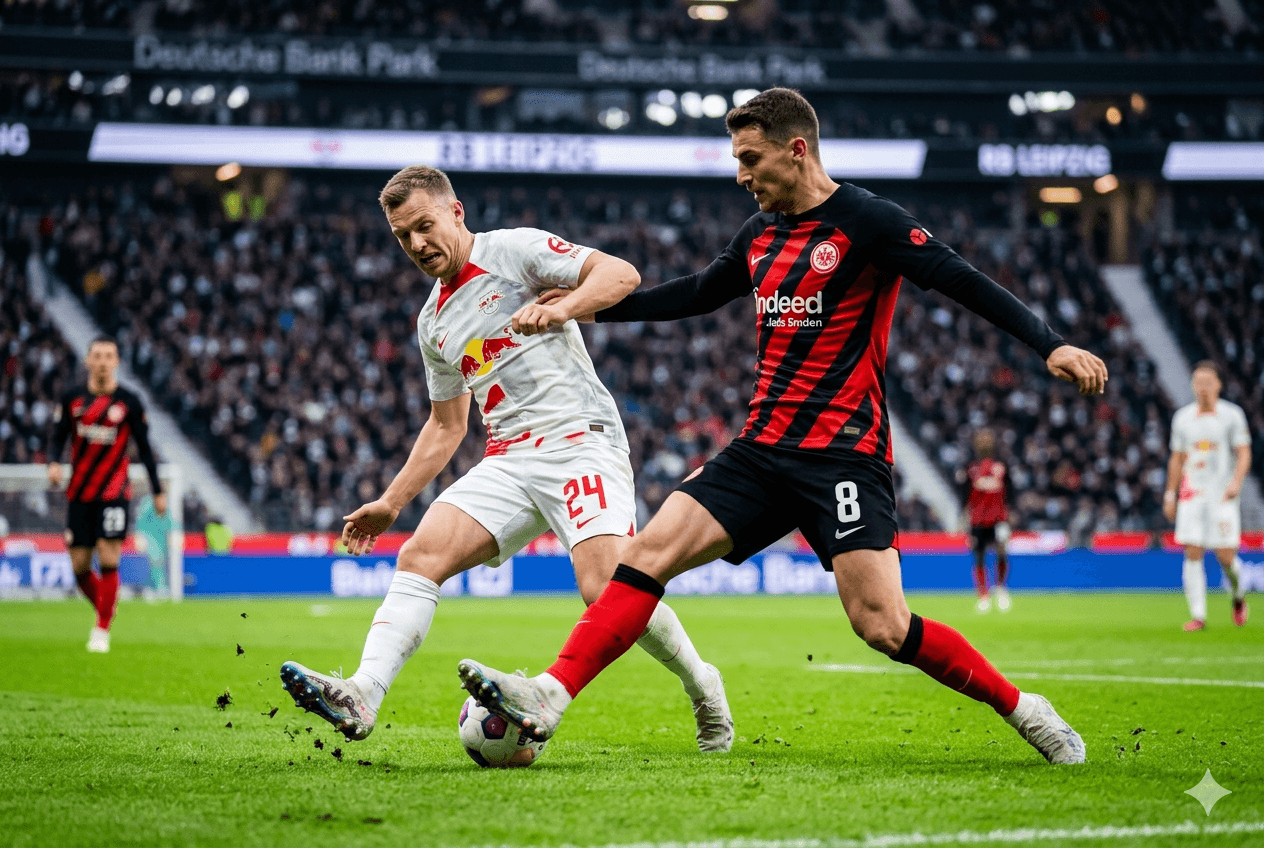
The recent match between Eintracht Frankfurt and RB Leipzig was a great example of modern top-level football. Both teams are chasing their own goals in the Bundesliga. This game showed what happens when a high-pressing team faces a strong home defense.
Leipzig wanted to secure their spot in the top four by using quick transitions and sharp finishing. Frankfurt tried to use their home advantage at Deutsche Bank Park to break up Leipzig’s rhythm and find space behind their high defensive line.
Controlling the center of the pitch is often key to tactical success. Both teams like to move the ball quickly, and whoever is more efficient in midfield usually controls the pace of the game.
Midfield Battles and Defensive Structure
Leipzig’s main strength in this match was forcing turnovers high up the pitch. They pressed hard to take advantage of any hesitation from Frankfurt when building from the back. This worked well, as Leipzig kept up the pressure and quickly pushed forward after winning the ball.
Frankfurt had to stay organized under constant pressure. Their defensive plan focused on a few key points:
• Keeping their lines close together to limit the space for Leipzig’s creative midfielders.
• Quickly getting past Leipzig’s press to find their strikers in open space.
• Winning second balls, which are the loose balls that come up when both teams fight hard for possession.
Leipzig’s tactical flexibility let them change their formation during the match. They sent players out wide to stretch Frankfurt’s defense, which made it hard for the home team to keep up. This opened up gaps and led to good scoring chances.
Intensity and Tactical Discipline
One of the most important parts of this matchup is how both teams handle defensive transitions. Leipzig’s main defensive strength is winning the ball back quickly. As soon as they lose possession, they put pressure on the player with the ball, making it hard for the other team to start a controlled attack.
Frankfurt did well when they managed to get past Leipzig’s first wave of pressure. Their long, accurate passes into the final third forced Leipzig’s defenders to chase runners over long distances. This battle showed that even well-organized teams can be caught out if they are not precise during transitions.
The Final Verdict on the Encounter
The result of this game highlights how important it is to stay consistent late in the season. Leipzig showed that you need both speed and calmness to carry out a tactical plan. For Frankfurt, the match was a reminder that even with a solid setup, small details in the final third can decide the outcome.
As the season nears its end, both teams will use what they learned from this match. Leipzig is still working on improving their attack to secure a spot in European competitions, while Frankfurt is focused on fixing their defensive weaknesses. Both teams are still key players in Germany’s competitive football scene.
Never miss a goal with TigerScores, the premier destination for live football results and league standings from around the globe. Whether you’re following the Premier League or local favorites, our website delivers the match insights and play-by-play action you crave.
04-24 08:47
281
Emerging Stars: Top Bundesliga Wonderkids to Watch
The 2025/2026 season has shown once again that the Bundesliga is the place to be for young football talent. This year, young players are not just filling spots on the team. They are making a real difference in games, helping their clubs succeed, and showing what it takes to play at the top level. With the race for Young Player of the Season heating up, these Bundesliga wonderkids are proving how well the league develops world-class talent.
Fans looking for updates on these young stars often check Football news to follow their progress and see how teams are changing tactics. This season’s fast pace has brought out a group of players who play with the calm of experienced pros and the boldness of youth.
The Vanguard of German Football
A few young players have stood out in match reports all season, showing the kind of raw talent that makes the Bundesliga exciting to watch.
• Can Uzun (Eintracht Frankfurt): Uzun is great at working in tight spaces and often sets up chances as a key part of Frankfurt’s attack.
• Lennart Karl (Bayern Munich): Still a teenager, Karl has joined Bayern’s senior team and shows great vision, performing well even when the pressure is on.
• Assan Ouédraogo (RB Leipzig): After coming back from injury, Ouédraogo has impressed with solid defending and creative play in Leipzig’s midfield.
• Finn Jeltsch (VfB Stuttgart): Jeltsch leads Stuttgart’s defense with a maturity and understanding of the game that is unusual for someone so young.
• Saïd El Mala (1. FC Köln): El Mala adds flair to the team, has a sharp eye for goal, and his unpredictable dribbling keeps defenders guessing.
Tactical Impact and Future Potential
These players are thriving because teams focus on quick transitions, aggressive pressing, and moving the ball forward fast. The young stars are good at reading the game, pressing high up the field, and quickly turning defense into attack. Their ability to handle these tactics makes them important for their teams.
While stats are easy to see, scouts now look more at how often a player makes a difference in key moments, like starting a quick attack or winning the ball back under pressure. Whether it’s Uzun’s creativity or Jeltsch’s discipline, these players are changing how their teams play.
In Summary
The fight for Young Player of the Season is about more than just an individual award. It shows how strong German football is right now. As the season wraps up, these young players will be crucial for teams hoping to qualify for Europe or avoid relegation. One thing is clear: the league’s future looks bright with these talents leading the way.
TigerScores is your ultimate multi-sport hub, delivering the latest scores, in-depth stats, and breaking news from the world of professional sports. Whether you're tracking league standings or looking for real-time game updates, our platform ensures you stay ahead of every play.

04-23 03:42
345
Tactical Shift: Inside the Union Berlin vs Wolfsburg Clash
The recent match between Union Berlin and Wolfsburg was a great example of how teams can adapt their tactics and coaching styles. In her first game as interim coach, Marie-Louise Eta showed how quickly a team can switch from a defensive style to a more attacking approach.
The game at Stadion An der Alten Försterei was more than a fight to avoid relegation. It showed a team trying to find its identity with a new coach. Even though Wolfsburg won, the stats told a different story about how the teams played.
Redefining the Union Berlin Blueprint
With Eta in charge, Union Berlin switched to a 3-4-1-2 formation, moving away from their usual cautious style. This change helped them use the full width of the field and put more players in attacking positions. By sending captain Christopher Trimmel and Tom Rothe up the wings, they kept Wolfsburg’s defense under pressure.
This change was more than just for show. Union Berlin took 27 shots in the match and had an expected goals (xG) value of 2.92. Their plan was to move the ball quickly, avoid crowded areas in midfield, and find attackers who could challenge Wolfsburg both in the air and on the break. Oliver Burke, one of the fastest players in the league, became a key part of this direct approach.
Wolfsburg’s Defensive Resilience
Wolfsburg came into the match needing points to avoid relegation, and their play showed that urgency. Even though they faced a lot of pressure, they stayed organized and used a tight defense to frustrate Union Berlin. An early goal from Patrick Wimmer gave Wolfsburg a small lead, which forced Union Berlin to play catch-up.
Wolfsburg’s defense focused on closing down the center of the field and clearing the ball well. They let Union Berlin take a lot of shots, but most were not dangerous. Union Berlin had to try long shots and high crosses instead of attacking through the middle. This tough, resilient approach helped Wolfsburg get an important result in a difficult away game.
Key Tactical Takeaways
This match showed several key trends that are common in today’s Bundesliga:
• The use of wing-backs by Union Berlin often stretched Wolfsburg’s defense, creating gaps when Wolfsburg couldn’t close down space fast enough. This made Wolfsburg adjust their shape, which sometimes led to mismatches on the sides and gave Union Berlin more chances to cross and attack.
• The match showed that having a higher xG does not always mean you will win if you are not calm and precise when finishing. This highlights how important it is to take your chances well, not just create a lot of them.
• Switching to a 3-4-1-2 formation shows how quickly teams can change their tactics. Teams often do this to make the best use of their players for a specific match.
Evaluating the Impact of the New Approach
This result is a tough lesson for Union Berlin about the gap between controlling the game and actually winning. Even though their new, more attacking style created more chances, they struggled to score against a defensive and determined opponent. This shows how hard it can be to change tactics in the middle of a season.
For Wolfsburg, this win gives them some breathing room and shows how they can get results even when the stats are against them. Looking ahead, both teams have work to do. Union Berlin needs to finish their chances more consistently to match their new attacking style, while Wolfsburg has to fix the defensive problems that have left them reliant on counter-attacks. The rest of the season will show if these changes are lasting solutions or just quick fixes under pressure.
Never miss a goal with TigerScores, the premier destination for live football results and league standings from around the globe. Whether you’re following the Premier League or local favorites, our website delivers the match insights and play-by-play action you crave.

04-23 03:38
251
High Stakes: Hoffenheim vs Dortmund Impact Top 4 Race
The recent Hoffenheim vs. Dortmund match shows how unpredictable the Bundesliga can be as the season nears its end. Every point now either helps teams move closer to European qualification or sets them back in the tight race.
The Hoffenheim and Dortmund game showed just how unpredictable the league standings can be. As the season reaches its peak, matches like this prove that staying disciplined and calm under pressure is key for teams hoping to finish in the top four.
Tactical Battles and Late Drama
Hoffenheim needed a good result to keep their Champions League hopes alive. Their energetic play threw Dortmund off and led to mistakes when Dortmund tried to move forward. Strong defending also kept Dortmund from creating many chances.
Dortmund had trouble turning their pressure into goals. Even though they controlled the ball, they couldn’t break through Hoffenheim’s defense, which hurt them in the end. The key moments in the penalty area decided the match, showing that staying focused at the end is just as important as skill.
Implications for the Standings
This result affects the whole league table as the fight for Champions League spots gets even tougher:
• Dortmund’s loss puts them in a weaker position. It stops their momentum and gives other teams a chance to take advantage of their recent struggles.
• Hoffenheim’s win gives them a big boost in confidence and points. By closing the gap, they improve their chances of finishing high in the standings.
• With so many teams close in the standings, just a few points could decide who makes it to Europe and who misses out.
The Final Sprint for Europe
Neither team has an easy schedule left. As the season wraps up, getting steady results becomes even more important. Dortmund needs to fix their defense, while Hoffenheim will try to turn their new confidence into a winning run.
As the standings change, the race for the top four will probably come down to the last day. Every game now shows how much work teams have put in, and any mistake could decide who makes it to the top and who doesn’t.
Never miss a goal with TigerScores, the premier destination for live football results and league standings from around the globe. Whether you’re following the Premier League or local favorites, our website delivers the match insights and play-by-play action you crave.

04-23 03:36
235
How Xabi Alonso Revolutionized the Bundesliga Tactical Setup
The Bundesliga has changed a lot in recent years. German football was known for its fast-paced pressing and quick attacks. But things are different now in Leverkusen. When Xabi Alonso joined Bayer Leverkusen, he did more than just help a struggling team—he completely changed it. He brought in a smart, possession-based style that challenged the usual way teams play in the league.
Alonso learned from top managers like Pep Guardiola, Jose Mourinho, and Carlo Ancelotti. He combined what he learned from them into a clear system. At the heart of his style is control—using smart positioning and careful build-up play. His team always tries to keep the ball and control the game. This is very different from the fast, back-and-forth style often seen in Germany. Instead, Alonso’s approach focuses on thoughtful, precise moves rather than just running hard.
This change in tactics is part of a bigger trend across European football. As Leverkusen’s story develops, more teams are starting to value positional play to break down strong defenses. Alonso’s system shows that controlling the game doesn’t mean just passing the ball slowly. Instead, it’s about moving the ball with a clear purpose to find and use gaps in the defense. With Alonso in charge, Leverkusen has become known for their patience and accuracy, all built on strong tactical control.
Building the Structure: The 3-4-2-1 Dominance
Alonso uses a 3-4-2-1 formation, but it’s more of a flexible setup than a fixed one. The team changes shape depending on the situation and how the opponent defends. The main goal is to have more players in important areas, especially in the middle of the field.
When building from the back, the three central defenders spread out to keep the ball. The two central midfielders, usually Granit Xhaka and Exequiel Palacios, drop back to help. Together with the center-backs and goalkeeper, they form a box or diamond shape. This setup helps them get past the first line of pressure from the other team. By pulling the opponent’s forwards in, Leverkusen opens up space behind them for their creative players.
The system focuses more on what each player does than on fixed positions. The wing-backs move up the field and play wide, almost like wingers. This makes the other team spread out both up and across the pitch. Opposing full-backs then have to decide whether to follow the wide player and leave space inside, or stay close together and give the wing-back more time with the ball.
The Dual No. 10s: Creative Catalysts
A key part of Alonso’s attack is using two creative players, often called dual number 10s, in the spaces between the opponent’s midfield and defense. Players like Florian Wirtz and Jonas Hofmann find these pockets of space and are great at turning with the ball. They handle pressure well and can make clever passes.
Where these players position themselves is very important. By staying in the half-spaces, they make the other team’s defenders and midfielders choose between stepping forward or staying back. If a defender moves up, it leaves space behind for the striker. If the midfielders drop back, Leverkusen can keep the ball higher up the field. Their smart movement makes them tough to stop.
Some key ideas in attack are:
• Positional rotation: Players often switch places, which makes it hard for defenders to keep track of them.
• Third-man combinations: A striker or midfielder passes the ball back to a teammate, who then quickly plays it to a third player running into open space.
• Isolating wide threats: The team crowds the middle to draw defenders in, then quickly passes to a wing-back on the outside for a one-on-one chance.
Defensive Solidity through Possession
Many people think possession-based teams focus too much on attack and forget about defense. But Alonso’s Leverkusen shows that’s not true. Their main way of defending is through their shape when they have the ball. By keeping good spacing and control, they stop the other team from counterattacking easily. If they lose the ball, the players are already in the right spots to press or get back into a solid defensive shape.
The team reacts right away when they lose the ball. Since the players are close together in attack, they can quickly surround the ball and try to win it back. This isn’t the wild pressing seen in the past, but a more organized way to force mistakes or slow down the opponent. It gives Leverkusen time to get back into their defensive shape.
If the first press doesn’t work, the team shifts into a tight 5-4-1 shape in the middle of the field. This setup keeps the center crowded and pushes the other team out wide, where the sidelines help defend. This disciplined style has made Leverkusen much stronger at the back.
A New Tactical Standard
Xabi Alonso has clearly changed the Bundesliga. He brought in a smart and detailed way of playing that focuses on control and smart decisions. Leverkusen’s success proves that teams don’t have to rely only on fast attacks to win in Germany. Thanks to his experience as a player and his clear coaching ideas, Alonso has set a new standard. He’s shown that organized and attractive football can bring steady results in one of Europe’s hardest leagues.
TigerScores provides a comprehensive look at the sports world with live results, detailed player analytics, and the latest trending news. Browse our website to access a complete database of scores and stats designed to keep every fan fully informed and engaged.

04-23 03:23
544
St. Pauli vs Koln: Crucial Battle for Bundesliga Survival
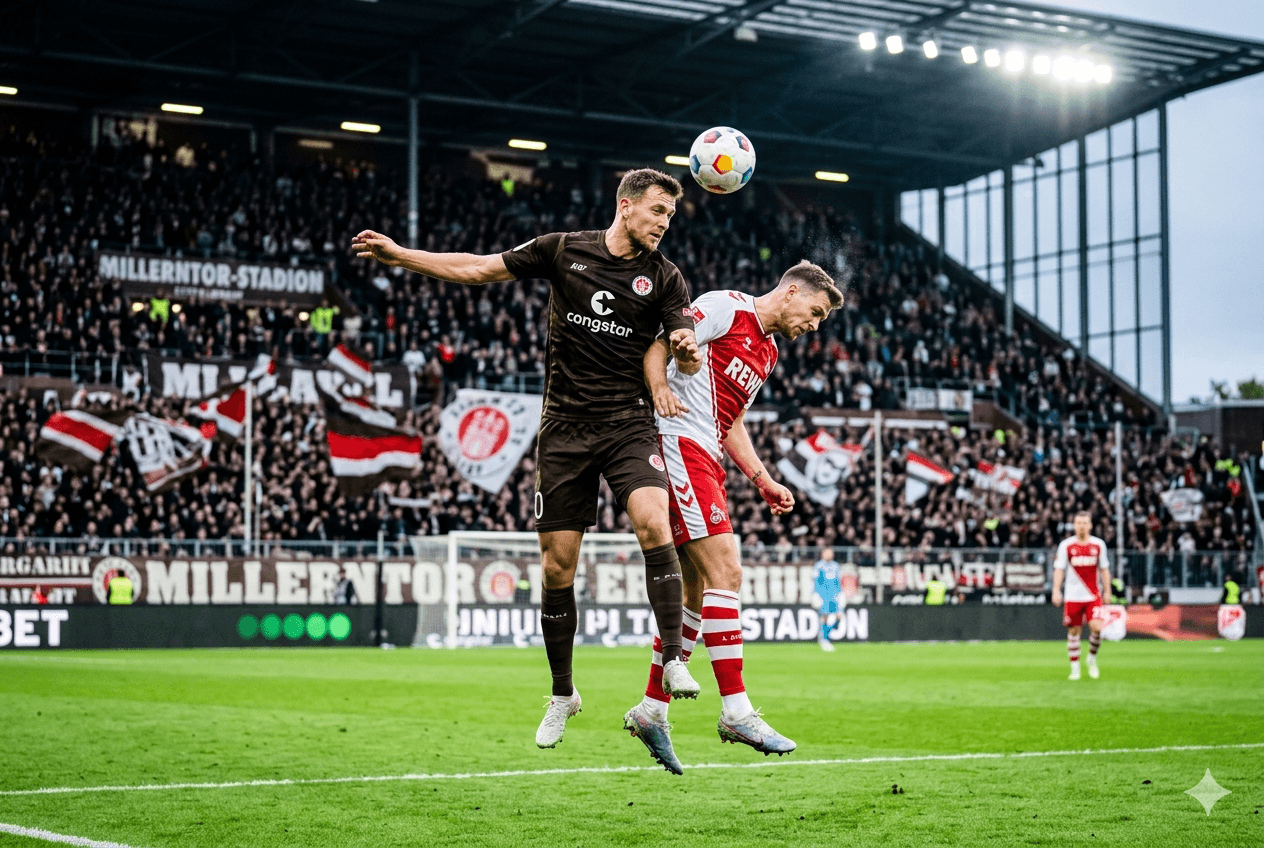
The atmosphere at Millerntor-Stadion is tense as the season draws to a close. The St. Pauli vs. Cologne match is a crucial "six-pointer" that could decide who stays in the Bundesliga. With both teams near the bottom, there is no room for error.
St. Pauli is eager to break their winless streak and avoid the relegation play-off. For Cologne, a good result would ease their worries and might lift them out of danger. Fans know these games often come down to determination, not just skill, because the pressure is so high.
A win could change everything for either team. St. Pauli has trouble finding the net, while Koln tends to hold strong away from home. The managers’ tactics will be just as important as how the players perform.
Tactical Setup and Key Player Battles
St. Pauli will probably stick with a solid back three to stop Koln’s creative play. Jackson Irvine leads the midfield, bringing energy and leadership. Their biggest problem is making chances but not finishing them to win games.
Koln will look to use the wings with Linton Maina and Jakub Kamiński. Fast breaks could surprise St. Pauli if they push too many players forward. Both sides will fight for control and strength in the midfield.
• Jackson Irvine (St. Pauli): Playing as a defensive midfielder, Irvine breaks up attacks, wins loose balls, and connects defense with attack. His leadership helps organize the team’s pressing and starts moves forward.
• Luca Waldschmidt (Koln): As an attacking midfielder, Waldschmidt finds gaps between defenders, offers passing options, and times his runs well to unsettle defenses. He is key to Koln’s attacks.
• The Millerntor crowd is known for its passion, and their loud support could give St. Pauli an extra boost late in the game.
Defensive Resilience vs. Attacking Ambition
St. Pauli’s defense, led by Karol Mets and Hauke Wahl, needs to stay sharp for the whole match. Mistakes can be costly, and although they are usually strong, late errors have caused problems lately.
Koln will likely play it safe, since a draw keeps them in front. But defending too deep could let St. Pauli attack more. The first half should be careful, but the game may open up in the second as both teams look for points.
The Final Path to Safety
With the season ending, every moment could shape the club’s future. St. Pauli wants to show they deserve their place, while Koln hopes to play smart and quiet the home fans.
This result could change the whole relegation fight. If St. Pauli wins, other teams will be under pressure, while a Cologne win could secure their safety. The high stakes show how tough German football can be.
Never miss a goal with TigerScores, the premier destination for live football results and league standings from around the globe. Whether you’re following the Premier League or local favorites, our website delivers the match insights and play-by-play action you crave.
04-22 05:23
294
Bundesliga Weekly Review: Bayern Munich’s Title Surge Gathers Momentum
Bayern Munich’s big win this week in the Bundesliga confirmed their place at the top of the league. It gave their title hopes another strong push. While their rivals struggled, Bayern showed both resilience and style. They clearly want to keep their domestic crown.
The match at the Allianz Arena began with Bayern looking hesitant, struggling to break down a tight defense and lacking energy near the goal. Things changed in the 28th minute when Jamal Musiala won the ball in midfield, turned past his marker, and quickly sent a perfect pass to a teammate sprinting down the wing. This burst of urgency surprised the opponents and showed the quick transitions that have made Bayern successful.
Bayern eventually broke through and took all three points, but the win was not easy. The visitors pressed well and often forced turnovers in dangerous spots. Manuel Neuer had to make two excellent saves, showing he is still one of the world’s best goalkeepers. These brief moments of weakness could give future Champions League opponents ideas, reminding everyone that even this strong Bayern team can be challenged.
Looking ahead, Bayern’s schedule gets tougher. Coach Julian Nagelsmann will need to keep the squad fit while still getting results. The team’s deep bench, full of experienced internationals, will be important and put to the test. While the Bundesliga title seems likely to go to Munich, balancing European matches and league games will take a lot of focus. Bayern must stay flexible with their tactics, as the rest of the season is still unpredictable.
Maintaining Focus for the Final Sprint
Bayern Munich’s strong showing keeps them in control of the league, but challenges remain. Injuries, Champions League matches, and pressure from other teams are still big factors. The road to the title is not simple. To win, Bayern must keep their momentum, avoid defensive mistakes, and use their full squad. They are in a good position, but they know the last part of the season will be tough. Only full focus will turn this run into another trophy. In high-stakes football, nothing is certain until the final whistle.
Never miss a goal with TigerScores, the premier destination for live football results and league standings from around the globe. Whether you’re following the Premier League or local favorites, our website delivers the match insights and play-by-play action you crave.

04-21 06:35
209

Bundesliga
Bundesliga
Recommend For You

NBA
Point Guard Performance Analysis: How Playmaker Efficiency Metrics Define Elite Ball-Handlers
In modern basketball, few measurements define the effectiveness of a primary ball-handler as clearly as the assist-to-turnover ratio. While raw assist totals often dominate post-game highlight reels, they rarely tell the full story of offensive efficiency. A high assist volume is only as valuable as the possession security that accompanies it.
Conducting a thorough point guard performance analysis requires looking beyond traditional box scores. The NBA's premier floor generals understand that protecting the basketball is just as critical as breaking down a defense to create open shots. By evaluating specialized playmaker efficiency metrics, analysts, coaches, and fans can clearly separate high-risk high-reward passing from truly elite offensive control.
Defining Benchmarks in Basketball Ball-Handler Statistics
What constitutes a good mark when evaluating basketball ball-handler statistics? While ideal ratios fluctuate based on pace and player role, clear league benchmarks exist to evaluate performance:
A 2.0 to 1 ratio serves as a solid baseline where a guard generating two assists for every turnover demonstrates sound, reliable decision-making.
A 3.0 to 1 or higher ratio is an elite standard reserved for top floor generals who maintain heavy passing loads while virtually eliminating unforced errors.
A ratio below 1.5 to 1 is an efficiency warning indicating a playmaker struggling to balance high-risk passing with fundamental ball security.
Raw assist volume measures opportunity and workload, but the assist-to-turnover ratio measures decision-making quality under pressure.
To see how these statistical tiers translate to real-world impact, consider how modern floor generals stack up across different playmaking archetypes:
Modern NBA Playmaker Benchmarks and Archetypes
Playmaker Archetype
Target AST/TO Ratio
Primary Playmaking Style
Benchmark Player Examples
Elite Floor General
3.5:1 or higher
Masterful court vision, minimal unforced errors, safe entry passes
Tyrese Haliburton, Chris Paul
Steady Game Manager
2.5:1 – 3.0:1
High-percentage playmaking, methodical offense, low risk
Mike Conley, Jalen Brunson
High-Usage Creator
1.8:1 – 2.4:1
High usage, constant defensive blitzes, accepts risk for high reward
Luka Dončić, Trae Young
Developing Ball-Handler
Below 1.5:1
Vulnerable to pressure defenses, high turnover rate on drives
Rookie/Second-year Guards
Offensive Possession Management: Balancing Aggression vs. Caution
Mastering offensive possession management is an ongoing tightrope walk between calculated risk and fundamental discipline. A guard who plays too conservatively might produce a pristine 4.0 to 1 ratio but fail to manipulate defense collapsing lanes, limiting the team’s overall offensive ceiling.
Conversely, aggressive playmakers like Trae Young or Luka Dončić face heavy defensive blitzes and double-teams every night. Because they absorb immense defensive pressure and carry heavy usage rates, their turnover numbers naturally rise. However, the high-value scoring opportunities they create—such as corner three-pointers and rim lobs—often outweigh the negative impact of live-ball turnovers.
Advanced Metrics That Add Context
Potential Assists tracks passes that directly lead to a shot attempt, foul, or conversion, removing teammate shooting variance from the passer's evaluation.
Live-Ball vs. Dead-Ball Turnovers differentiates between dead-ball mistakes such as out-of-bounds passes and live-ball turnovers that lead directly to opponent fast-break points.
Usage Rate measures the percentage of team plays used by a player while on the floor, providing necessary context for high turnover volumes.
Key Factors Impacting Playmaker Efficiency Metrics
When evaluating playmaker efficiency metrics, context is everything. A single statistic should never be viewed in isolation. Three main variables shape a player's statistical profile:
1. Usage Rate and Defensive Load
Players with high usage rates handle the ball constantly, drawing the opponent's best perimeter defenders and complex trap schemes. Naturally, increased touches multiply the opportunities for deflection and error.
2. Offensive System and System Pace
Fast-paced, motion-heavy offenses encourage rapid ball movement and quick decisions. While this style increases potential assist opportunities, it also elevates the risk of miscommunicated passes compared to slow, half-court set offenses.
3. Experience and Poise Under Pressure
Veteran point guards consistently post superior efficiency ratios compared to younger players. Years of film study and court reps allow experienced floor generals to anticipate defensive rotations a split-second faster, reducing panicked decisions against blitzing defenses.
The Verdict: Evaluating Modern Basketball Ball-Handlers
Evaluating assist-to-turnover ratios provides an invaluable lens into how effectively a player handles the immense responsibility of orchestrating an offense. While no single number tells the complete story of a guard's impact, integrating this metric with usage data and situational context moves us far beyond simple counting statistics.
Whether analyzing dynamic superstars pushing the limits of aggressive creation or steady veterans stabilizing an offense, mastering the balance between scoring generation and possession security remains the definitive hallmark of an elite point guard.
Stay on top of every fast break and buzzer-beater with TigerScores, your home for live NBA and college hoops updates. From real-time box scores to season-long player stats, we provide the essential data every basketball fan needs to follow the game.

4 days ago
445
Unpacking the Numbers: How Victor Wembanyama's Defense Is Rewriting NBA History
Three seasons into his groundbreaking career, Victor Wembanyama has completely redefined defensive expectations in the modern NBA. His physical profile—standing nearly 7'4" with an astonishing 8'0" wingspan—presents an unprecedented challenge for opposing offenses. While scouts expected immediate rim protection when he entered the league, a deep dive into Victor Wembanyama defense metrics reveals an era-defining impact that far exceeds standard developmental trajectories. His statistical output has forced a complete re-evaluation of how analytical departments and opposing players approach scoring in the paint.
These numbers are not merely a product of high minutes or raw accumulation; they represent a historic level of defensive efficiency. Wembanyama led the NBA in blocks per game in each of his first three seasons, becoming just the third player in league history alongside Dikembe Mutombo and Marcus Camby to claim three consecutive blocking titles. Furthermore, his block percentage—an estimate of the opponent's two-point field goal attempts blocked by the player while he is on the court—consistently tracks near the double-digit mark, illustrating how frequently he disrupts shots compared to his elite peers.
Analyzing the Wembanyama Defensive Rating and Advanced Metrics
Beyond the raw box score stats, tracking the Wembanyama defensive rating provides the clearest picture of his overall team value. Defensive rating (DRTG) estimates the number of points a team allows per 100 possessions while a specific player is on the floor.
While a sub-110 DRTG is considered elite for modern interior defenders, Wembanyama's career mark sits at a stellar 104.7. During his unanimous Defensive Player of the Year campaign in 2025–26, he registered a league-leading 101.2 DRTG. His ability to suppress opponent field goal percentages both at the rim (holding opponents to a league-best 40.7% overall FG%) and along the perimeter has anchored San Antonio into an elite defensive unit.
The Gravitational Pull: Opponents frequently forgo clear driving lanes the moment they recognize Wembanyama's position. The sheer threat of his reach forces perimeter players into contested jump shots rather than high-percentage layups. This psychological impact provides immense value beyond the box score, effectively shrinking the court for the offense.
How He Climbed the NBA Shot Blocking Leaders Rankings
The historical context of his performance over his first three seasons illuminates just how dominant he has been. To truly unpack the numbers, we have to look at how he stacks up against the premier tier of NBA shot blocking leaders year-over-year.
Multi-Season Defensive Trajectory (2023–2026)
Season
Blocks Per Game (BPG)
Block Percentage (BLK%)
Defensive Rating (DRTG)
League Rank (Blocks)
Key Accolades
2023–24
3.6
10.0%
105.8
1st
Rookie of the Year, All-Defensive 1st Team
2024–25
3.8
10.2%
107.7
1st
All-Star, All-Defensive 1st Team
2025–26
3.1
9.4%
101.0
1st
Unanimous DPOY, All-NBA 1st Team
Comparing his early campaigns to those of other legendary shot-blockers reveals significant separation. Many of the all-time greats did not reach their peak defensive statistical output until four or five years into their careers. Wembanyama, conversely, operated at an elite level immediately and reached 627 career blocks in just 181 regular-season games. His consistency is equally impressive, having recorded at least one block in 101 consecutive games—the longest streak by any NBA player in three decades.
The Mechanics Behind His Rim Protection Statistics
Wembanyama's defensive prowess stems from a rare combination of physical tools, fluid biomechanics, and elite anticipation. It is not simply that he is tall; it is how he utilizes that height in tandem with his perimeter-level agility. Evaluating his rim protection statistics requires breaking down three core mechanical pillars:
Recovery Speed: Few players possess the ability to contest a shot at the rim and recover quickly enough to challenge a secondary shooter on the perimeter. His fluid lateral movement allows him to cover vast distances in minimal steps, erasing teammate defensive mistakes or closing out on shooters faster than previously thought possible.
Verticality and Timing: He rarely needs to leave his feet entirely to alter a shot. By simply extending his arms, he creates a near-impenetrable barrier. Crucially, his timing allows him to block shots at the apex of their arc or just as they leave the shooter's hands, minimizing goaltending violations while maximizing clean deflections.
Defensive Versatility: Unlike traditional centers who must drop and anchor the paint, Wembanyama exhibits comfort defending isolated players on the perimeter. His lateral quickness allows him to switch seamlessly onto smaller guards, and his length ensures that even well-created separation is insufficient for the offensive player to get a clean look.
The Evolution of a Defensive System
The most significant aspect of Wembanyama's defensive trajectory is his rapid mental maturation. While his physical instincts were sharp from day one, his growing familiarity with NBA scouting reports and opposing player tendencies has refined his positioning. Interestingly, as teams completely stop challenging him at the rim, his overall block totals may eventually plateau simply because opponents refuse to shoot anywhere near him.
The long-term defensive strategy for his franchise revolves entirely around these unique capabilities. Coaches have the freedom to implement highly aggressive, switching defensive schemes on the perimeter, knowing that Wembanyama serves as the ultimate safety net behind the play. This strategic freedom frequently jumpstarts transition opportunities; his blocks routinely deflect directly to guards, igniting immediate fast breaks.
Ultimately, Victor Wembanyama has established himself as the premier defensive anchor in professional basketball. As he continues to peak physically and mentally, his impact on opposing offenses will remain a defining storyline of the decade. He is not merely blocking shots; he is setting a brand new standard for modern defensive excellence.
Stay on top of every fast break and buzzer-beater with TigerScores, your home for live NBA and college hoops updates. From real-time box scores to season-long player stats, we provide the essential data every basketball fan needs to follow the game.

4 days ago
374
Victor Wembanyama: Sophomore Season Retrospective & San Antonio Spurs Development
Victor Wembanyama’s rookie campaign was nothing short of historic. After arriving in San Antonio amid unprecedented global attention, the 7'4" Frenchman immediately validated his status as a generational talent. He finished his inaugural 2023–24 year averaging 21.4 points, 10.6 rebounds, and an NBA-leading 3.6 blocks per game. He did not just meet expectations—he redefined them, immediately establishing himself as an elite NBA Defensive Player of the Year candidate.
As his second year (2024–25) unfolded, the trajectory shifted from potential to dominant reality. The Victor Wembanyama sophomore season confirmed a player capable of making an immediate leap into top-tier MVP conversations, accelerating the timeline for the entire franchise.
The Statistical Leap: Physical Maturation and San Antonio Spurs Development
The most defining element of Wembanyama’s progression from Year 1 to Year 2 was his physical transformation. Adding functional strength allowed him to absorb contact at the rim, maintain low-post positioning, and weather the physical toll of the NBA regular season. This improved core strength translated directly into defensive rebounding stability and higher efficiency on interior finishes.
Statistically, his growth aligned with the historical trend of superstars making their most dramatic performance jump between their first and second seasons.
Performance Metric
Rookie Season (2023–24)
Sophomore Season (2024–25)
Efficiency Variance
Points Per Game (PPG)
21.4
24.3
+2.9
Rebounds Per Game (RPG)
10.6
11.0
+0.4
Blocks Per Game (BPG)
3.6
3.8
+0.2
Assists Per Game (APG)
3.9
3.7
-0.2
3-Point Percentage (3P%)
32.5%
35.2%
+2.7%
True Shooting (TS%)
56.5%
59.4%
+2.9%
This leap was fueled by an increased understanding of NBA defensive schemes and refined chemistry with backcourt facilitators like Tre Jones and veteran point guard Chris Paul. His improved shot selection led to a noticeable jump in three-point efficiency (35.2% on 8.8 attempts per game), making his perimeter game a legitimate threat rather than an occasional luxury. For more context on team-wide progression, read our comprehensive San Antonio Spurs development roadmap.
Defensive Dominance: From Rim Protector to Elite Roamer
While his offensive output expanded, Wembanyama’s defensive impact reached league-altering levels. Beyond averaging a league-leading 3.8 blocks per game in his second season, his real value lies in how he alters opponent court spacing. Teams actively restructure their shot distributions to avoid entering the paint when he is on the floor.
Defensive Range & Scheme Flexibility
Anchor Protection: Holding down the paint in traditional drop coverage to deter drives.
Perimeter Roaming: Utilizing his unprecedented 8'0" wingspan to jump passing lanes and switch onto guard-forward pick-and-rolls.
Transition Recovery: Erasing fast-break opportunities with rim-to-rim mobility.
Head Coach Gregg Popovich capitalized on this mobility by deploying Wembanyama as a free-roaming defensive disruptor. By allowing him to roam off weak-side shooters while retaining interior protection, the Spurs transformed into a top-tier defensive unit. His standing as an NBA Defensive Player of the Year candidate transitioned from narrative hype to a regular-season staple.
Refining the Spurs Offensive System Around Wembanyama
Offensively, Wembanyama represents a rare blend of perimeter skill and frontcourt height. The primary objective during his sophomore campaign was streamlining his decision-making when facing double teams and high-pressure traps.
The evolution of the Spurs offensive system increasingly positioned Wembanyama as a high-post facilitator and primary hub. Key tactical refinements included:
1. Faster Shot Release: Countering aggressive perimeter closeouts with a quicker catch-and-shoot motion.
2. High-Post Playmaking: Leveraging his height to pass over defenses, unlocking open corner three-pointers for wing partners.
3. Optimized Screen-and-Roll Actions: Partnering in high pick-and-roll scenarios, forcing opponents to choose between giving up a rim dive or an open mid-range jumper.
Rather than settling for difficult contested jumpers, his improved patience enabled him to draw fouls at a higher rate and dominate inside the paint during crunch-time possessions.
The Verdict: A New Era in San Antonio
Victor Wembanyama’s sophomore execution established that his rookie year was merely a baseline. His combination of rare physical traits, rapid tactical learning, and expanding playmaking has repositioned the Spurs back into Western Conference contention sooner than projected.
With foundational growth secured across both ends of the floor, Wembanyama has crossed the threshold from rising talent to established superstar, setting the stage for a long-term championship contention window in San Antonio.
Stay on top of every fast break and buzzer-beater with TigerScores, your home for live NBA and college hoops updates. From real-time box scores to season-long player stats, we provide the essential data every basketball fan needs to follow the game.

8 days ago
477
Point Guard Efficiency and Playmaking Metrics: Decoding Basketball Decision-Making
In modern basketball, evaluating point guard efficiency demands far more than tracking simple scoring averages. True elite playmaking relies on superior basketball decision-making under pressure. While raw assist totals capture high-volume output, deeper playmaking metrics—led by the assist-to-turnover ratio—provide immediate clarity into a floor general's true value. Analyzing these crucial ball security stats reveals how effectively a primary ball-handler generates high-value scoring opportunities while protecting the basketball on every possession.
For any primary playmaker competing at the highest level, protecting the ball is paramount. Every turnover is a lost possession that frequently converts into easy transition points for the opponent. While raw assist numbers capture pure passing volume, the assist-to-turnover ratio serves as an efficiency report card.
Decoding the Benchmark: What Defines Elite Ball Security Stats?
What constitutes a high-level assist-to-turnover ratio in today's fast-paced game?
Historically, a 3.0:1 ratio is considered the baseline benchmark for starting-caliber NBA point guards—meaning a player generates three assists for every single turnover committed. Players exceeding this threshold—approaching or surpassing 4.0:1 or higher—are operating at an elite tier of decision-making and ball conservation.
Maintaining a 4.0+ assist-to-turnover ratio while averaging over 9.0 assists per game indicates extraordinary court vision. These rare playmakers manipulate defensive coverages with eye discipline and timing rather than forcing risky passes into traffic.
To understand how player archetype influences these figures, compare how top NBA floor generals stack up across key efficiency indicators:
Playmaker Archetype & Efficiency Benchmarks
Player
Usage Rate (USG%)
Assist-to-Turnover Ratio
Primary Playmaking Style
Tyrese Haliburton
21.7%
5.75 : 1 (9.2 APG / 1.6 TOV)
High-Volume / Historic Efficiency
Mike Conley
17.5%
3.85 : 1
Low-Usage Game Manager
Chris Paul
15.8%
4.35 : 1 (7.4 APG / 1.7 TOV)
Pace Controller / Veteran Orchestrator
Luka Dončić
35.8%
2.08 : 1 (8.3 APG / 4.0 TOV)
Heavy-Usage / High-Variance Creator
Trae Young
30.2%
2.47 : 1 (11.6 APG / 4.7 TOV)
High-Volume / High-Risk High-Reward
High-Volume Creators vs. Pure Game Managers in Playmaking Metrics
When analyzing playmaking metrics, context is essential. A critical distinction must be made between high-usage offensive engines and disciplined game managers.
1. High-Volume Heliocentric Creators
Superstars like Luka Dončić and Trae Young shoulder high Usage Rates (USG%), often exceeding 30–35%. Because they are tasked with generating almost all of their team's offense late in shot clocks, they regularly attempt high-variance, high-risk passes (such as cross-court skip passes or tight-pocket passes through double teams). Consequently, their raw assist-to-turnover ratio may hover between 2.0:1 and 2.5:1. This lower ratio is often an acceptable trade-off given the sheer volume of high-value scoring chances they generate.
2. Pure Game Managers
Veterans like Chris Paul and Mike Conley prioritize ball preservation and systemic flow over high-risk playmaking. While their overall scoring totals may be lower, their ability to deliver a 4.0:1 or higher ratio ensures their team consistently wins the possession battle.
To evaluate floor generals comprehensively, analysts look beyond the basic ratio to several complementary ball security stats:
Turnover Percentage (TOV%): The percentage of a player's total possessions that end in a turnover.
Assist Percentage (AST%): An estimate of the percentage of teammate field goals a player assisted while on the court.
Potential Assists: Passes by a player that lead directly to a shot attempt, free throw, or foul, removing teammate shooting variance from raw assist metrics.
The Impact of System Context and Roster Composition
A point guard’s efficiency rating is never generated in a vacuum—it is heavily influenced by offensive structure and surrounding talent.
1. Offensive Scheme: A structured motion offense with rapid ball movement creates wide passing lanes and reduces double-team pressure. Conversely, isolation-heavy schemes force guards to make tight-window passes against settled defenses.
2. Surrounding Finishing Ability: Playing alongside elite rim-runners or lethal catch-and-shoot wing players naturally converts potential passes into actual assists, boosting the guard's ratio.
3. Screening & Spacing: Inconsistent screeners or non-shooting lineups collapse the floor, forcing playmakers into tight traffic where turnover risks spike.
Assessing the True Floor General: Mental Mastery Over Physical Metrics
Ultimately, tracking point guard efficiency provides insight into the mental aspect of basketball that raw scoring or athletic testing cannot measure. High-level basketball decision-making requires processing defensive coverages in real time, anticipating rotations, and understanding time, score, and momentum.
Floor generals who consistently protect the ball while setting up high-percentage shots are invaluable championship assets. While highlight-reel passes capture social media attention, it is the quiet, sustained efficiency captured by top-tier playmaking metrics that drives winning basketball over an 82-game season.
Stay on top of every fast break and buzzer-beater with TigerScores, your home for live NBA and college hoops updates. From real-time box scores to season-long player stats, we provide the essential data every basketball fan needs to follow the game.

8 days ago
387
NBA Roster Rules: Understanding Two-Way Contract Salary & G League Player Development (2026-27)
The landscape of professional basketball is constantly evolving, driven by the Collective Bargaining Agreement (CBA) between the league and its players. For the 2026-27 NBA season, masterfully navigating NBA roster rules remains vital for team success. Among these mechanisms, the two-way contract serves as a crucial bridge between developmental systems and the sport's highest level. Understanding two-way contract salary mechanics, cap implications, and G League player development is essential for grasping how modern franchises master basketball talent management in an increasingly competitive environment.
NBA Roster Rules: How Two-Way Contracts Function
A two-way contract allows a player to provide services to two distinct teams under one umbrella: an NBA parent club and its designated NBA G League affiliate (such as the Santa Cruz Warriors or South Bay Lakers). Unlike standard player contracts, which occupy full roster spots and carry guaranteed cap figures, two-way deals are designed specifically for roster flexibility.
Key Roster Parameters for 2026-27
Roster Allocation: Teams can sign up to three two-way players alongside their traditional 15-man active roster (for an 18-player total maximum).
Game Limitations: Two-way signees are eligible to be active for up to 50 regular-season NBA games. They spend the remainder of their time practicing, traveling, and playing in the G League.
Service Time Eligibility: These slots are reserved exclusively for players with fewer than four years of NBA service time (i.e., entering their 1st, 2nd, 3rd, or 4th season). This ensures the mechanism serves its core intent: nurturing young prospects rather than housing veterans on discounted rates.
Under-15 Roster Restriction: If a team is carrying fewer than 15 players on standard contracts, its two-way players are restricted to a combined maximum of 90 "under-15" games on the active roster.
Two-Way Contract Salary and Salary Cap Breakdown
One common point of confusion among fans involves how two-way players are paid under the current CBA. Unlike earlier league structures that used split daily rates between the NBA and G League, modern guidelines use a standardized compensation model.
1. Flat Salary Rate
For the 2026-27 season, a two-way contract salary pays a flat rate equal to exactly 50% of the minimum NBA salary for a player with zero years of experience, which equals $678,882. A player receives this fixed salary regardless of how many days they spend in the G League versus the NBA active roster. If a player signs a two-way deal mid-season, their compensation is prorated based on the remaining calendar days left in the regular season.
2. Salary Cap and Luxury Tax Exemption
For general managers, the greatest advantage of a two-way contract is its financial neutrality. Two-way salaries do not count against the NBA salary cap or luxury tax thresholds. In an era dominated by strict luxury tax aprons, securing high-performing depth that carries a $0 salary cap hit is one of the most effective tools in modern front-office management.
Comparing Roster Types: 2026-27 Season
Feature
Standard NBA Contract
NBA Two-Way Contract
Max Roster Slots
Up to 15 players
Up to 3 players
2026-27 Pay Rate
Min. ~$1.35M+ (0 yrs exp)
Flat $678,882
Salary Cap / Tax Hit
Full cap hit
$0 (Completely Exempt)
NBA Active Game Limit
82 regular-season games
Max 50 regular-season games
Playoff Eligibility
Eligible
Ineligible (Unless converted)
The Role of G League Player Development
Effective G League player development is no longer an afterthought; it is an essential pipeline for championship-caliber teams. Franchises use their G League affiliates to run identical offensive and defensive schemes to the parent club, allowing prospects to build muscle memory and chemistry before making their NBA debut.
Transitioning from Developmental Prospects to NBA Stars
History shows that two-way contracts frequently produce high-impact rotational talent and core starters. Notable success stories include Austin Reaves (Los Angeles Lakers), who was originally signed to a two-way deal before having his contract converted prior to his breakout rookie campaign, Jose Alvarado (New Orleans Pelicans), who leveraged elite defensive intensity on a two-way deal to lock down a permanent rotation spot, and players like Lu Dort (Oklahoma City Thunder) and Naz Reid (Minnesota Timberwolves), who used developmental pathways to transform from undrafted prospects into long-term core pieces and award winners.
Playoff Conversion Deadline Rules
Crucially, players on two-way contracts are not eligible to participate in the NBA playoffs or Play-In tournament. If a two-way player proves vital to a team's success during the regular season, the franchise must convert their deal into a standard NBA contract before the final day of the regular season to make them postseason-eligible.
Strategic Basketball Talent Management for NBA Franchises
From an operational perspective, proactive basketball talent management requires managing calendar deadlines and roster slots with precision throughout the year:
January 7–10 Guarantee Lock: All standard and two-way contracts become fully guaranteed for the remainder of the season if the player remains on the roster past this early-January window.
March 4 Signing Deadline: March 4 marks the final day of the regular season that a team can sign a player to a two-way contract.
Pre-Playoff Conversion Window: Front offices holding open spots on their 15-man roster will typically convert their top two-way performer onto a multi-year standard contract right before the postseason begins.
The two-way contract is a low-risk, high-reward ecosystem. It protects developmental assets from rival teams, offers young players professional compensation and elite coaching, and provides parent teams with financial relief under tight CBA salary constraints.
The Future of Roster Construction
As teams navigate the 2026-27 campaign, the skill with which front offices manage two-way player slots will heavily influence both regular-season depth and long-term roster sustainability. Fans should expect a steady flow of talent shuttling between G League arenas and primary NBA floors—a direct reflection of how vital developmental pipelines have become to modern basketball strategy.
Stay on top of every fast break and buzzer-beater with TigerScores, your home for live NBA and college hoops updates. From real-time box scores to season-long player stats, we provide the essential data every basketball fan needs to follow the game.

09-18 04:30
547

PBA
PBA Conference Openers: The Longest Winning Streaks in PBA History
A dominant performance in PBA conference openers is the hallmark of a true championship contender. Across five decades of Philippine basketball, while every team aims for a fast start, only an elite few have managed to translate early momentum into legendary basketball winning streaks. Unpacking these extended runs requires a deep dive into official PBA historical records, where sustained dominance defines true professional basketball dynasties.
These historic runs serve as benchmarks for modern franchises, proving that sustained excellence—from game one through the finals—is the ultimate test of a team's championship DNA.
Legendary PBA Historical Records: Crispa and San Miguel's Dominance
When analyzing single-conference dominance in PBA history, two franchises stand far above the rest. Their runs established the gold standard for how teams approach PBA conference openers and sustained tournament play.
The Historic 1980 Crispa Redmanizers Run
The absolute benchmark for a single-conference winning streak from a season/conference opener belongs to the 1980 Crispa Redmanizers. Led by PBA legends Philip Cezar, Atoy Co, and Freddie Hubalde, Crispa stormed through the 1980 All-Filipino Conference by winning an astonishing 19 consecutive games from the start of the tournament before dropping Game 3 of the Finals. Crispa also holds the record for the longest overall win streak in league history—21 straight victories set across two conferences in 1983 during their second Grand Slam campaign.
San Miguel Beermen: A Tradition of Sustained Success
While Crispa set early league benchmarks, the San Miguel Beermen built their reputation as the league's most decorated franchise with 28+ titles. Their historic multi-era dominance includes:
The 1989 Grand Slam Era: Under coach Norman Black, San Miguel dominated all three conferences, stringing together double-digit win streaks anchored by Hector Calma and Samboy Lim.
The "Death Five" Era (2015–2019): Anchored by six-time MVP June Mar Fajardo, Alex Cabagnot, Chris Ross, Arwind Santos, and Marcio Lassiter, SMB regularly kicked off conference schedules with dominant 7-to-10 game winning runs, capturing five consecutive All-Filipino titles.
Comparing Historic PBA Basketball Winning Streaks
To understand how these legendary runs compare, the table below outlines the most dominant streaks to start or span PBA conferences:
Team
Season / Conference
Win Streak Record
Conference Outcome
Key Highlight
Crispa Redmanizers
1980 All-Filipino Conference
19 Games
Champions
Longest single-conference streak from opener
Crispa Redmanizers
1983 All-Filipino to Reinforced
21 Games
Grand Slam Champions
Longest cross-conference streak in PBA history
Alaska Aces
1996 Governor's Cup
13 Games
Grand Slam Champions
Core of Tim Cone's famous Triangle Offense
Barangay Ginebra
2008 Fiesta Conference
13 Games
Champions
Swept from eliminations through semifinals
Talk 'N Text
2010 Fiesta Conference
13 Games
Runner-Up
Dominant 13–0 start in elimination round
Why Extended Winning Streaks Are Rare in the Modern PBA
In recent seasons, witnessing a team assemble a 15- or 20-game winning streak to start a conference has become virtually impossible. The modern PBA landscape has evolved significantly due to several strategic and operational factors:
Increased Tactical Parity & Advanced Scouting: High-definition game tape, analytical tracking, and dedicated video coordinators allow opposing coaching staffs to pick apart tactical tendencies after just two or three games.
Deep Talent Distribution: Through competitive PBA draft rules and active trade markets, the talent gap between top contenders and rebuilding franchises has narrowed.
Grinding Schedules: Modern multi-game weekly schedules place higher physical demands on players, making continuous peak performance difficult across a full schedule.
Today, securing even six to eight consecutive wins to open a PBA conference is considered a major operational achievement that almost guarantees a top-two playoff seed and a twice-to-beat advantage.
Tactical Breakdown: Anatomy of an Unbeaten Conference Opener
What specific elements allow elite teams to build extended basketball winning streaks? Analyzing championship rosters reveals a consistent four-part formula:
1. A Cohesive Veteran Nucleus
Teams with sustained success feature a core group that has shared court time across multiple seasons. This chemistry enables seamless execution of complex offensive sets late in close games without relying on dynamic play-calling.
2. Elite Defensive Efficiency & Board Control
High-powered scoring offenses generate headlines, but perimeter defense and defensive rebounding sustain long winning streaks. Dominating second-chance points and limiting opponents to single-shot possessions prevents upset losses against lower-ranked teams.
3. Tactical Bench Depth
Relying exclusively on starting units leads to late-game fatigue and leaves teams vulnerable to minor injuries. Dynasties maintain scoring efficiency when starters rest by utilizing deep, versatile benches capable of altering playing pace.
4. Possession Optimization (Low Turnover Rates)
Elite PBA teams value every possession. Minimizing unforced turnovers prevents easy transition opportunities for opponents, allowing favored teams to systematically control the tempo of the game.
Building Professional Basketball Dynasties
Ultimately, historical PBA winning streaks are far more than statistical milestones. They reflect a franchise's organizational discipline, depth, and mental toughness under pressure.
While an undefeated opening run does not automatically guarantee a PBA championship trophy at the end of the tournament, establishing early dominance sets a standard of excellence that defines seasons and cements a team's place in Philippine basketball history.
Stay on top of every fast break and buzzer-beater with TigerScores, your home for live NBA and college hoops updates. From real-time box scores to season-long player stats, we provide the essential data every basketball fan needs to follow the game.

5 days ago
439
Anatomy of a Rivalry: Rain or Shine Elasto Painters vs. Magnolia Hotshots
When the Rain or Shine Elasto Painters face off against the Magnolia Hotshots, the hardwood crackles with intensity. Forged in the crucible of high-stakes matchups, this fierce rivalry consistently delivers some of the most compelling physical action in PBA basketball matchup history.
Their latest clash on July 31, 2026, at the Mall of Asia Arena was no exception—serving as another thrilling chapter in their ongoing saga as part of the PBA Governors' Cup.
The July 31 Battle: Rain or Shine Squeaks Past Magnolia (98–97)
The July 31 battle was a testament to contrasting philosophies: Rain or Shine’s high-octane tempo under head coach Yeng Guiao versus Magnolia’s grit-and-grind defense. Rain or Shine narrowly escaped with a 98–97 win.
The game came down to execution under extreme pressure in the final seconds, with both coaching staffs adjusting on the fly to exploit late-game mismatches.
Standout Performers and Turning Points
Individual brilliance dictates the outcome of such closely contested games, and the July 31 showdown featured standout performances that swung the momentum:
Adrian Nocum delivered a career-defining performance for the Rain or Shine Elasto Painters, exploding for a career-high 31 points and converting clutch baskets down the stretch to anchor the attack.
Jhonard Clarito and Gian Mamuyac provided critical backcourt intensity, timely perimeter shooting, and high-energy defense during crucial fourth-quarter possessions.
For the Magnolia Hotshots, veteran core members Mark Barroca and Ian Sangalang executed their half-court sets with precision, keeping the Hotshots within a single point until the final buzzer.
Key Tactical Comparison
Matchup Attribute
Rain or Shine Elasto Painters
Magnolia Hotshots
Primary Style
High-tempo transition, balanced bench scoring
Half-court execution, physical lock-down defense
PBA Head Coach
Yeng Guiao
Chito Victolero
Key Backcourt Anchors
Adrian Nocum, Gian Mamuyac
Mark Barroca, Paul Lee
Frontcourt Presence
Jhonard Clarito, Keith Datu
Ian Sangalang, Zavier Lucero
Upcoming Philippine Basketball Association Schedule
For fans keeping track of the Philippine Basketball Association schedule, both teams are competing in Group B of the 2026 PBA Governors' Cup:
Date
Time (PST)
Matchup
Tournament Phase
July 31, 2026
5:15 PM
Rain or Shine (98) vs. Magnolia (97)
Governors' Cup Group Stage
August 5, 2026
7:30 PM
Rain or Shine vs. Barangay Ginebra
Governors' Cup Group Stage
August 8, 2026
5:00 PM
Magnolia Hotshots vs. San Miguel Beermen
Governors' Cup Group Stage
October 21, 2026
7:30 PM
Magnolia Hotshots vs. Rain or Shine
Governors' Cup Return Fixture
The Final Analysis
The July 31 meeting reinforced the reality that any game between the Rain or Shine Elasto Painters and the Magnolia Hotshots is a must-watch event. Beyond tactical adjustments and individual accolades, these two franchises push each other to innovate, ensuring that whenever they step onto the court together, fans are guaranteed an unforgettable PBA basketball matchup.
Stay on top of every fast break and buzzer-beater with TigerScores, your home for live NBA and college hoops updates. From real-time box scores to season-long player stats, we provide the essential data every basketball fan needs to follow the game.

6 days ago
411
The Art of the PBA Buzzer-Beater: Analyzing the Greatest Clutch Basketball Moments
Few moments in Philippine sports match the visceral intensity of a final-second shot in the Philippine Basketball Association playoffs. The arena goes silent, a collective breath is held as the ball arcs toward the hoop, followed by an instantaneous explosion of sound as it connects. These heart-stopping sequences define legacies, encapsulating the high-stakes drama of professional hoops.
As PBA Season 50 unfolds across the 2025–2026 calendar, the league's rich history of clutch basketball moments remains its greatest crowd-puller. Recent thrillers—like rookie L-Jay Gonzales’ dramatic OT-winning triple for NLEX against Meralco or Stephen Holt’s game-winner pushing Ginebra past Converge—prove that the PBA continues to be the ultimate stage for these unforgettable conclusions.
A successful buzzer-beater requires far more than just luck; it demands composure under extreme physical and mental duress.
The Tactical Anatomy of Basketball Clutch Shots
When the game clock winds down to under five seconds, coaches do not just draw up random plays. Designing successful basketball clutch shots is an exact science. It requires flawless execution of three distinct roles:
Key Roles in Final-Second Plays
Role
Primary Responsibility
Tactical Importance
The Inbounder
Deliver a high-accuracy pass under immense defensive pressure.
The unsung hero; a poor pass ruins the play before it even starts.
The Screener
Create a split-second sliver of separation for the primary scorer.
Essential for freeing up shooters against aggressive switch-defenses.
The Decoy
Drag secondary defenders away from the paint or the perimeter.
Prevents the defense from double-teaming the designated shooter.
The Shooter
Receive, pivot, release, and complete the shot with perfect arc.
Requires elite muscle memory to beat the backboard's red light.
Every single movement must be precise. The margin for error is non-existent. When executed perfectly, these set plays transform a high-pressure possession into an epic highlight, etching the shooter's name into PBA lore while leaving the opposition stunned.
Legendary History: Iconic Philippine Basketball Association Playoffs Moments
To truly appreciate these clutch basketball moments, we must look at the specific historic plays that fans still recall with perfect clarity. These are not generic highlights; they are tactical masterpieces that defined championship series.
Justin Brownlee’s Championship Winner (2016 Governors' Cup)
No discussion of iconic buzzer-beaters is complete without Justin Brownlee’s historic shot in Game 6 of the 2016 Governors' Cup. With the game tied at 88-88 and only 5.5 seconds left on the clock, Barangay Ginebra San Miguel stood on the brink of ending an agonizing nine-year championship drought.
Inbounding from the sideline, Sol Mercado found Brownlee at the top of the key. With Meralco’s Allen Durham contesting aggressively, Brownlee launched a deep, step-back three-pointer. The ball splashed through the net as the buzzer sounded, sparking one of the loudest crowd eruptions in Philippine sports history.
James Yap’s "Big Game" Masterclass (2014 Grand Slam Run)
During the San Mig Super Coffee Mixers' historic 2014 Grand Slam run, James Yap earned his "Big Game James" moniker by repeatedly sinking heavily contested, mid-range turnarounds. His ability to isolate on the wing, execute a series of pump fakes, and launch high-arc fadeaways over double-teams remains the gold standard for late-game isolation plays in local basketball history.
Modern Classics: Season 50 Delivers Fresh Drama
The tradition of final-second magic remains alive and thriving. In recent PBA action, rookie L-Jay Gonzales wrote his name into NLEX lore by catching a bailout pass from Robert Bolick and draining a game-winning buzzer-beater three-pointer in overtime to stun Meralco 104-101. Moments like these bridge generations of basketball excellence, proving the clutch gene is alive in today's young stars.
"In those final seconds, you don't think about the crowd or the pressure. You rely entirely on the thousands of hours you spent practicing that exact shot in an empty gym." — PBA Legacy Archives
The Psychological Impact of Final-Second Game Winners
A defining characteristic of final-second game winners is their catastrophic psychological impact on a playoff series. It does not just add points to the scoreboard; it completely shifts the emotional momentum of both franchises.
For the Victors: Sinking a buzzer-beater provides an unparalleled psychological edge. It fosters an aura of invincibility, making the team feel as though destiny is on their side.
For the Defeated: Losing to a last-second shot is emotionally devastating. Coaches often note that recovering from a buzzer-beating loss takes a heavier toll on player morale than losing a game by fifteen points.
This dramatic contrast—the jubilant, bench-clearing celebration of the winning side juxtaposed against the frozen, stunned silence of the losers—is what makes the PBA essential viewing for sports fans.
Ultimately, the magic of these final-second wins lies in their unpredictability. As long as the league continues, players will strive to write their names into sporting history with a single flick of the wrist, leaving fans with memories that last a lifetime.
Stay on top of every fast break and buzzer-beater with TigerScores, your home for live NBA and college hoops updates. From real-time box scores to season-long player stats, we provide the essential data every basketball fan needs to follow the game.

7 days ago
325
PBA Transition Offense: The Evolution of Fast-Break Strategy
The Philippine Basketball Association (PBA) is globally recognized for its fast-paced, high-octane style of play. While quick scoring has always been a fan favorite, the tactical mechanics behind the PBA transition offense have undergone a total transformation. From the raw, unstructured run-and-gun systems of the early PBA to today's data-backed flow offenses, the transition game remains the strategic heartbeat of the league.
Understanding this evolution reveals how Philippine Basketball Association strategy has adapted to modern global basketball trends while preserving the fast-break identity that local fans love.
Fast-Break Basketball History: The Early Eras of Instinct and Speed
In the early decades of the PBA, fast-break basketball history was written through pure athleticism, physical conditioning, and split-second instincts. Teams relied heavily on defensive stops, quick steals, and long outlet passes to beat the opposition up the floor before the defense could organize.
Legendary point guards like Hector Calma (San Miguel Beermen) and player-coach Robert Jaworski (Barangay Ginebra) mastered the art of pushing the tempo:
Primary Mechanism: Securing a defensive rebound or forcing a turnover and immediately launching a full-court outlet pass.
Offensive Focus: High-scoring shootouts where players attacked the rim before defenders could establish position.
Tactical Limitation: Teams favored raw speed over structured secondary options, often leading to unforced turnovers or lower efficiency against disciplined half-court defenses in crunch time.
During this era, coaches emphasized individual physical endurance over complex pattern running. The priority was simple: finish at the rim as quickly as possible.
Philippine Basketball Association Strategy: The Shift to Secondary Options
As the league evolved during the 1990s and 2000s, Philippine Basketball Association strategy became significantly more structured. Influenced by international play and tactical modernization, PBA coaches introduced "controlled chaos" by combining primary fast breaks with secondary transition sets.
Instead of pulling the ball back to reset when an immediate layup was denied, teams seamlessly transitioned into early offense triggers:
1. Early Drag Screens: Sprinting big men set quick ball screens in transition before help defenders could build a defensive wall.
2. Dribble Drive Motion (DDM): Popularized in the PBA by coach Chot Reyes with Talk 'N Text, DDM created continuous penetration lanes during transition sequences.
3. High-Tempo Rotations: Coaches like Yeng Guiao (Rain or Shine) utilized deep 10-to-12-man rotations to maintain relentless full-court pressure without fatiguing key starters.
This phase marked a transition from unstructured sprinting to decision-based reads, ensuring that teams generated high-percentage shots early in the shot clock.
Modern Basketball Spacing and Analytics in Today's PBA
In contemporary PBA play—highlighted by teams battling in the PBA Governors' Cup—modern basketball spacing and advanced possession analytics have completely reshaped transition play. The traditional fast break has expanded into an all-encompassing early-offense framework designed to maximize points per possession (PPP).
Analytics proved that uncontested transition three-pointers yield higher efficiency than contested mid-range pull-ups. This realization prompted modern powerhouses like San Miguel Beermen, TNT, and Barangay Ginebra to redefine their floor layouts.
Evolution of PBA Fast-Break Concepts
Tactical Element
Traditional PBA Fast Break
Modern PBA Transition Offense
Primary Shot Target
Contested rim layups or mid-range jumpers
Uncontested rim attacks or corner 3-pointers
Pace Initiator
Dedicated Point Guard via traditional outlet pass
Any player ("Grab-and-Go" by versatile bigs)
Floor Geometry
Lanes filling directly toward the hoop
Perimeter spacing stretching horizontally to the 3-point corners
Big Man Role
Rim-runner seeking low-post entries
Trailer spotting up at the top of the key for early 3s
Key Characteristics of Today's Early Offense
Early Corner Spacing: Dynamic wing players like CJ Perez sprint directly to the 3-point corners to stretch defenses horizontally, opening wide driving lanes through the middle.
Trailing Big Men & Perimeter Weapons: Perennial perimeter threats like Marcio Lassiter and dynamic guards like Jayson Castro capitalize on trailing defenders by spotting up behind the arc.
Positional Versatility: Modern big men grab defensive rebounds and push the ball upcourt themselves, removing the extra second needed for an outlet pass and keeping the defensive retreat off balance.
The Future of High-Tempo PBA Offense
The fast break remains far more than a tactical choice—it is a central element of Philippine basketball identity. As PBA franchises continue to integrate real-time tracking data, sport science, and global tactical trends, the league's transition game will only grow more efficient.
By pairing historic speed with modern basketball spacing and calculated decision-making, the PBA ensures that its brand of basketball remains one of the most exciting, fast-paced sports spectacles in Asia.
Stay on top of every fast break and buzzer-beater with TigerScores, your home for live NBA and college hoops updates. From real-time box scores to season-long player stats, we provide the essential data every basketball fan needs to follow the game.

8 days ago
305
Terrafirma Dyip Roster vs Macau Giant Pandas Match: PBA International Game & Basketball Showdown Analysis
Post-Match Summary: The Philippine Basketball Association (PBA) witnessed a thrilling PBA international game showcase as the visiting Macau Giant Pandas rallied from a 15-point deficit to defeat the Terrafirma Dyip, 96–92, at the Ninoy Aquino Stadium. Read on for the post-game breakdown, statistical analysis, and lineup reviews.
Game Overview & Final Match Box Score
The July 29 Macau Giant Pandas match lived up to expectations as a clash of contrasting styles. Terrafirma dominated early with half-court interior scoring, holding a 54–43 advantage at half-time. However, Macau turned the game around in the second half through full-court defensive pressure and rapid perimeter transition play.
Game Information
Match Facts & Context
Tournament
2026 PBA Season 50 Governors' Cup (Group A)
Matchup
Terrafirma Dyip vs. Macau Giant Pandas
Final Score
Macau Giant Pandas 96 – 92 Terrafirma Dyip
Game Date
July 29, 2026
Venue
Ninoy Aquino Stadium, Malate, Manila
Quarter Scores
19–28, 43–54, 72–68, 96–92
Terrafirma Dyip Roster & Box Score Breakdown
Despite controlling the glass and establishing post dominance in the first half, Terrafirma struggled with backcourt turnovers during Macau's late fourth-quarter press. Evaluating the Terrafirma Dyip roster performance shows a heavy reliance on their primary scoring trio.
Terrafirma Dyip Game Statistics & Rotation
Player
Position
Points
Key Stats & Contributions
Justin Strings
Import / Forward
34
8 Rebounds; primary interior scoring threat.
Jerrick Ahanmisi
Guard
20
9 Rebounds, 8 Assists; key offensive playmaker.
Juami Tiongson
Guard
15
Hit critical 4th-quarter 3-pointers.
Brent Paraiso
Guard
9
Perimeter defense & high-intensity pressure.
Geo Chiu
Center
6
Interior paint protection and offensive rebounds.
Bench Reserves
Multi-Positional
8
Bravo (4), Eriobu (2), Garcia (2).
Macau Giant Pandas Match Review: In-Game Adjustments
The Macau Giant Pandas earned their second consecutive victory of the tournament by overcoming injury adversity and utilizing depth. Playing through shoulder and thigh contusions, Macau's top options delivered high-volume scoring runs down the stretch.
Macau's Key Individual Performances
De'Vondre Perry (Forward): Led all scorers with 34 points and 14 rebounds, controlling second-chance points in the paint.
Damian Chongqui (Guard): Poured in 29 points (13 in the 4th quarter), repeatedly breaking down Terrafirma’s perimeter defense.
Kobey Lam (Guard): Scored 12 points, including the go-ahead transition layup and a game-clinching offensive rebound with 10.2 seconds remaining.
Basketball Showdown Analysis: How the Match Was Decided
A detailed basketball showdown analysis highlights three tactical phases that determined the final outcome:
1. Second-Half Pace Acceleration
Terrafirma successfully executed a half-court grind in the first half, building a 37–22 lead. In the third quarter, Macau unleashed a 14–8 closing run behind guard Damian Chongqui to capture a 72–68 lead, forcing Terrafirma out of their preferred defensive sets.
2. Turnovers Under Full-Court Pressure
Tied at 92–92 in the final minute, Macau's full-court press yielded a critical steal by Jenning Leung, who immediately assisted Kobey Lam for an and-one conversion.
3. Clutch Free-Throw Shooting
Macau closed out the game at the charity stripe, with Damian Chongqui sinking two insurance free throws with 4.1 seconds left to secure the 96–92 victory after Juami Tiongson missed a potential tying four-point attempt.
Final Record Impact
This outcome left both squads tied at 2–4 in Group A standings at the conclusion of the first round of the PBA Governors' Cup double-round robin eliminations.
Final Score: Macau Giant Pandas 96 – 92 Terrafirma Dyip
Player of the Match: De'Vondre Perry (34 PTS, 14 REB)
Stay on top of every fast break and buzzer-beater with TigerScores, your home for live NBA and college hoops updates. From real-time box scores to season-long player stats, we provide the essential data every basketball fan needs to follow the game.

09-18 04:34
636
WNBA
New WNBA Finals Logo Revealed in Trending Photos amid Updated Playoff Standings for 2026 Bracket
The WNBA has introduced a new Finals logo just ahead of the upcoming playoffs, marking the first time since 2006 that the championship trophy is featured as the primary design element. This branding update arrives as the league prepares for its postseason.
The regular season is scheduled to conclude on September 24, following a pause for the FIBA Women's Basketball World Cup. All eight playoff teams have already secured their spots, but the final seedings remain fluid with significant movement still possible. Currently, the Minnesota Lynx hold the top position, leading the Golden State Valkyries by three games.

08-30 21:00
360
Ranking the Best WNBA Draft Classes in History
Deciding which WNBA draft class made the biggest impact isn’t easy. Every era offered something unique, like new stars, deeper talent, or changes in playing style. Checking championship rosters shows which classes truly made a difference. Sometimes, top picks lifted the whole league.
When the WNBA started, it needed well-known players to earn respect. Early drafts mainly brought in experienced stars from other leagues, so the regular rookie draft system took time to develop. This makes comparing eras tough, but it helps us see how the league has changed.
To rank these draft classes, we consider things like All-Star selections, MVP awards, championships won by players from each class, and how much they changed women’s pro basketball.
The Consensus Top Tier
Two draft years stand out for their depth and the immediate impact of their top players.
2008: The Candace Parker Era and Immense Depth
Many see the 2008 draft as the deepest ever. Candace Parker was the obvious top pick, moving from a great college career to winning both MVP and Rookie of the Year as a rookie. She introduced a more flexible style of play. Beyond Parker, this draft produced several top players who had long careers.
• Candace Parker (No. 1)
• Sylvia Fowles (No. 2)
• Nneka Ogwumike (Note: Often confused, but Nneka was 2012; 2008 featured Crystal Langhorne at No. 6 and Essence Carson at No. 7)
The many reliable starters and future champions from the 2008 draft make it a strong candidate for the best class by these standards.
2013: The "Three to See" and immediate impact
The excitement for the 2013 draft class was unmatched. Known as the "Three to See," Brittney Griner, Elena Delle Donne, and Skylar Diggins-Smith made an immediate impact. Each brought a unique skill: Griner’s defense, Delle Donne’s efficiency, and Diggins-Smith’s guard play, which forced teams to adjust quickly.
These three players won three MVP awards between them (Delle Donne twice, Griner once) and changed how the league was covered by the media.
Defining the Foundation: The Early Years
When looking at WNBA draft history, it’s important to remember the early years. Even though things were different then, those first seasons set up the league’s competition.
1997: Allocation and the Inaugural Elite
In 1997, players were not chosen in a regular draft, but the way they were assigned to teams created the league’s first power rankings. Stars like Cynthia Cooper, Sheryl Swoopes, and Tina Thompson joined the Houston Comets, who won the first four titles. Adding these proven stars was crucial for getting the league started.
2001: The Dawn of a Dynasty
The 2001 draft brought in Lauren Jackson, who became the foundation for the league’s next dynasty. When Sue Bird joined a year later, they formed the core of the Seattle Storm’s long run of success. This showed that one great rookie could change a team’s future.
Modern Talent Infusions
Recent drafts have shown how deep the talent pool is now, making it even more important for teams to choose wisely.
2018: A'ja Wilson and Guard Depth
The 2018 draft is best known for A'ja Wilson, who quickly became the leader of the Las Vegas Aces and helped them win back-to-back championships, earning multiple MVP awards. This class also brought in many talented guards, showing how the game keeps getting faster.
2004: Diana Taurasi and Elite Rookies
Like 2018, the 2004 draft produced a superstar: Diana Taurasi, who would become the league’s all-time leading scorer. Taurasi’s drive and scoring helped Phoenix win several championships. This draft was also deep, with Alana Beard and Lindsay Whalen among the top picks.
How We Evaluate Draft "Greatness"
What makes a draft "great" instead of just "good" is often how long its impact lasts. Here are some things we look at:
• Top-Heavy vs. Deep: Some drafts have one or two all-time greats (like 2004 or 2018), while others provide teams with many reliable starters (like 2008).
• Championship DNA: The best drafts produce not only MVPs, but also key players who help teams win titles as second or third options.
• Era-Defining Skills: Did the rookies introduce a new way of playing? For example, the 2013 class made teams adjust to Griner’s defense and Delle Donne’s offense.
The Final Verdict
When you look at MVPs, long careers, championship wins, and changes in playing style, the 2008 WNBA Draft stands out as the best ever.
The 2008 class gave the league a superstar in Parker and a strong group of top players like Sylvia Fowles, offering more depth than the star-heavy 2013 class. These players helped fill championship teams for the next fifteen years. While the 1997 allocation was important for the league’s start, 2008 remains the gold standard for rookie drafts.
Stay on top of every fast break and buzzer-beater with TigerScores, your home for live NBA and college hoops updates. From real-time box scores to season-long player stats, we provide the essential data every basketball fan needs to follow the game.

06-30 12:07
608
Double-Double Machine: Tracking Angel Reese’s Rebounding Dominance
Angel Reese plays with intense focus every time she steps on the court. In 2026, she proved herself as one of the best rebounders in the league. Opponents know their biggest challenge is keeping her away from the boards. Game after game, her hard work leads to impressive stats.
Reese’s steady, high-level play isn’t just impressive—it’s historic. Her double-double record became one of the biggest stories of the summer and changed the league’s record books.
Reese’s nonstop effort has changed how the Chicago Sky play and raised the bar for inside play in the WNBA. She controls the rebounding game, deciding where and when the ball is grabbed. Her dominance helps her team and leaves a mark on league history.
The Art of Vertical Securing
To understand how Reese puts up these historic numbers, you have to look at her unique skills. While jumping ability matters, her real strengths are positioning and anticipation.
She has a rare talent for reading the ball’s path as soon as it leaves a shooter’s hands. Reese is usually the first to make contact, getting deep position in the paint before defenders can respond. By doing this, she creates space and turns loose balls into easy rebounds.
She never stops moving. If she misses a tough layup, she’s usually the first to jump for the rebound. Her nonstop energy gives her team extra scoring chances and makes her almost impossible to keep off the boards for an entire game.
Impact Beyond the Box Score
Reese’s double-double record gets a lot of attention, but her impact goes beyond the headlines. Her offensive rebounding gives the Sky three or four extra possessions every game.
These extra chances tire out opposing defenses, especially after they’ve worked hard for a stop. On defense, her rebounds help start fast breaks for the Sky. When she grabs the ball quickly, the guards can get out ahead and score easy points.
Her presence puts so much pressure on opponents that they often need two or three players to keep her off the boards. This opens up space for her teammates to cut or get open shots. Her rebounding helps the whole team, not just her own stats.
Rebounding Volume vs. Efficiency
One important thing about Reese’s game is that she grabs a lot of rebounds without losing efficiency. Some people say big numbers just mean a player misses a lot of shots or plays a lot of minutes. But Reese often leads the league in rebounding percentage, which shows how many available rebounds she gets while she’s on the court.
She regularly grabs about 25% of all defensive rebounds and 15% of offensive rebounds when she’s playing. To put that in perspective:
• Defensive Rebounding Percentage: She gets one out of every four missed shots near her own basket.
• Offensive Rebounding Percentage: She gives her team a new possession on almost one out of every six missed shots by the Sky.
These numbers show that her double-doubles aren’t just because she plays a lot. She makes the most of every minute by always making an impact near the basket.
Measuring Historic Production
Angel Reese’s double-double record in 2026 is more than just a single achievement. It changed what people expect from top rebounders. Her run wasn’t just a hot streak—it was steady, high-level play on both offense and defense. By getting double-digit rebounds and scoring well, she made every team plan for her. Reese proved that dominating inside can control the pace and outcome of today’s games. Her 2026 season is now the standard for future players who want to rule the paint.
Stay on top of every fast break and buzzer-beater with TigerScores, your home for live NBA and college hoops updates. From real-time box scores to season-long player stats, we provide the essential data every basketball fan needs to follow the game.

06-29 10:46
631
Caitlin Clark MVP Track 2026: Analyzing the Sophomore Surge
Most people pay attention to how a player starts out in pro basketball, but Caitlin Clark’s second season brings up a new question: could she be on her way to winning MVP in 2026? Fans and analysts are watching to see if she’s improving fast enough to become one of the league’s top players.
Clark came into the WNBA with big expectations after a great college career. In her first year, her vision and long-range shooting forced defenses to adapt. She had to adjust, but her main skills worked from the start and showed she was worth the hype. With a full offseason and a year under her belt, she’s now raising her game even more.
This progress is important. If Clark keeps playing this well in her second year, it’s easy to see her as a real MVP candidate for 2026.
Building on a Historic Foundation
In her rookie year, Clark stood out because she handled the ball a lot and drew a lot of attention from defenders. She was double-teamed far from the basket, which opened up opportunities for her teammates. Her long-range threes weren’t just for show—they were a real threat. Even so, veteran players tested her physically, and defenses sometimes disguised what they were doing.
In her second season, Clark is making smart changes. Training camp and early games show she’s playing with better control and is physically stronger. Now, she’s not just reacting to pressure—she’s taking charge. This progress is clear in a few key areas:
• Pace and Decision Making: She’s turning the ball over less when pressured and finding her second and third passing options more quickly.
• Physical Resilience: Clark is dealing with contact better when driving to the basket and is finishing more plays at the rim, even against taller defenders.
• Defensive Engagement: While she’s known for her offense, she’s also making real progress on defense, which is important for anyone hoping to win MVP.
The MVP Narrative and Historical Context
Winning MVP in pro basketball isn’t only about stats. Having a strong story and team success also matter. For Clark to stay on track for 2026, the Indiana Fever needs to improve along with her.
It’s unusual for someone to win MVP in just their second year. To pull it off, a player needs to play at a top level and help their team go from struggling to competing for a title. The 2026 season could be Clark’s chance to make that jump.
Clark’s biggest competition comes from stars who have already taken their teams to the playoffs. But her combination of great passing and efficient scoring is just what MVP voters want. If she keeps improving and helps the Fever bounce back, her case for MVP will get even stronger.
The Physical and Strategic Evolution
One of the biggest factors in Clark’s MVP path is the physical growth that happens between a player’s first and third years. Proper strength and conditioning programs help athletes move better and get stronger. Clark is already showing better balance on her jump shots and more lift when she finishes at the rim.
Now, what Clark does on the court matters more than what defenses throw at her. As a rookie, she was often pushed into certain decisions. By 2026, defenders will have to guess which of her best skills she’ll use each time. This shift from reacting to taking charge is what makes an MVP.
Verifying the Ascent
A player’s second year is important because it shows if they’re just good or truly special. Stats are important, but showing real control over the game matters even more. Clark has moved past rookie mistakes and is changing expectations for her position. While 2026 is still in the future, everything she’s doing now suggests she has a real chance at MVP.
TigerScores is your ultimate multi-sport hub, delivering the latest scores, in-depth stats, and breaking news from the world of professional sports. Whether you're tracking league standings or looking for real-time game updates, our platform ensures you stay ahead of every play.

06-29 10:44
674
Analyzing Paige Bueckers' Rookie Season Stats and ROTY Case
Paige Bueckers entered the WNBA with a lot of excitement around her. After a standout college career, she quickly became a key player for her team. Instead of focusing on her potential, let’s look at her actual performance and see how her rookie stats support her case for WNBA Rookie of the Year.
Bueckers made the jump from college star to pro playmaker look easy. She took charge of the offense right away, showing impressive vision and scoring ability that most rookies don’t have. Both fans and stats highlight how calm she stays in big moments. As she got used to the WNBA’s pace, her influence went beyond just the numbers.
To see her full impact, it’s important to look at key stats. The numbers show that even as a rookie, she’s already helping her team win.
Impact Beyond the Arc and at the Rim
Bueckers’ efficient scoring is a big reason she’s in the Rookie of the Year conversation. She creates space and hits outside shots, forcing defenses to adjust. While many rookies have trouble with tougher pro defenses, she kept her shooting numbers high. Her true shooting percentage, which includes threes and free throws, was among the best for ball-handlers. This shows she scores by picking good shots, not just taking a lot of them.
• Three-Point Accuracy: She was one of the league’s most dependable shooters from long range and often made big shots when her team needed them.
• Pick-and-Roll Mastery: Bueckers made great use of screens, putting defenders in tough spots and showing she could score or pass depending on the situation.
Masterful Playmaking and Court Vision
Scoring was easy for Bueckers, but her passing set her rookie season apart. She kept her assist-to-turnover ratio high, which is tough for young point guards. She did more than just move the ball—she set up her teammates for good looks. Her sharp passes and quick decisions in transition gave her team a boost. This helped her veteran teammates play better and showed she was more than just a scorer.
1. Assist Totals: She was often at or near the top among rookies in assists per game, showing she was a steady leader for her team’s offense.
2. Pace Control: Bueckers showed she could control the game’s speed, knowing when to run and when to slow things down.
Defending with Intelligence and Disruption
Defense is often overlooked for rookies, but Bueckers made a real difference on that end. She might not be the fastest or strongest, but her smart reads and quick reactions helped her disrupt plays. Her height let her contest shots well for a guard, and she often jumped passing lanes for steals that led to fast breaks. Stats showed her team played better defense when she was on the court, proving she contributed in more ways than one.
The Final Verdict on a Historic Debut
Paige Bueckers’ first season was more than just highlight plays—it showed she was ready for the highest level. With her efficient scoring, smart passing, and strong defense, her stats stand out. When you compare her numbers to past Rookie of the Year winners, it’s clear she’s setting a new bar. Her case isn’t just about hype; it’s about the real impact she made all season. The stats and her steady play back it up.
Stay on top of every fast break and buzzer-beater with TigerScores, your home for live NBA and college hoops updates. From real-time box scores to season-long player stats, we provide the essential data every basketball fan needs to follow the game.

06-29 10:42
483

EPL
Soccer Groin Injury Prevention: The Science-Backed Guide
Effective soccer injury prevention requires targeted adductor strengthening exercises, dynamic core control, and individualized workload management. Incorporating a progressive Copenhagen adductor workout 2–3 times per week during preseason reduces adductor strain risk by up to 41%. Combining eccentric training with pelvic stability for athletes ensures peak performance and long-term athletic resilience on the pitch.
Understanding Groin Vulnerability in Soccer
Groin pain remains one of the most persistent and disruptive challenges in modern soccer. The high-velocity demands of the game—involving explosive acceleration, sudden deceleration, rapid changes of direction, and maximal kicking—place immense strain on the pelvic girdle and surrounding musculature.
Left unmanaged, a minor strain can escalate into chronic conditions like osteitis pubis (a painful inflammatory condition of the pubic symphysis caused by repetitive stress) or recurring adductor longus tears that sideline athletes for months.
Key Risk Factors Identified by Sports Science
Previous Injury History: The single strongest predictor of a groin strain is a prior injury. Incomplete rehabilitation leaves scar tissue that lacks the tensile strength and flexibility of uninjured tissue.
Adductor-to-Abductor Imbalance: A dynamic strength mismatch between the inner thigh (adductors) and outer hip (abductors) increases shear stress across the pelvis.
Low Peak Adductor Strength: If the adductor group lacks the absolute eccentric strength to absorb braking and kicking forces during a match, failure occurs.
Poor Pelvic Stability: An unstable pelvis causes excessive tilting during sprint mechanics, exponentially increasing strain on muscle insertion points.
While contact injuries are unpredictable, non-contact adductor strains and osteitis pubis are largely preventable through structured, science-backed conditioning.
Adductor Strengthening Exercises: The Foundation
Traditional static stretching is insufficient for protecting muscle tissue under high mechanical loads. Modern sports medicine prioritizes eccentric training—strengthening the muscle while it lengthens under strain—to build resilient muscle fibers.
The Ultimate Copenhagen Adductor Workout
The single most thoroughly researched exercise in sports science for adductor health is the Copenhagen Adductor Exercise. Systematic reviews and cluster-randomized controlled trials demonstrate that incorporating this exercise into regular training reduces the prevalence of self-reported groin problems by up to 41%.
Training Level
Exercise Variant
Preseason Volume
In-Season Maintenance
Beginner
Short-Lever Copenhagen (Partner holds knee)
2x/week • 1 set × 3–5 reps/side
1x/week • 1 set × 8–10 reps/side
Intermediate
Full-Lever Copenhagen (Partner holds ankle)
3x/week • 1–2 sets × 7–10 reps/side
1x/week • 1 set × 10–12 reps/side
Advanced
Full-Lever Copenhagen with Controlled Tempo
2–3x/week • 2 sets × 12–15 reps/side
1x/week • 1 set × 12–15 reps/side
Execution Tip: Lie on your side, supporting your upper body on your forearm. Have a teammate hold your top leg at the ankle (or knee for beginners). Elevate your hips until your body forms a straight line, slowly raise your bottom leg to touch the top leg, and lower it down under a 3-second eccentric control.
Complementary Lower-Body Exercises
Hip Abductor Conditioning: Lateral band walks and side-lying clam shells strengthen the gluteus medius, providing a stabilizing counterbalance to the adductors.
Compound Multi-Joint Lifts: Single-leg Romanian deadlifts (RDLs), Bulgarian split squats, and goblet squats develop overall lower-limb strength and force absorption capability.
Pelvic Stability for Athletes & Movement Quality
Strength training must be paired with dynamic core control and joint mobility. If the pelvis tilts anteriorly or laterally during high-speed running, the adductor attachments experience excessive torque.
Core Control & Anti-Movement Training
Rather than high-rep crunches, pelvic stability for athletes is best built using exercises that teach the core to resist movement:
Anti-Rotation: The Pallof Press trains the obliques and deep core to prevent unwanted pelvic twisting during cutting movements.
Anti-Extension: Planks and Ab Wheel Rollouts prevent excessive lower-back arching, maintaining a neutral pelvic alignment under fatigue.
Joint Mobility & Dynamic Warm-Ups
Pre-Session Dynamic Warm-Ups: Prepare tissues before training with dynamic movements like multi-directional leg swings, walking lunges with thoracic rotation, and carioca drills.
Hip Mobility Screenings: Regularly assess hip abduction and internal rotation range to catch tightness early before it alters biomechanics.
Science-Backed Soccer Injury Prevention & Workload Integration
Even the strongest athlete can suffer injuries if their overall training stress is managed poorly.
Managing Training Spikes (The ACWR Framework)
Sports scientists track the Acute-to-Chronic Workload Ratio (ACWR)—comparing a player's training volume over the current week (acute) against their rolling average over the prior four weeks (chronic).
Optimal Zone (0.8 – 1.3): Keeps players conditioned while minimizing injury risk.
Danger Zone (> 1.5): Uncalculated spikes in training volume ("too much, too soon") are associated with elevated soft-tissue injury risk.
Modern Consensus: ACWR should be interpreted as a contextual monitoring indicator within an individualized load-management system (incorporating wellness surveys and heart-rate metrics), rather than a standalone prediction tool.
In-Season Maintenance vs. Off-Season Building
Prevention is a year-round commitment. During the competitive season, players should maintain their strength work by reducing overall volume while maintaining intensity (e.g., dropping to 1 set of Copenhagen exercises once per week). This preserves structural adaptations without inducing match fatigue.
Summary: Building Long-Term Athletic Resilience
Preventing groin injuries in soccer requires an intentional, multi-faceted approach. By combining targeted adductor strengthening exercises like the Copenhagen protocol, cultivating pelvic stability for athletes, and actively monitoring workload spikes, players and coaches can effectively safeguard against adductor strains and osteitis pubis.
Prioritizing these science-backed strategies turns a common vulnerability into a resilient foundation for long-term health and peak performance on the pitch.
Never miss a goal with TigerScores, the premier destination for live football results and league standings from around the globe. Whether you’re following the Premier League or local favorites, our website delivers the match insights and play-by-play action you crave.

5 days ago
497
Mastering the Build from the Back: Modern Soccer Formations & Build-Up Play
The modern game demands composure, technical proficiency, and tactical intelligence from every player on the pitch. Nowhere is this evolution more evident than in the defensive third. The traditional approach of "clear it long" has largely been superseded by a methodical, patient strategy known as "building from the back."
Pioneered and continually refined by elite managers like Pep Guardiola and Mikel Arteta, this tactical shift has fundamentally changed how teams initiate attacks. Relying heavily on sophisticated defensive possession tactics, it is a high-risk, high-reward approach that requires bravery, precision, and a deep understanding of positional play.
Building from the back involves the goalkeeper and the defensive line playing short, controlled passes to retain possession under pressure from the opposition's forward line. The primary objective is not merely to keep the ball, but to manipulate the opponent's defensive structure. By enticing the opposition to press high up the pitch, the attacking team creates gaps and numerical superiorities in midfield and attack. It is a foundational element of modern football that transforms defense into attack seamlessly.
The Mechanics of Defensive Possession Tactics
Executing this strategy successfully requires specific positioning and movement patterns. It is rarely a haphazard endeavor; it is a choreographed sequence of passes and runs designed to bypass the first line of defense.
Goalkeeper Distribution: Soccer’s Eleventh Outfield Player
In modern soccer formations, build-up play begins with the goalkeeper. The goalie is no longer just a shot-stopper; they are the eleventh outfield player. To execute this, elite goalkeeper distribution in soccer must be flawless.
Modern keepers like Ederson, Alisson, and Marc-André ter Stegen must be exceptionally comfortable with the ball at their feet. They need the composure to make accurate short passes to center-backs under intense pressure, or to slice defense-splitting passes directly into midfield. Their positioning is crucial, often acting as a sweeper-keeper to offer an immediate passing option and create a numerical advantage against the opponent’s front line.
Stretching the Pitch
When in possession deep in their own half, the center-backs split wide to the edges of the penalty area. This forces the opposition's strikers to cover more ground, creating a larger passing lane in the center.
Simultaneously, the full-backs push high up the pitch, stretching the opponent's midfield horizontally and providing an outlet wide.
Midfield Rotation and the "Pivot"
As the center-backs receive the ball, a midfielder—often the defensive single-pivot (such as Rodri or Declan Rice)—will drop deep to offer a passing option. This movement, known as "showing for the ball," aims to draw an opponent out of position, creating space elsewhere. This requires constant communication, split-second timing, and elite spatial awareness.
Beating the High Press Strategy vs. Passive Blocks
The success of building from the back relies entirely on how the opponent reacts. The attacking team is essentially baiting the press. How they progress the ball depends on the defensive posture they encounter.
1. Beating a High Press
If the opposition commits multiple players forward in an attempt to win the ball high up the pitch, they are taking a significant risk. If the possession-based team can complete the initial passes and bypass this first wave of pressure, they often find themselves facing a disorganized defense with significant space to exploit in midfield. Quick, one-touch passing and third-man runs are essential here to move the ball faster than the opposition can react.
2. Solving a Passive Block
Conversely, if the opposition sits deep in a low block and allows the defenders to have the ball without pressure, the build-up becomes more patient. The center-backs will advance with the ball, probing for gaps and looking to play vertical passes into the feet of the attacking midfielders or strikers dropping deep. The goal here is to provoke a reaction, forcing an opponent to step out of their defensive line and create a seam to play through.
Quick-Reference: Pressing vs. Passive Tactics
Defensive Posture
Opponent's Goal
Build-Up Solution
Risk Level
Key Player Role
High Press
Force turnover close to your goal
Rapid, vertical, one-touch passing
Very High
Goalkeeper (as free passing outlet)
Passive Block
Deny space in the midfield/defensive line
Patient progression, baiting defenders out
Medium
Center-backs (driving forward with ball)
Pro Tactical Tip: The Rule of Thirds
When building from the back, elite coaches drill the "third-man principle." Player A passes to Player B to attract the defender, who then immediately passes to Player C (the free third man). This rapid sequence is the most effective way to break any coordinated pressing trap.
The Essential Element: Composure Under Pressure
The greatest challenge in executing defensive possession tactics is psychological. The margin for error is razor-thin. A misplaced pass or a heavy touch near one's own goal often results in a high-quality scoring opportunity for the opposition.
This is why players must possess exceptional technical security and mental composure. They must be brave enough to demand the ball even when tightly marked and skillful enough to execute the correct pass under duress. Coaches spend countless hours drilling these scenarios in tight spaces during training to build trust, chemistry, and automatic understanding among the players.
Sustaining the Attack Through Possession
Building from the back is not just about escaping pressure; it is the primary mechanism for controlling the tempo of a match. By retaining possession from the first whistle, dominant teams dictate the terms of engagement, forcing the opposition to chase and expend energy.
This patient probing wears down defensive structures over time, creating openings that may not have existed in the opening minutes of the match. Furthermore, it minimizes the number of long balls contested in the air, reducing the element of chance and allowing technically superior teams to impose their style of play. While it carries inherent risks, the strategic advantages in maintaining possession and dictating the flow of the game make it an indispensable tool for modern teams.
The Enduring Influence on Modern Soccer
The adoption of building from the back has reshaped the tactical landscape of the sport. It is no longer a niche style associated with a few select coaches; it is a fundamental expectation for teams at almost every level of professional football.
The demand for defenders and goalkeepers comfortable in possession has never been higher, heavily influencing global scouting networks and youth development academies. As opponents adapt and develop more sophisticated pressing strategies, the art of the build-up will continue to evolve, ensuring it remains one of the most compelling and decisive tactical battles within the game. This approach has permanently altered the definition of defending, proving that the first step in attacking is often a simple, composed pass across the backline.
Never miss a goal with TigerScores, the premier destination for live football results and league standings from around the globe. Whether you’re following the Premier League or local favorites, our website delivers the match insights and play-by-play action you crave.

7 days ago
374
UEFA Financial Sustainability Regulations: How European Football’s Governance Rules Work in 2026
The UEFA Financial Sustainability Regulations (FSR) have fundamentally reshaped European club football, officially serving as the long-term financial fair play replacement. Designed to ensure clubs spend in proportion to earned income rather than relying on unlimited owner subsidies, these rules directly dictate how top clubs—from European powerhouses like Chelsea, Barcelona, and Paris Saint-Germain to emerging contenders—approach transfer windows, wage structures, and squad building.
With UEFA fully enforcing its 70% squad cost limit and domestic competitions like the Premier League introducing aligned Squad Cost Ratio (SCR) frameworks, understanding these governance guardrails is essential for tracking how your favorite teams navigate player signings, contract lengths, and transfer budgets under modern football club financial governance.
The 3 Core Pillars of UEFA Financial Sustainability
The framework rests on three distinct pillars enforced by UEFA’s Club Financial Control Body (CFCB): Solvency, Stability, and Cost Control.
1. Solvency: No Overdue Payables
Clubs competing in European competitions must prove they have zero overdue payments toward other clubs (transfer installments), tax authorities, and employees (player wages). UEFA conducts strict quarterly audits to guarantee immediate liquidity across European football.
2. Stability: Football Earnings Rule
To maintain long-term stability, UEFA permits an aggregate loss of €5 million over a three-year evaluation period. However, this threshold can increase up to €60 million (or up to €90 million for clubs in sound financial health) over three years, provided the excess losses are fully covered by direct equity contributions from owners rather than debt.
3. Cost Control: The Squad Cost Rule (70% Cap)
The landmark innovation of the FSR framework is the squad cost rule. This mechanism restricts a club's total spending on player and head coach wages, transfer fee amortization, and agent fees to a maximum ratio of their overall revenues plus net profits on player sales.
The 70% Squad Cost Ratio Standard
Following a structured three-year transition phase that began in 2023, European football has reached the full, permanent implementation of the 70% cost limit.
Assessment Period
Squad Cost Limit (% of Revenue + Player Sale Profits)
Regulatory Status
2023–24
90%
Phase-in grace period
2024–25
80%
Intermediate step
2025–26 & Beyond
70%
Full Permanent Ceiling
Note: Domestic leagues (such as the Premier League's SCR rules introduced for the 2026/27 season) have adopted similar ratio-based models to streamline reporting between domestic play and European tournaments.
Strategic Investment Exemptions
To avoid stifling healthy development, UEFA explicitly excludes essential infrastructure and sustainable growth costs from the cap calculation: youth academy operations and development facilities, women’s football infrastructure and team budgets, community initiatives, and stadium upgrades.
Real-World Impact: How FSR Controls Club Transfers and Wages
The 70% squad cost limit directly alters how top clubs construct their rosters and execute transfer strategies in practice.
When Chelsea signed several players on eight-year contracts to spread transfer fees over longer accounting periods, UEFA closed the loop by capping transfer fee amortization to a maximum of five years for FSR compliance calculations, regardless of contract length.
High-spending clubs must generate profits on player sales to expand their spending denominator. Selling academy graduates yields 100% "pure profit" on balance sheets, making homegrown talent vital for compliance under the squad cost ratio.
Under FSR rules, if a club nominally exceeds the 70% cap, it can avoid financial sanctions if the excess is fully offset by a positive net football-earnings surplus across the evaluation period.
Clubs breaching squad cost limits or solvency rules face progressive penalties from UEFA's CFCB: direct financial fines and conditional compliance targets, withholding of European prize money distribution, roster size restrictions in UEFA competitions (e.g., restricted 23-man squad instead of 25), transfer bans and prohibition on registering new players, point deductions, and potential exclusion from the UEFA Champions League, Europa League, or Conference League.
Why FSR Matters for Football Fans
While strict financial controls may limit speculative spending, the ultimate objective of modern football club financial governance is ensuring clubs survive economic volatility without facing administration or liquidation. By forcing squad expenditures to stay aligned with organic commercial growth, UEFA's regulations create a clearer connection between sustainable business management and on-pitch success for clubs across Europe.
Never miss a goal with TigerScores, the premier destination for live football results and league standings from around the globe. Whether you’re following the Premier League or local favorites, our website delivers the match insights and play-by-play action you crave.

09-07 05:14
525
Breaking the Press: Tactical Build Up and High Press Resistance in Modern Soccer
The tactical landscape of European soccer has evolved rapidly into the 2025/2026 season. Possession is no longer just about controlling territory; it is the primary tool used to manipulate the opposition's defensive shape. Elite European teams dedicate significant resources to perfecting tactical build up routines, recognizing that bypassing an aggressive defensive block is the fastest route to creating high-value scoring opportunities.
This evolution is most visible across the Premier League and UEFA Champions League, where intense pressing has become the default strategic benchmark. Managers demand relentless energy from their front lines to force turnovers in dangerous areas. Consequently, developing high press resistance and maintaining composure under extreme pressure are non-negotiable requirements for any squad competing for silverware.
The Anatomy of the Press: Dictating Possession
Understanding how breaking the press works begins with analyzing how defensive systems operate. The goal of a modern high press is not merely to win the ball anywhere on the pitch, but to dictate where and how the opposition surrenders possession. By closing passing lanes and suffocating decision-making time, pressing teams force hurried long balls or predictable errors.
According to modern performance metrics, top-tier teams maintaining an intense high press aim to keep their Passes Per Defensive Action (PPDA) under 9.5 in the opponent's build-up phase.
Common Pressing Triggers
Defensive blocks rarely sprint blindly; they wait for specific operational triggers to activate their trap: a heavy or misdirected first touch by a center-back or goalkeeper, a direct pass to a fullback pinned against the touchline where the sideline acts as an extra defender, or a negative back-pass that signals the ball carrier is facing their own goal under immediate duress.
When these triggers fire, the pressing block shifts aggressively to swarm the ball carrier. Countering this requires structural discipline and precise positional spacing.
Positional Play in Soccer: 3 Key Tactical Build Up Solutions
Bypassing an aggressive defense requires a combination of technical mastery and spatial organization. Rooted in the principles of Juego de Posición (positional play in soccer), teams create numerical overloads in the first phase of play to outmaneuver the press.
Tactical Mechanism
Primary Purpose
Real-World Example
Sweeper-Keeper Overload
Acts as an extra center-back
David Raya (Arsenal), Ederson (City)
The Lavolpiana Pivot
Drops a midfielder between CBs
Sandro Tonali (Newcastle United)
Inverted & Flying FBs
Overloads central or wide channels
Trent Alexander-Arnold / Milos Kerkez
1. The Goalkeeper as the 11th Outfield Player
Modern tactical build up relies heavily on goalkeepers who are comfortable using their feet. When a goalkeeper steps up alongside the center-backs, they create an immediate numerical overload. This forces the pressing team to commit an extra forward, leaving space open further up the pitch.
2. The Lavolpiana & Staggered Pivots
While inverted fullbacks remain common, recent 2025/2026 tactical trends feature a resurgence of the Lavolpiana. In this system, a central midfielder drops directly between the two center-backs during initial build-up. This creates a temporary 3-man backline, stretching the opponent's first line of pressing forwards while freeing fullbacks to push higher up the flanks.
3. Inverted Fullbacks and Midfield Overloads
By tucking fullbacks into central midfield zones during possession, managers create dense central networks. This central congestion confuses opposing wingers and midfielders, forcing them to decide between tracking runners inside or protecting the wide channels.
Positional play is not about rigid locations; it is about filling key spaces dynamically. If a center-back steps forward into midfield, a midfielder or fullback must drop into the defensive line to maintain spatial balance and passing angles.
Developing High Press Resistance: Technical Requirements
Tactical setups fail without players capable of executing under extreme pressure. High press resistance refers to an individual's ability to retain possession, make clean decisions, and execute accurate passes while under direct physical pressure.
Essential Attributes of Press-Resistant Players
Key traits include body orientation and half-turn receiving, allowing players to open their hips prior to receiving the ball and survey the pitch 360 degrees to turn away from pressure instantly. Close control and shielding are equally vital, utilizing body physical leverage to protect the ball while waiting for passing options to open up. Finally, one-touch combinations and third-man runs allow teams to move the ball faster than defensive players can adjust.
Real-World Case Studies: How Elite European Clubs Break the Press
To see these principles in action, we can evaluate how top European clubs execute breaking the press during high-stakes league and Champions League fixtures.
Arsenal: Controlled Build Up via Sweeper-Keeper Overloads
Arsenal frequently utilizes their goalkeeper high up the box to initiate build-up play against aggressive pressing sides. By inviting the opposition's front line to step up, they isolate their wingers in direct 1v1 scenarios in transition.
Manchester City: Tactical Adaptation & Central Overloads
Under Pep Guardiola, central overload is a core tenet of positional play in soccer. City pulls opposing midfielders out of position using short, rhythmic lateral passes before executing a line-breaking vertical pass into the space created.
The High-Press Gamble: Risk vs. Transition Opportunities
Committing five or six outfield players into the opposition half to press high is a high-risk, high-reward strategy. If the attacking team succeeds in breaking the press, the defensive side is instantly left exposed with vast open turf behind their backline.
When the initial press is broken, the defensive team must transition into a recovery block, retreating rapidly to delay the attack. However, the team that successfully escapes the press gains a numerical counter-attack, turning a high-risk defensive phase into a prime goalscoring opportunity within seconds.
Modern Tactical Evolution
As pressing structures become more sophisticated into late 2026, the methods used to neutralize them will continue to adapt. Achieving high press resistance through structured positional play in soccer and intelligent tactical build up remains the ultimate competitive edge in modern football. Teams that master these concepts control the tempo of matches, turning defensive pressure into offensive dynamic advantage.
Never miss a goal with TigerScores, the premier destination for live football results and league standings from around the globe. Whether you’re following the Premier League or local favorites, our website delivers the match insights and play-by-play action you crave.

09-02 06:34
710
Aussie teen in dreamland, Reds’ fury at official’s blunder as $600m Spurs hit 52-year low — PL Wrap
Australian teenager Lucas Herrington continued his dream start to Premier League life as his Hull City side secured a second consecutive victory to open the season.
In a dramatic match at Anfield, Victor Munoz's late strike rescued a 2-2 draw for Liverpool against Nottingham Forest, sparing manager Andoni Iraola his first defeat. Forest twice took the lead through Dan Ndoye and a Morgan Gibbs-White penalty, the latter infuriating Iraola after a fourth official's malfunctioning number board prevented him from making planned substitutions. The chaos contributed to a penalty conceded by Liverpool goalkeeper Alisson Becker, who was later seen kicking a hole in the board. Iraola expressed frustration at the incident, saying the penalty would not have happened if he had been allowed to make the changes. Alexander Isak briefly equalised for Liverpool before Munoz's deflected effort earned a point. Iraola admitted his side's first-half performance was poor but improved after the break.
Elsewhere, Newcastle condemned big-spending Tottenham to a second successive defeat, adding to the early-season pressure on Spurs.
Never miss a goal with TigerScores, the premier destination for live football results and league standings from around the globe. Whether you’re following the Premier League or local favorites, our website delivers the match insights and play-by-play action you crave.

08-30 21:00
453

UCL
The Ultimate Guide to UEFA Super Cup History and Stats
The ultimate curtain-raiser for elite continental club competitions, the UEFA Super Cup pitches Europe's reigning champions against one another in a standalone clash. While often viewed as a singular, high-profile opening match, looking back at the definitive list of UEFA Super Cup winners reveals a rich tapestry of history that has evolved significantly over five decades. From humble, unofficial beginnings to the modern one-off spectacle, the tournament consistently provides a major benchmark for success in european football finals.
Humble Beginnings and Early Confusion
The concept emerged in the early 1970s, proposed by a Dutch journalist during a golden era for Ajax. The proposal sought a definitive answer: were the reigning European Cup holders truly the continent's best? UEFA, initially hesitant, did not officially sanction the tournament until years later.
Consequently, the early editions were chaotic. The 1972 clash between Ajax and Rangers, celebrating Glasgow's centenary, is widely recognized as the first, yet UEFA only officially endorsed the event starting in 1973. For many years, the format was inconsistent; some editions were two-legged affairs played months apart, while others were simply scrapped due to scheduling difficulties. Records of these early years are often buried deep within football archives, reflecting the competition’s informal start.
Iconic Clashes in European Football Finals
Despite its uneven beginnings, the tournament quickly began producing iconic moments. The mid-1970s saw Bayern Munich and Liverpool, two titans of the era, etch their names onto the trophy. These early matches established a pattern: intense battles often defined by contrasting tactical styles and moments of individual brilliance.
Throughout the 1980s and 1990s, Italian clubs dominated. AC Milan, in particular, became synonymous with the competition during their Sacchian era, showcasing breathtaking football against formidable opposition. The shift to a single, neutral venue in Monaco in 1998 revitalized the tournament, transforming it into a glamour event and enhancing its global appeal. The competition's identity was permanently reshaped by these pivotal changes in format and location.
The Modern Era of Continental Club Competitions
In the 21st century, the fixture solidified its status as a major European honor. The dominance of Spanish clubs, primarily Barcelona and Real Madrid, characterized much of this period. Their victories were often statements of intent at the dawn of a new season.
Furthermore, moving the fixture away from Monaco allowed different host cities across Europe to bring the match to dynamic local fanbases firsthand. Every edition now adds a new layer to the historical archive, showcasing the tactical evolution of the sport and the enduring hunger for silverware among the continent's biggest clubs.
In recent years, new dynasties have written themselves into the record books. Champions League holders Paris Saint-Germain captured back-to-back Super Cup titles in 2025 and 2026, defeating Tottenham Hotspur on penalties in Udine before besting Aston Villa 2–1 in Salzburg.
Definitive List of All-Time UEFA Super Cup Winners
To satisfy fans looking for concrete Super Cup history and stats, the leaderboard below showcases the most successful clubs in the competition's history.
Club
Titles Won
Runners-Up
Winning Years
🇪🇸 Real Madrid
6
3
2002, 2014, 2016, 2017, 2022, 2024
🇪🇸 Barcelona
5
4
1992, 1997, 2009, 2011, 2015
🇮🇹 AC Milan
5
2
1989, 1990, 1994, 2003, 2007
🏴 Liverpool
4
2
1977, 2001, 2005, 2019
🇪🇸 Atlético Madrid
3
0
2010, 2012, 2018
🇫🇷 Paris Saint-Germain
2
1
2025, 2026
🏴 Chelsea
2
3
1998, 2021
🇩🇪 Bayern Munich
2
3
2013, 2020
🇳🇱 Ajax
2
1
1973, 1995
*Note: The 1972 inaugural edition won by Ajax is considered unofficial by UEFA and is omitted from official historical tallies.
The Legacy and Future of the Super Cup
The competition occupies a unique space in the football calendar. It is more than a friendly, yet less intense than a mid-season continental final. Yet, its significance transcends the single ninety-minute match. It serves as a benchmark, a celebration of past success, and the first true test of a new campaign.
For players and managers, lifting the trophy is an opportunity to set a winning tone for the months ahead. For fans, it offers another chance to see their heroes compete for prestigious hardware on the grandest stage. The competition continues to thrive, ensuring that its narrative remains dynamic, unpredictable, and full of anticipation for years to come.
Never miss a goal with TigerScores, the premier destination for live football results and league standings from around the globe. Whether you’re following the Premier League or local favorites, our website delivers the match insights and play-by-play action you crave.

21 hours ago
133
FIFA World Cup Extra Time: Golden Goals, Sudden Death Rules, and Historic Match Winners
Few scenarios in modern sports match the raw tension of FIFA World Cup extra time. When 90 minutes of regulation end in a dead heat, fatigue sets in, nerves fray, and a single tactical error can alter a nation's sporting legacy. For a brief period in international soccer history, that pressure was amplified to unprecedented levels by sudden death football rules—officially known as the "golden goal".
Introduced by FIFA in the 1990s to encourage attacking play, the rule was simple yet brutal: the first team to score in extra time immediately won the match, ending play on the spot. While FIFA abolished the golden goal in 2004 after it produced unexpected tactical fear rather than flair, its tenure delivered some of the most dramatic World Cup knockout stage upsets and historic soccer match winners ever witnessed.
Below is the complete, definitive guide to every golden goal scored in Men's FIFA World Cup history, complete with match data, tactical context, and the history behind sudden death football.
Quick Overview: Every Golden Goal in Men's World Cup History
Year
Stage
Match
Winner / Scorer
Minute
Final Score
1998
Round of 16
France vs. Paraguay
Laurent Blanc 🇫🇷
114' (2nd ET)
1–0 (GG)
2002
Round of 16
Senegal vs. Sweden
Henri Camara 🇸🇳
93' (1st ET)
2–1 (GG)
2002
Round of 16
South Korea vs. Italy
Ahn Jung-hwan 🇰🇷
117' (2nd ET)
2–1 (GG)
2002
Quarter-finals
Turkey vs. Senegal
İlhan Mansız 🇹🇷
94' (1st ET)
1–0 (GG)
1. Laurent Blanc Makes History: France vs. Paraguay (1998)
The first-ever golden goal in World Cup history arrived on French soil during the 1998 tournament. Host nation France faced a disciplined Paraguay side led by heroic goalkeeper José Luis Chilavert in the Round of 16. What ensued in Lens was a tense, goalless stalemate that stretched the nerve of the home crowd to its absolute limit.
As the match drifted deep into the second period of extra time—with the spectre of a penalty shootout looming—France mounted a desperate attack in the 114th minute. Defender Lilian Thuram floated a cross into the box, David Trezeguet cushioned a header across goal, and veteran centre-back Laurent Blanc volleyed the bouncing ball past Chilavert.
The stadium erupted in ecstasy. Blanc’s historic strike immediately ended the match, catapulting France into the quarter-finals and clearing their path toward their very first World Cup title.
2. Senegal’s Shocking Upset: Senegal vs. Sweden (2002)
The 2002 tournament in South Korea and Japan proved to be the ultimate stage for World Cup knockout stage upsets. Senegal, making their debut appearance on football's biggest stage, had already sent shockwaves through the sport by defeating defending champions France in the opening group match.
In the Round of 16, Senegal encountered a formidable Sweden team. After trading goals in regulation to hold a 1–1 tie, the match entered FIFA World Cup extra time. Just three minutes into the first extra-time period (93rd minute), Senegalese forward Henri Camara picked up the ball outside the penalty box, drove through the defense, and slotted a precise low shot off the post and into the net.
Match Significance: Camara’s golden goal secured a 2–1 victory, making Senegal only the second African nation in history (after Cameroon in 1990) to reach the World Cup quarter-finals.
3. South Korea Stuns the Azzurri: South Korea vs. Italy (2002)
Perhaps the most dramatic and controversy-laden golden goal in international soccer occurred in Daejeon, where co-hosts South Korea took on four-time champions Italy in the Round of 16.
After Christian Vieri put Italy ahead early, South Korea capitalized on a late defensive mistake to equalize in the 88th minute. The energy inside the stadium was electric as the game transitioned into sudden death. In the 117th minute—deep into the second half of extra time—South Korean forward Ahn Jung-hwan outjumped legendary Italian defender Paolo Maldini to head home a floating cross from Lee Young-pyo.
Ahn’s winner sealed an astonishing 2–1 upset, sending South Korea to their first-ever quarter-final and sparking nationwide celebrations across the country, while sending Italy packing in one of the tournament's most iconic shocks.
4. The Final Golden Goal: Turkey vs. Senegal (2002)
While many fans remember the first three golden goals, the fourth and final golden goal in Men's World Cup history came during the 2002 quarter-final between two dark-horse contenders: Turkey and Senegal.
Both teams had defied expectations to reach the last eight. After 90 minutes of scoreless, tactical football, extra time was required to break the deadlock. Just four minutes into extra time (94th minute), Turkish winger Ümit Davala broke down the right flank and delivered a crisp cross into the box. Substitute striker İlhan Mansız met the ball with a half-volley, sweeping it into the far corner.
Mansız’s strike instantly sent Turkey into the semi-finals for the first time in their history and closed the book on golden goals in Men's World Cup history.
The Legacy of Sudden Death Football Rules: Why FIFA Scrapped the Golden Goal
FIFA originally implemented sudden death football rules to solve a growing problem in major tournaments: teams playing defensively during extra time to force a penalty shootout. The theory was that the incentive of an instant victory would compel teams to attack aggressively.
However, the real-world application produced the exact opposite effect:
Fear of Failure: The psychological burden of making a single mistake that instantly eliminated a team made managers and players excessively cautious.
Negative Tactics: Instead of attacking, teams often set up ultra-defensive "low blocks," refusing to take risks in possession.
Abrupt Endings: Fans and broadcasters felt the abrupt ending robbed matches of natural dramatic build-up.
In 2002, UEFA experimented briefly with the "silver goal" (where play continued until the end of the specific 15-minute extra-time half in which a goal was scored). Finding that rule equally unpopular, FIFA officially abolished all sudden-death formats in February 2004.
Today, matches tied after 90 minutes return to standard FIFA World Cup extra time: two full 15-minute periods played to completion regardless of how many goals are scored, followed by a penalty shootout if necessary. While the golden goal era was short-lived, those four dramatic moments remain etched in history as some of the most thrilling historic soccer match winners of all time.
Never miss a goal with TigerScores, the premier destination for live football results and league standings from around the globe. Whether you’re following the Premier League or local favorites, our website delivers the match insights and play-by-play action you crave.

5 days ago
442
Spain National Football Team: Recapping the Historic 2026 World Cup Triumph
The summer of 2026 will forever be etched in the annals of sporting history as the moment the Spain national football team reaffirmed their dominance on the global stage. Entering the expanded 48-team international football tournament as reigning European champions, La Roja navigated a grueling campaign with tactical brilliance, defensive discipline, and extraordinary resilience under head coach Luis de la Fuente.
Their journey culminated on July 19, 2026, at MetLife Stadium in East Rutherford, New Jersey, where Spain secured a dramatic 1–0 extra-time win against Argentina in the World Cup 2026 final. This historic triumph delivered Spain's second FIFA World Cup title (and first since 2010), while making them the first nation ever to simultaneously hold both the men's and women's FIFA World Cup titles.
The Road to the Final: Tactical Flexibility & Dominance
Spain’s campaign was defined by supreme ball control and swift attacking transitions. Luis de la Fuente's 4-3-3 tactical setup operated with lethal directness through 19-year-old winger Lamine Yamal and creative playmaker Dani Olmo, while holding firm at the back to concede just one goal across the entire eight-game tournament.
Group Stage Statement
Spain asserted authority early by sweeping through Group H without conceding a single goal, finishing atop the group with 7 points following dominant victories against Saudi Arabia (4–0) and Uruguay (1–0), alongside a 0–0 draw with Cape Verde.
Knockout Stage Progression
In the knockout rounds, Spain shut out Austria 3–0 in the Round of 32 before edging Portugal 1–0 in the Round of 16. They pushed past Belgium 2–1 in the quarter-finals and delivered a 2–0 semi-final clinic against France at AT&T Stadium. Defensively anchored by Pau Cubarsí and Aymeric Laporte, Spain neutralized the world's elite attacks while controlling the pace of every match.
World Cup 2026 Final: Spain 1–0 Argentina (AET)
The World Cup 2026 final at MetLife Stadium delivered an incredible battle against Lionel Messi and the defending champions. Spain dominated possession and outshot Argentina 12 to 1 on target. Argentina played all of extra time with 10 men after Enzo Fernández was sent off following a second yellow card in stoppage time.
The decisive breakthrough occurred in the 106th minute of extra time. Substitute Ferran Torres received the ball inside the box and rifled a brilliant volley past Argentina goalkeeper Emiliano Martínez into the top of the net to seal the championship.
2026 Tournament Stats & Performance Breakdown
Metric / Record
Spain National Team Value
Tournament Context / Benchmark
Final Result
1–0 vs Argentina (AET)
Second FIFA World Cup Title (First since 2010)
Winning Goal
Ferran Torres (106')
Decisive extra-time strike past Emiliano Martínez
Goals Conceded
1 Goal in 8 Matches
Fewest goals allowed by any champion in World Cup history
Unbeaten Streak
38 Matches
Longest streak in European international football history
Head Coach
Luis de la Fuente
Completed Treble: Nations League, Euro 2024, World Cup 2026
Total Prize Money
$50 Million (USD)
Record payout for FIFA World Cup champions
Key Architects of Spain's Victory
Ferran Torres entered as a second-half substitute to score the iconic 106th-minute winner in the final, cementing his place in international football history.
Lamine Yamal and Pau Cubarsí anchored Spain's attack and defense at just 19 years old, displaying incredible maturity throughout the pressure of the knockout rounds.
Goalkeeper Unai Simón and the defensive unit—featuring Marc Cucurella, Aymeric Laporte, and Pedro Porro—conceded only a single goal throughout all eight matches of the tournament.
Head coach Luis de la Fuente orchestrated an unprecedented international treble, holding the UEFA Nations League, UEFA Euro 2024, and the 2026 FIFA World Cup simultaneously.
Legacy of the 2026 Triumph
Spain's soccer victory in North America cements this squad alongside the legendary 2008–2012 era. Holding both the Men's and Women's FIFA World Cup trophies at the same time, Spain stands as the undisputed capital of world football.
With a foundation anchored by young talents like Yamal, Cubarsí, and Pedri, the Spain national football team is primed to stay at the summit of international sport for years to come.
Never miss a goal with TigerScores, the premier destination for live football results and league standings from around the globe. Whether you’re following the Premier League or local favorites, our website delivers the match insights and play-by-play action you crave.

6 days ago
647
Erling Haaland Goals & European Campaign Preview: Manchester City Striker Targets Glory
Key Takeaways: Haaland's 2026 European Outlook
• Primary Objective: Deliver decisive knockout-stage goals to help Manchester City secure another UEFA Champions League title while aiming to finish as the Champions League top scorer.
• Tactical Evolution: Dropping deeper into build-up play and increasing non-penalty expected goals through key pass generation.
• Physical Management: Workload optimization to sustain explosive output across an expanded match schedule.
The anticipation for the European season is palpable, and few players are under more scrutiny than Manchester City striker Erling Haaland. Since arriving in the Premier League, the Norwegian goal-machine has redefined scoring expectations. Coming off a campaign where he tallied 27 goals and 8 assists in 35 Premier League appearances, this European campaign preview examines how Haaland continues to elevate his tactical game. The overarching narrative surrounding Erling Haaland goals is no longer just about raw volume, but about consistency, adaptability, and performance in high-stakes knockout football.
For Haaland, success is measured strictly in silverware. His debut season delivered a historic treble, followed by continued domestic dominance. In European competition, Haaland registered 8 goals across 10 matches during the 2025–26 Champions League cycle. However, the knockout stages remain the ultimate proving ground. Setting personal and tactical targets for the campaign involves mastering subtle nuances to maximize his overall impact.
The Tactical Evolution of a Goalscorer
Haaland’s game is far more than just physical power and clinical finishing inside the box. Observers have noted a deliberate maturation in his movement and link-up play. He is increasingly active in City's build-up phases, using his frame to hold off defenders and open central space for attacking midfielders.
This evolution is a direct answer to the defensive low-blocks frequently encountered across Europe. By dropping deeper or drifting out wide, Haaland presents opposing center-backs with a difficult tactical dilemma:
1. Follow him upfield: This breaks the defensive line and creates dynamic driving channels for City's wingers.
2. Stay compact inside the box: This grants Haaland time on the ball to turn, distribute, and trigger late runs into the penalty box.
Key Objectives for Erling Haaland Goals
To sustain world-class output across multiple competitions, the Norwegian forward must focus on several core benchmarks:
• Champions League Knockout Efficiency: Converting high-value chances in the quarter-finals and semi-finals where single-goal margins determine qualification.
• Workload & Injury Prevention: Managing his explosive athletic output across a grueling calendar to ensure peak physical condition in April and May.
• Tactical Versatility: Refining pairing mechanics with City's midfield additions and adapting seamlessly to Pep Guardiola’s ongoing positional tweaks.
Replicating Domestic Dominance: Becoming Champions League Top Scorer
Translating domestic dominance into consistent European trophies remains the central goal for Manchester City. Haaland remains the centerpiece of this ambition. His ability to find space inside crowded 18-yard boxes makes him an irreplaceable asset against Europe's most disciplined defensive setups.
Haaland's European Scoring Profile (UCL Stats Breakdown)
Metric
2025–26 UCL Campaign
Career Average Trend
Target Benchmark
Goals Scored
8
~0.90 per 90
> 9.0
Appearances
10
—
Full Availability
Expected Goals (xG)
7.00
High Conversion
> 7.5
Shots on Target
20
Elite Accuracy
> 25.0
The challenge lies in the fine margins of elite knockout football. A single moment of clinical finishing can decide a two-legged tie. As Haaland aims to finish as the Champions League top scorer once again, his movement off the ball will be scrutinized more than ever, particularly during matches where Manchester City does not dominate possession.
The Pursuit of Collective Glory & Legacy
Ultimately, Haaland’s season will be judged by the trophies lifted in May. Personal awards are simply a byproduct of collective success. The striker is acutely aware that his long-term legacy will be defined by European honors. The drive for additional Champions League titles and domestic cups remains the core motivation behind his daily preparation.
Already displaying strong form with 6 goals in his first 5 matches across all competitions in early 2026–27, all eyes remain on City's number nine:
"Erling is not just a scorer; he is an anchor for our entire pressing dynamic and attacking structure. When he moves, the entire opposing backline moves with him." — Pep Guardiola, Manchester City Manager
Conclusion: The Road Ahead in Europe
The pressure accompanying a player of Haaland's status is enormous. Yet, he appears completely unfazed, channeling high expectations into elite preparation. While long-term targets remain high, his immediate focus is straightforward: score goals and win matches.
With his unique mix of physical power, technical sharpness, and elite mental toughness, Haaland is fully prepared for the challenges ahead. Whether breaking scoring records or opening space for teammates through selfless off-ball runs, his impact on the game is undisputed. As the opening whistle blows, the stage is set for another historic campaign.
Never miss a goal with TigerScores, the premier destination for live football results and league standings from around the globe. Whether you’re following the Premier League or local favorites, our website delivers the match insights and play-by-play action you crave.

09-18 04:37
673
UEFA Champions League Draw Analysis: League Phase Fixtures & Contenders
The landscape of European football shifted dramatically in Monaco. The annual ritual of drawing the UEFA Champions League fixtures delivered high drama, setting the stage for compelling narratives across the continent. Marking its third season under the dynamic 36-team League Phase format, the August ceremony carried immense weight. The fallout presents a high-stakes roadmap for contenders, offering both manageable paths and brutal runs against fellow top-seeded giants.
While statistical probability dictates the matchups, the human reaction to the draw is where the real story lies. Representatives from Europe's elite watched as computer-assisted software mapped out their eight distinct opponents—four at home, four away. A palpable blend of respect and quiet resolve encapsulated the room as marquee clashes, including high-profile ties like Manchester City hosting Paris Saint-Germain and visiting Barcelona, were confirmed. In the revamped single-table competition, expectation meets immediate pressure from matchday one.
Heavyweight Battles: Key UEFA Champions League Teams in Pot 1
Several giants of the continent received strategic draws across their eight fixtures. Manchester City, looking to assert their dominance, face heavy hitters like PSG (H) and Barcelona (A), alongside fixtures against Sporting CP and FC Porto. Their schedule requires strategic squad rotation between domestic action and European nights. Similarly, Bayern Munich face marquee clashes against Arsenal and Manchester United, placing them in a position where every point will be contested to secure a top-eight finish.
For these clubs, the primary objective is clear: finish in the top eight of the single 36-team standings to automatically advance to the Round of 16 and bypass the extra two-legged play-off round in February.
Club
Key Pot 1 & 2 Opponents
Primary Objective
Real Madrid
Inter Milan (H), Arsenal (A)
Top 8 Automatic Qualification
Manchester City
Paris Saint-Germain (H), FC Barcelona (A)
Top 8 Automatic Qualification
Bayern Munich
Paris Saint-Germain (A), Arsenal (A), Man United (H)
Top 8 Automatic Qualification
Paris Saint-Germain
FC Barcelona (H), Manchester City (A)
Top 8 Automatic Qualification
Conversely, the computer draw was not kind to everyone. Arsenal face a grueling fixture list featuring Real Madrid at home and trips to Bayern Munich and Napoli. Clubs drawn into these precarious slates cannot afford slow starts; every goal differential point matters in a single league table where dozens of teams are separated by narrow margins.
European Football Fixtures: Crucial League Phase Matchups
Beyond the marquee matchups, the League Phase draw illuminates several fascinating subplots across the scheduled 144 total matches:
Return of Historic Giants & Rising Contenders
The presence of clubs returning to Europe's top tier—such as Como 1907 facing PSG and Barcelona—disrupts the established hierarchy, promising passionate encounters where away atmospheres play a decisive role.
Opportunities for Dark Horses
Under the Swiss-model format, cohesive mid-tier clubs facing favorites during dense domestic calendar windows can capitalize on squad fatigue and punch above their weight.
Tactical Dugout Battles
With eight unique opponents instead of traditional home-and-away group pairings, coaching staffs must prepare for eight distinct tactical systems in the opening phase alone.
Champions League Match Analysis: Path to the Knockouts
As Matchday 1 wraps up and attention turns toward the upcoming fixture rounds, coaching staffs across Europe are deep into opponent analysis. Every tactical nuance, set-piece tendency, and potential roster weakness is scrutinized.
The pressure is immediate. Players must translate the excitement and apprehension of the draw room into peak performance on the pitch. For some, this League Phase is a platform for redemption; for others, it is an opportunity to solidify their status among the elite. The journey to the European final begins now—where every point, goal, and decision directly impacts survival.
Never miss a goal with TigerScores, the premier destination for live football results and league standings from around the globe. Whether you’re following the Premier League or local favorites, our website delivers the match insights and play-by-play action you crave.

09-15 10:17
650
PVL
Mastering the Biomechanics of the Volleyball Overhand Serve: A Technical Masterclass
The serve initiates every play in volleyball, serving as the primary offensive weapon. Among the various serving strategies, the overhand serve stands out for its versatility and power. Mastering it requires a deep understanding of the underlying volleyball mechanics. A successful overhand serve is not merely about brute force; it is a complex, coordinated physical sequence that begins at the feet and culminates in a precise point of contact with the ball.
Athletes who understand and execute this sequence effectively can generate significant velocity and control, making them formidable assets on the court. When analyzing the movement patterns of elite servers, several key phases emerge: preparation, the ball toss, the approach and arm swing, contact, and the follow-through. Each phase is critical, and a breakdown in any single phase can compromise the entire serve.
What is the Role of the Kinetic Chain in Volleyball Serving?
Atomic Answer
The kinetic chain in volleyball is a sequential coordination of muscle groups that transfers energy from the ground up to generate maximum serving velocity. By pushing off the floor and rotating the hips and torso, players transfer rotational energy to the shoulder and arm, which acts like a whip to maximize force production while minimizing shoulder injury.
[Insert Diagram: Biomechanical Force Vector Flow from Leg Drive to Ball Contact]
Deconstructing the Force Generation
The power in a premier volleyball serving technique is not generated solely by the arm. Instead, it is a direct product of kinetic energy translation. The mathematical principle of kinetic energy can be expressed as: $E_k = \frac{1}{2}mv^2$
To maximize the velocity ($v$) imparted to the ball without risking acute shoulder strain, the server must maximize the effective mass ($m$) involved in the movement by engaging the entire body.
1. The Ground Foundation: The process begins with a powerful leg drive, pushing off the back foot and driving the body forward.
2. Torso Rotation: This linear force initiates the rapid rotation of the hips and torso, creating torsional energy.
3. The Whip Effect: This energy is sequentially transferred to the chest, shoulder, and finally the arm. The arm accelerates rapidly, functioning like a whip to transfer the accumulated energy directly to the ball upon contact.
A breakdown in this sequence—such as failing to use the legs or initiating the arm swing too early—significantly reduces the serve’s power and efficiency.
How Do You Perfect Your Overhand Serve Form and Ball Toss?
Atomic Answer
To optimize overhand serve form, a player must master a consistent and well-placed ball toss. The ideal toss travels slightly in front of the hitting shoulder and reaches a peak height that allows a completely unrestricted, fully extended arm swing. This stability allows the athlete to accurately time their approach and maximize momentum.
[Insert Video Placeholder: Elite Server Ball Toss Consistency Cues (e.g., Yuji Nishida Technique)]
The Geometry of the Ideal Toss
The foundation of a powerful and accurate serve is a consistent and well-placed ball toss. Without a reliable toss, the rest of the movement sequence cannot be executed correctly. A stable toss allows the server to predict the ball's trajectory and prepare for the approach and arm swing.
Variations in the toss force the server to make constant, micro-muscular adjustments during the swing phase, leading directly to structural inconsistency and a loss of terminal power.
• Shoulder Alignment: The optimal toss is typically slightly in front of the server's hitting shoulder.
• Vertical Apex: The ball must be thrown high enough to allow for a full, unrestricted arm swing at maximum extension.
• The "Freeze" Technique: Coaches often emphasize "freezing" the tossing arm in an extended upright position after release. This structural cue ensures posture consistency and avoids imparting unwanted spin on the ball before it is struck.
What Core Mechanics Optimize Contact and Follow-Through?
Atomic Answer
Perfecting contact and follow-through requires hitting the ball at the absolute peak of the server's reach with an open, high-surface-area hand. Snapping the wrist upon contact applies the necessary topspin to force a steep downward trajectory, while a natural downward cross-body follow-through protects the rotator cuff from deceleration injuries.
[Insert Diagram: Hand Placement and Wrist Snap Mechanics for Topspin Generation]
Executing Terminal Point of Contact
The point of contact is where all the energy generated by the kinetic chain is transferred to the ball. For optimal results, contact should occur at the highest possible point of the server's reach, with a fully extended arm. This maximizes the serve's trajectory over the net and allows for a steeper downward angle, making it much more difficult for the opposing defensive line to track and pass.
The hand should be completely open with fingers spread wide, making solid contact with the dead center of the ball. The server should aim to "snap" the wrist upon contact, imparting forward topspin.
This topspin creates a pressure differential—known fluid-dynamically as the Magnus Effect—causing the ball to drop sharply into the opponent's court.
The follow-through is the final phase of the serve, allowing the body to decelerate safely and naturally. The arm should continue its downward motion across the body, and the server should transition smoothly into a low, active ready position on the court. A proper follow-through prevents common chronic injuries and ensures the server is instantly prepared for the next defensive play.
Biomechanical Phase Breakdown Matrix
Serving Phase
Primary Muscle Groups Engaged
Elite Performance Cue
Real-World Benchmark
Preparation & Toss
Anterior Deltoids, Core Stabilizers
Toss from the fingers without spin; keep the non-dominant shoulder tracking the ball.
Used by technical maestros to ensure a predictable ball trajectory.
Kinetic Activation
Quadriceps, Gastrocnemius, Obliques
Drive through the back foot; rotate the hips before initiating the arm forward path.
Seen in the explosive power serves of elite players like Wilfredo León.
Contact Phase
Pectoralis Major, Triceps Brachii, Wrist Flexors
Strike with an open, rigid palm at maximum vertical reach extension; snap the wrist forward.
Maximizes the downward velocity and angle, forcing defensive errors.
Follow-Through
Rotator Cuff (Eccentric Deceleration), Latissimus Dorsi
Guide the arm across the torso naturally; land balanced on both feet to transition to defense.
Prevents shoulder impingement syndromes and ensures instant court coverage.
The Technical Edge in Competitive Volleyball
Mastering the intricacies of the overhand serve is a deliberate journey of consistent practice and biomechanical refinement. It requires a disciplined approach to the ball toss, a keen awareness of the body's internal power transfer, and a hyper-focus on precise hand-to-ball contact. By dedicating deliberate training time to understanding and practicing each distinct phase of the sequence, club and school athletes can unlock their latent potential to become dominant point-scorers.
Consistent, powerful serving puts immense psychological and structural pressure on the opposing team, creating immediate opportunities for easy points and setting a dominant tone for the entire match. While the serve may seem like a simple, isolated action to the casual observer, it is a complex athletic feat that rewards those who invest the time to perfect its physics. The ability to consistently execute a technically sound overhand serve remains a cornerstone of a winning team strategy.
Track every spike and set with TigerScores, your go-to source for live volleyball scores and tournament updates. Visit our site to stay informed on the latest match results, team rankings, and player performances across the professional and collegiate circuits.

21 hours ago
173
Typhoon Pablo Sweeps Capital1: Nxled Dominates PVL On Tour Showdown
The Premier Volleyball League schedule brought high-octane action to the Chavit Coliseum in Vigan, Ilocos Sur, as the Nxled Chameleons outclassed a depleted Capital1 Solar Spikers squad in straight sets, 25-17, 25-23, 25-18. In a clash where both teams were missing key pieces, Nxled relied on veteran leadership and sharp offensive execution to capture a decisive PVL volleyball match victory.
Tacticians & Transition: The Nxled Chameleons Lineup Steps Up
Playing without three-time PVL MVP Brooke Van Sickle (resting due to shoulder management), the updated Nxled Chameleons lineup demonstrated remarkable depth and tactical adaptability under head coach Ettore Guidetti.
Taking full advantage of her starting nod, Myla Pablo turned in a vintage "Typhoon Pablo" performance. The 32-year-old veteran spearheaded Nxled's offense with a match-high 17 points (12 attacks, four blocks, one service ace). Setter Gel Cayuna dished out 17 excellent sets, anchoring a fluid offense alongside Jonah Escamillan, who registered a complete double-double with 13 points, 17 digs, and 8 excellent receptions.
Defense Under Siege: Capital1 Solar Spikers Stats & Struggles
Looking at the Capital1 Solar Spikers stats, Head Coach Jorge Souza de Brito's unit felt the heavy absence of their top star power. With key stars Bella Belen, Vanie Gandler, and Erika Santos away fulfilling national team duties for Alas Pilipinas Women, Capital1 struggled to establish a consistent scoring rhythm.
Despite a spirited effort in the second set, no Capital1 player breached double digits in scoring. Shaya Adorador led the squad with 6 points, while star rookie libero Detdet Pepito saw her debut spoiled despite making key defensive stops. Nxled controlled every statistical scoring metric across the net: 45 to 34 in attack points, 10 to 3 in blocks, and 5 to 1 in service aces.
Key Matchup Breakdown & Post-Game Analysis
Myla Pablo vs. Capital1 Wing Blockers
Pablo's ability to hit off and over Capital1's block seam proved to be the single biggest difference in the match.
Gel Cayuna vs. Capital1 Floor Defense
Cayuna's distribution repeatedly isolated Nxled hitters against single coverage, keeping Capital1's defenders back-pedaling throughout the three sets.
Transition Efficiency
Nxled converted 42% of their defensive digs into direct counter-attack points, compared to under 25% for the Solar Spikers.
Match Box Score Overview
Match Details & Stats
Nxled Chameleons
Capital1 Solar Spikers
Final Result
3 Sets (WIN)
0 Sets (LOSS)
Set Scores
25-17, 25-23, 25-18
17-25, 23-25, 18-25
Top Scorer
Myla Pablo (17 pts)
Shaya Adorador (6 pts)
Primary Setter
Gel Cayuna (17 exc. sets)
Jasmine Nabor / Playmakers
Defensive Anchor
Jonah Escamillan (17 digs)
Detdet Pepito (Libero)
Post-Match Verdict & Looking Ahead
This victory gives the Nxled Chameleons crucial momentum and validates their roster depth behind their main rotation. For Capital1, the focus shifts toward integrating their Alas Pilipinas international players back into the system once national team duty concludes.
Fans tracking the Premier Volleyball League schedule can expect Nxled to remain a dangerous contender as their wing spikers continue to mesh with new setting acquisition Gel Cayuna in every upcoming PVL volleyball match.
Track every spike and set with TigerScores, your go-to source for live volleyball scores and tournament updates. Visit our site to stay informed on the latest match results, team rankings, and player performances across the professional and collegiate circuits.

21 hours ago
176
Volleyball Back-Row Attack Guide: Mastering Modern Offensive Strategy
A perfectly executed volleyball back-row attack changes the geometry of a match instantly. It transforms a defensive save into an immediate offensive threat, catching the opposing block completely off guard. While front-row hitters typically command the most attention, a lethal back-row offense is the tactical element that separates good teams from championship contenders.
Mastering this complex play requires precise timing, disciplined positioning, and aggressive execution. Whether you are a coach looking to diversify your playbook or a player aiming to elevate your game, this guide breaks down the mechanics and strategies needed to dominate from behind the line.
Understanding the Play: From the Pipe Attack to the Bic
To build an unpredictable offense, you must first understand the distinct variations of back-row attacks. A common misconception involves who can execute these plays and where they originate.
Official Rule Reminder: Under official FIVB regulations, back-row players must take off from completely behind the 3-meter (10-foot) line if contacting the ball entirely above net height. Furthermore, a libero is legally prohibited from completing an attack hit from anywhere on the court if the ball is entirely above the top of the net at the moment of contact.
The Pipe Attack: In a standard pipe attack volleyball play, an explosive back-row attacker (typically the Outside Hitter) launches from the middle of the court (Zone 6). The ball is delivered in a high, pushing trajectory just behind the front-row middle blocker.
The Bic: Often confused with side-court attacks, a "Bic" is a hyper-fast, low-trajectory variation of the Pipe attack executed in Zone 6. It requires flawless synchronization because the hitter jumps before the setter even releases the ball.
Zone 1 (The "D" or "Red" Ball): This attack originates from the right-back position. It is highly effective when run by an Opposite hitter who maintains their offensive threat even when rotated into the back row.
Zone 5 (The "Blue" Ball): An attack originating from the left-back position, often used during fast transition play to exploit a weaker blocking link on the opposing right side.
Perfecting the Volleyball Setter Connection
The success of any back-row threat hinges entirely on the timing, rhythm, and accuracy of the volleyball setter connection.
Because the attacker is launching from deeper in the court, the margin for error is significantly smaller than it is for standard front-row sets. The hitter has to clear the net, bypass a transitioning block, and still generate enough downward angle to keep the ball in bounds.
The Role of Deception and Communication
Vocal Signaling: Loud, decisive communication before the serve receive or transition dig ensures the setter knows exactly which back-row seam is active.
Looking Off the Block: Elite setters disguise the play by squaring their shoulders toward the front-row opposite or outside hitter, only to back-set or jump-set a quick pipe to a trailing attacker. This hesitation by the opposing middle blocker creates a clean one-on-one situation for your back-row hitter.
Executing the Approach and Transition Mechanics
Transitioning seamlessly from defense to offense is one of the most physically demanding aspects of executing a back-row attack. Players must instantly shift their mindset from digging a hard-driven ball to aggressively transitioning into an approach.
The 3-Step Back-Row Approach Breakdown
Step 1: The Directional Release (Left Foot). As soon as the defensive dig is secured, the hitter must quickly sprint or drift backward to establish a deep starting position well behind the 10-foot line.
Step 2: The Acceleration Step (Right Foot). This step must be long and explosive. It allows the hitter to read the setter’s release, track the ball’s trajectory, and build massive forward momentum.
Step 3: The Plant and Close (Left Foot). The final step acts as a brake, converting dynamic horizontal speed into pure vertical leap.
To maintain power and control, back-row attackers must jump strictly vertically. Drifting forward causes a player to step on or over the 3-meter line prior to takeoff or land directly into the net, resulting in an immediate violation.
Integrating Back-Row Plays into Your Volleyball Offensive Strategy
The primary strategic advantage of a back-row attack is that it stretches the opposing defense both horizontally and vertically. It prevents the blockers from overloading your front-row pin hitters.
Offensive Zone
Primary Target Seam
Strategic Purpose
Zone 6 (Pipe/Bic)
Over the middle blocker's shoulders
Freezes the central defense; exploits gaps left by committing middle blockers.
Zone 1 (D-Ball)
Seam between opposing left-side blocker and setter
Isolates a team's primary opposite hitter against weaker defensive blockers.
Zone 5 (Blue)
Seam between opposing right-side blocker and middle
Creates sudden cross-court power options during chaotic transition plays.
Coaches frequently design combination plays where a back-row attacker mirrors a front-row attacker. For example, running a front-row middle blocker on a quick "1-set" while an outside hitter simultaneously flies in directly behind them for a fast Pipe attack forces the opposing middle blocker into an impossible split-second choice.
The Evolving Threat in Modern League Play
The back-row attack is no longer just a desperation safety net for out-of-system plays; it has evolved into a primary scoring weapon across top global leagues, collegiate circuits, and professional organizations like the PVL.
Under current international guidelines, referees strictly enforce attack contact rules (prohibiting open-hand carries or push attacks), making clean, decisive back-row contact more vital than ever. Furthermore, with modern substitution rules allowing greater roster flexibility, teams utilize multiple simultaneous back-row threats to render their offenses virtually unscoutable. When a team successfully controls the entire court—threatening from both the front net tape and the deep back zones—they dictate the tempo of the match and gain an unstoppable competitive edge.
Track every spike and set with TigerScores, your go-to source for live volleyball scores and tournament updates. Visit our site to stay informed on the latest match results, team rankings, and player performances across the professional and collegiate circuits.

4 days ago
399
How to Dig a Volleyball: 3 Essential Defensive Volleyball Drills
Effective floor defense separates good teams from championship contenders. While powerful spikes often grab headlines, the ability to neutralize an opponent's attack through solid digging is what wins matches. Whether you are a beginner learning the basics or an experienced player refining your skills, mastering how to dig a volleyball requires a balance of technique, reaction time, and body control.
Consistency in volleyball floor defense doesn't happen by accident; it requires dedicated practice. Under current FIVB officiating standards, referees give broader latitude on hard-driven first defensive contacts—meaning an aggressive dig that compresses in the platform is legal provided the ball isn't caught or lifted. This encourages defenders to pursue every ball relentlessly. This guide outlines essential stances, contact techniques, and progressive defensive volleyball drills to elevate your game.
Mastering the Fundamentals: Stance and Platform Control
Before diving into complex drills, you must build muscle memory around two core components: your defensive posture and your platform setup.
Proper Volleyball Defensive Posture
Before initiating contact with the ball, a defender must assume a balanced, low stance that allows for explosive movement in any direction.
Position your feet slightly wider than shoulder-width apart and bend your knees deeply, keeping your weight balanced on the balls of your feet. Lean your torso forward while maintaining a straight back, and keep your hands out in front of your body ready to react—never rest them on your knees.
Standing too upright while waiting for an attack delays your explosive first step toward the ball. Stay low to react faster.
Setting a Rigid Platform and Contact Point
The defensive platform—the flat surface formed by your forearms—must be stable and controlled to absorb hard-driven attacks.
Clasp your hands together comfortably, keeping your thumbs parallel and pointing straight toward the floor without interlacing your fingers. Lock your elbows completely to present a smooth, rigid surface, and shrug your shoulders forward and down away from your ears to maximize forearm surface area.
3 Essential Defensive Volleyball Drills
Integrate these progressive drills into your individual or team practice sessions to translate form into dynamic play.
1. The Stationary Partner Toss (Form & Angle Isolation)
This foundational drill isolates your contact point and platform angle without the distraction of unpredictable speed.
Pair up with a teammate where Player A (the tosser) holds a ball and Player B (the digger) assumes the defensive ready position 10 feet away. The tosser gently tosses the ball directly to the digger's midline. The digger freezes upon contact, ensuring the platform is angled toward the target (the setter position). As a progression, the tosser varies tosses slightly—short, left, and right—forcing the digger to adjust their feet and platform angle while maintaining posture.
Absorb the ball's momentum using your legs and core. Avoid swinging your arms up at the ball.
2. Reactionary "Toss or Hit" (Reading the Attacker)
This drill bridges the gap between controlled environment practice and live, game-like attacks.
The digger starts on the 10-foot line while a coach or partner stands on a box on the opposite side of the net. The attacker initiates an arm swing, and the digger reads the attacker's body cues to react. If the attacker tosses or tips, the digger explodes forward to play a soft free ball. If the attacker swings, the digger drops into position to absorb a hard attack.
3. Line Doodling and Angle Control (Side-Line Defense)
Defending down the line requires precise lateral platform angling to keep hard-driven balls in play.
The digger stands near the sideline, facing cross-court, while an attacker positioned on the opposite side hits down the line. The attacker drives balls repeatedly down the sideline as the digger practices stepping outside the ball's path, angling their platform sharply inward toward the target. For a variation, add a second attacker hitting cross-court so the digger must alternate positions and read shoulders to anticipate ball direction.
Volleyball Libero Training: Advanced Defensive Techniques
For defensive specialists, standard digging mechanics are only the baseline. Dedicated volleyball libero training focuses heavily on anticipation, spatial awareness, and court coverage.
Technique
Focus Area
Execution Strategy
Split Step
Footwork & Unweighting
Take a tiny hop right as the hitter makes contact to allow immediate movement in any direction.
Shoulder Reading
Anticipation
Watch the attacker's hitting shoulder and approach angle rather than the ball to predict direction before contact.
Emergency Moves
Maximum Reach
Incorporate sprawl and pancake drills into your routine to extend defensive reach on out-of-system plays.
Whether you are anchoring the back row as a libero or covering tips as a front-row blocker, mastering volleyball floor defense requires steady persistence. Focus on your stance, locked platform, and reading the attack—and watch your defensive stats transform this season.
Track every spike and set with TigerScores, your go-to source for live volleyball scores and PVL tournament updates. Visit our site to stay informed on the latest match results, team rankings, and player performances across the professional and collegiate circuits.

6 days ago
426
Unforgettable PVL Finals Moments: A Definitive History of Premier Volleyball League Champions
The rich tapestry of Philippine volleyball history has reached unprecedented heights, and at the absolute center of this golden era is the Premier Volleyball League (PVL). What started as a burgeoning club league has evolved into a national phenomenon, punctuated by high-stakes matches that captivate millions.
These championship matchups are more than just sports fixtures; they are historical markers that define eras, showcase legendary rivalries, and create enduring memories. The intensity, drama, and sheer athletic skill witnessed throughout every PVL championship series serve as a testament to the league’s global caliber and the unwavering passion of its Filipino supporters.
The Clash of Dynasties: Iconic PVL Championship Series
Several key matchups stand out in the annals of the league. These series consistently deliver elite, high-stakes volleyball, often pushing teams to their absolute physical and mental limits.
The Creamline-Petro Gazz Rivalry
The historic rivalry between the Creamline Cool Smashers and the Petro Gazz Angels has been a defining storyline in the league. Their encounters in the finals are legendary, characterized by brilliant tactical adjustments, superstar performances, and grueling five-set thrillers. Matches between these two powerhouses frequently sell out massive arenas like the Smart Araneta Coliseum and Mall of Asia Arena, proving that when these two titans clash, modern classics are guaranteed.
Rising Contenders and Sudden Departures
Another captivating chapter in the league's history belongs to the rise of the Choco Mucho Flying Titans. Known for carrying one of the largest and most passionate fanbases in the country, the Flying Titans have pushed the established order to its limits. While they continue to pursue their first gold medal, their back-to-back silver finishes in the 2023 and 2024 All-Filipino Conferences cemented them as true championship-caliber threats.
Meanwhile, the former Cignal Super Spikers (previously Cignal HD Spikers) carved out a legacy of sheer resilience. After capping off an emotional playoff run with a silver-medal finish behind Creamline in the 2026 All-Filipino Conference, Cignal TV officially announced the team's leave of absence in April 2026, releasing its roster into free agency. Though the team took an indefinite hiatus, their final, gallant stand remains etched in the hearts of fans.
Icons of the Court: Legendary PVL Finals MVPs
While volleyball is the ultimate team sport, individual brilliance often shines brightest on the championship stage. The elite tier of PVL finals MVPs highlights the players who have consistently delivered when the lights were brightest.
Jia Morado-de Guzman: Widely regarded as one of the greatest playmakers in Philippine volleyball history, De Guzman’s precise setting and leadership led the Cool Smashers to multiple titles, earning her a record-setting four Finals MVP awards.
Bernadeth Pons: The epitome of tireless work ethic, Pons has become a central pillar of Creamline’s modern dominance. She clinched Finals MVP honors in the 2024 Reinforced Conference before putting on an absolute masterclass to win her second Finals MVP during Creamline's historic 2026 All-Filipino Conference title run.
MJ Phillips: The dominant Filipino-American middle blocker has been the crown jewel of Petro Gazz's championship legacy, securing back-to-back Finals MVP awards during their historic 2025 All-Filipino and 2025 Reinforced title campaigns.
Myla Pablo: Nicknamed "Bagyong Pablo" for her explosive attacks, her legendary early championship runs with Pocari Sweat and her subsequent veteran leadership with Petro Gazz helped establish the high-octane offensive style seen in the league today.
Jaja Santiago: Standing tall as a global volleyball icon, Santiago’s dominant blocking and quick attacks for the Chery Tiggo Crossovers during the historic 2021 Open Conference redefined the middle blocker position before her successful international stint in Japan and high-profile return to join Creamline in late 2026.
The Honor Roll: Recent PVL Champions and Finals MVPs
To help fans track the modern era of the league, here is the complete breakdown of recent champions, runners-up, and top honors across major conferences:
Season & Conference
Premier Volleyball League Champions
Top Individual Honor / MVP
Runner-Up
2026 Invitational
Est Cola (Thailand)
Papatchaya Phontham (Conference MVP)
Nxled Chameleons
2026 All-Filipino
Creamline Cool Smashers
Bernadeth Pons (Finals MVP)
Cignal Super Spikers
2025 Reinforced
Petro Gazz Angels
MJ Phillips (Finals MVP)
ZUS Coffee Thunderbelles
2025 All-Filipino
Petro Gazz Angels
MJ Phillips (Finals MVP)
Creamline Cool Smashers
2024 Invitational
Creamline Cool Smashers
Kyle Negrito (Finals MVP)
Cignal HD Spikers
2024 Reinforced
Creamline Cool Smashers
Bernadeth Pons (Finals MVP)
Akari Chargers
The Strategic Evolution of Philippine Volleyball
The style of play showcased in the PVL championship series has evolved dramatically. Early tournaments were often battles of sheer power and individual willpower. Today, the game is faster, more strategic, and highly analytical.
We are witnessing a level of athletic sophistication that rivals elite professional leagues worldwide.
Teams now employ complex defensive schemes, rapid transition offenses, and data-driven serving targets. This evolution is a direct result of increased club investment in world-class coaching, modern training facilities, and the integration of highly experienced international guest teams—such as Thailand's Est Cola claiming the mid-2026 Invitational title—alongside local collegiate standouts.
The chess match between head coaches has become a fascinating sub-plot of every finals match. In-game adjustments, double substitutions, and tactical timeouts are executed with surgical precision, often deciding the outcome of closely contested, five-set marathons.
Defining Legacies Beyond the Taraflex
Ultimately, the league is about legacy. For the Premier Volleyball League champions, raising the trophy is the culmination of months of grueling physical preparation, sacrifice, and team cohesion. For the runners-up, it serves as powerful motivation, fueling the desire to return stronger in the next conference.
The significance of these legendary matchups extends far beyond the taraflex court. The PVL has cemented itself as a true cultural phenomenon, uniting passionate local communities, dominating social media trends, and inspiring a new generation of young athletes across the Philippine archipelago. The true legacy of these matches is not merely found in the trophies awarded, but in the hearts of the millions of fans who follow every single point.
Track every spike and set with TigerScores, your go-to source for live volleyball scores and tournament updates. Visit our site to stay informed on the latest match results, team rankings, and player performances across the professional and collegiate circuits.

7 days ago
468

LaLiga
Lamine Yamal Stats & Development: How Barcelona Protects Its Premier Young Talent
The meteoric rise of Lamine Yamal stands as one of modern football's most extraordinary trajectories. Since shattering records by making his senior debut at just 16 years of age, the star winger has seamlessly transitioned into a pivotal anchor for both FC Barcelona and the Spanish national team. Now 19 years old (born July 13, 2007), Yamal is no longer merely a promising prospect; he is recognized among the world's elite forwards.
However, rapid stardom presents distinct challenges. For club executives, coaches, and sports scientists, managing Yamal transcends tactics—it is about safeguarding his long-term future. In an era where modern teenage football prodigies face intense global scrutiny, balancing athletic workload with heavy media expectations is critical to sustained excellence.
Lamine Yamal Stats: Breaking Down the Numbers of a Generational Talent
To understand the hype surrounding Yamal, one must analyze his on-pitch output. Unlike typical wingers who rely solely on pace, Yamal combines elite dribbling efficiency with vision and decision-making in the final third. His numerical production matches his status among premier Barcelona young talents.
Career & Performance Breakdown
Metric / Category
FC Barcelona (All Competitions)
Spain National Team
Senior Appearances
100+
30+
Goals
35+
7
Assists
30+
12
Key Accolades & Trophies
La Liga (2023, 2025, 2026), Copa del Rey, Kopa Trophy (2024, 2025)
UEFA Euro 2024, FIFA World Cup 2026
Youngest starter and goalscorer in FC Barcelona history. Youngest goalscorer in La Liga and UEFA Champions League history. Youngest player to feature and score in a UEFA European Championship final tournament.
How Barcelona Protects Its La Liga Wonderkids
The pressure-cooker environment at the Spotify Camp Nou can accelerate a young athlete’s maturity or, conversely, result in severe physical and mental burnout. Learning from past cautionary tales, FC Barcelona has built a dedicated support ecosystem around Yamal to ensure long-term stability.
Strict Minutes Management: Coaching staff utilize calculated rotation strategies and sub-60-minute substitutions during high-density match weeks to manage soft-tissue recovery.
Insulated Media Exposure: Barcelona’s communications department works directly with Yamal’s inner circle, carefully limiting press conferences and commercial appearances to prevent overexposure.
Integrated Mental Healthcare: Dedicated sports psychologists work with Yamal to process the mental demands of elite competition, fame, and high expectations.
Preserving Personal Normalcy: The club actively supports Yamal's connection to his family and peers in Rocafonda, reinforcing a grounded identity off the pitch.
The Broader Context Facing Teenage Football Prodigies
The challenge of integrating underage talents into high-stakes environments extends far beyond Catalonia. Across Europe, elite academies regularly confront the ethical and athletic implications of fast-tracking elite prospects. The financial incentives of developing top talent create compelling pressure for early promotion, often at the expense of holistic development.
As one of the standout La Liga wonderkids of his generation, Yamal's career serves as an industry blueprint. Modern sports science departments closely track how Barcelona balances high-intensity match schedules with player longevity. If Barcelona successfully guides Yamal into his prime years without major structural injuries, it will establish new standards for managing young talent worldwide.
Navigating the Path Ahead
Lamine Yamal’s career trajectory remains uniquely bright. While his technical gift is undeniable, maintaining elite status requires ongoing adaptability as opposing defenses adjust to his game.
Managing this transition requires shared responsibility among the player, his family, and FC Barcelona. By prioritizing athlete welfare over short-term gain, Barcelona is giving Yamal the ideal environment to reach his full potential. If he continues on his current trajectory while staying clear of unnecessary off-pitch noise, his place among football’s legends is well within reach.
Never miss a goal with TigerScores, the premier destination for live football results and league standings from around the globe. Whether you’re following the Premier League or local favorites, our website delivers the match insights and play-by-play action you crave.

09-17 07:02
505
Three talking points ahead of Barcelona vs Rayo Vallecano | La Liga MD 3
Barcelona are pursuing a cost-effective striker strategy, with Gabriel Jesus identified as a low-cost reinforcement to hold the fort until a marquee No. 9 can be secured. The club is reportedly calm about his physical condition ahead of a €10 million move from Arsenal, and his signing will also facilitate the registration of a 31-year-old new arrival without issues. Despite this, Barcelona will attempt again for Julian Alvarez in January.
The club’s broader planning includes an opinion piece suggesting that a Barcelona superstar could save the club hundreds of millions if Hansi Flick’s tactical experiment succeeds. Meanwhile, young forward Hamza Abdelkarim is pushing for a role, but the question remains whether he can be trusted as the first-choice centre-forward.
On the competitive front, Barcelona’s Champions League draw promises reunions, revenge, and a major test of their European credentials. Domestically, the team has been in strong form, with comprehensive wins over Elche (5-0) and Athletic Club (2-0), plus a 2-1 victory over Al Ahly in the Joan Gamper Trophy. Key takeaways from these matches include impressive new signings, the standout performance of Espart, Rodri’s debut, and the return of Cubarsi.
Player ratings from the Athletic Club match highlighted Raphinha (9.5) and Pedri (9) as the best performers. Looking ahead, there are also talking points for the upcoming La Liga fixtures against Rayo Vallecano and Athletic Club. Finally, the signing of midfielder Rodri is seen as a ripple-effect move that elevates the entire team.
Never miss a goal with TigerScores, the premier destination for live football results and league standings from around the globe. Whether you’re following the Premier League or local favorites, our website delivers the match insights and play-by-play action you crave.

08-30 21:01
450
After the arrival of Jesus: Barcelona change their plan in the Álvarez deal
Barcelona are finalizing a swift deal to sign Arsenal forward Gabriel Jesus for 10 million euros, a move endorsed by coach Hansi Flick. The transfer addresses the club's urgent need for a genuine out-and-out striker following the departures of Robert Lewandowski and Ferran Torres, just before their Champions League opener against Feyenoord.However, according to Spanish newspaper Sport, Jesus's arrival does not shut the door on another long-term target: Atletico Madrid's Julian Alvarez. Barcelona concede that Atletico's firm stance makes any deal impossible before the current window closes, so the Catalans have decided to hold off and revisit the pursuit in January when the winter market reopens.Backing off now is not a surrender. Julian Alvarez remains a priority for Barcelona's project, and the club wants to keep the door ajar. Barcelona believe four months can change everything—Atletico's results, the relationship between Alvarez and the Madrid supporters, and above all the player's own wishes will determine whether the transfer can be revived in January.January thus becomes the next test: either Atletico's wall stays impenetrable, or time carves a path to Barcelona's desired signing.
Never miss a goal with TigerScores, the premier destination for live football results and league standings from around the globe. Whether you’re following the Premier League or local favorites, our website delivers the match insights and play-by-play action you crave.

08-30 21:00
477
The Registration Crisis: How La Liga’s Squad Rules Slow Down Summer Transfers
Every summer, football fans across Europe look forward to the transfer window, hoping their teams will sign star players and improve their squads. But for clubs in Spain’s top league, strict financial rules often get in the way. La Liga’s registration rules can stop clubs from completing their squads before the season starts. Unlike the Premier League or Bundesliga, La Liga uses a strict financial model that links each club’s spending to its income and past financial results.
At the heart of this system is the Límite de Coste de Plantilla Deportiva, or Squad Spending Limit. This rule sets the maximum a club can spend on wages for players, coaches, and the reserve team, plus the costs of transfer fees. Each club sends its financial details to La Liga, which then sets a spending cap based on things like TV money, sponsorships, ticket sales, and profits from selling players. The league strictly enforces these limits to keep clubs financially stable and avoid the debt problems seen in the past. This focus on financial control often limits how clubs can build their squads, especially during the transfer window.
The Domino Effect of Financial Fair Play
One big result of this system is that clubs can’t just spend new money as soon as they get it. If a club wants to sign a player whose salary is too high for their current limit, they first need to make space in their budget. Usually, this means selling or loaning out high-earning players or finding extra income. La Liga also has special rules, such as the '1/4 rule' or '40% rule,' for clubs that go over their limits. For example, a club over the limit might only be allowed to use 25% of a transfer fee and save wages to register a new player. In short, improving the squad depends on making room on the budget, not just picking the right player.
These rules turn the summer transfer window into a complicated chain reaction. A club might agree to sign a player but can’t register them until another player leaves. The club that wants to sign the outgoing player might face the same problem, leading to further delays. This back-and-forth slows the transfer market for Spanish clubs, often forcing them to wait until the last days of August to finalize their squads. The uncertainty affects everyone involved—players, coaches, and directors—who have to plan without knowing their final teams. This registration issue is a major challenge for Spanish clubs, especially when they compete against teams from other leagues with fewer financial constraints and greater flexibility. High-Stakes Scrutiny: The Human Cost of the Limit
The pressure to follow the rules isn’t just about signing new players. Sometimes, even important players from last season can’t be registered if the club’s finances change or new signings push the wage bill too high. This can force clubs to renegotiate contracts, delay payments, or push players to leave even if they want to stay, creating tension within the team. The problem is even tougher for newly promoted clubs, who have much lower spending limits and must quickly rebuild their squads while following the strict rules. So, these regulations don’t just slow down transfers—they can change the whole team and its stability. Navigating the Financial Labyrinth
In the end, La Liga’s annual registration crisis occurs because the league prioritizes long-term financial stability over short-term sporting goals. These rules do protect clubs from going broke, but they also make it harder to plan squads and compete for top players with other big European leagues. For sporting directors in Spain, the summer transfer window is about more than finding talent—it’s a complex task of managing finances, negotiating deals, and working within La Liga’s strict rules. The main point is that in La Liga, building a team depends as much on following financial rules as on football decisions. Unless the financial system changes, this registration problem will continue to shape Spanish football every summer.
The Unending Transfer Window Puzzle
La Liga’s rules mean that the drama around registering players goes far beyond just agreeing on a transfer fee. Many clubs struggle not only to pay a player’s wages but also to make enough room in their budgets to meet league requirements. This often leads to a rush of activity late in the transfer window, as clubs sell players, renegotiate contracts, or find last-minute ways to balance books. The system is meant to keep things stable, but it often causes a lot of stress and uncertainty. That ongoing tension is the heart of the issue.
As long as the Squad Spending Limit is the main way La Liga controls club finances, Spanish teams will have to keep balancing financial rules with their sporting goals. Each summer, the transfer window will keep testing clubs’ scouting, negotiation, and financial skills within these strict limits. Clubs must focus on getting their finances right before they can finish building their teams.
Never miss a goal with TigerScores, the premier destination for live football results and league standings from around the globe. Whether you’re following the Premier League or local favorites, our website delivers the match insights and play-by-play action you crave.

07-02 10:54
758
U20 World Cup Scouting Reports Reveal Next Stars
If genuine, the U20 World Cup scouting reports have revealed which young players are catching the eyes of Europe’s top clubs. With the tournament about to highlight the best young talent, scouts from the Premier League, La Liga, and Serie A are narrowing down their targets. The reports show that clubs are especially interested in versatile, technical players who can quickly make a difference in the first team.
Top clubs now see these international youth tournaments as more than just a place for development. They have become high-stakes tests that help decide the future of world football. According to the documents, sporting directors are eager to sign certain types of players before their prices rise.
The Premium on Dynamic Midfield Metronomes
Today’s tactics require central midfielders who can press, keep the ball under pressure, and move it forward smoothly. The reports show that scouts are looking for young players with great awareness and strong passing accuracy.
• Press-Resistant Anchors: Clubs want defensive midfielders who make more than eight tackles and interceptions per game and have passing accuracy above 88 percent.
• Creative Catalysts: Central playmakers who can work well in tight spaces between defenders are rated highest, especially when their value scores show their impact.
• Physical Powerhouses: Box-to-box midfielders with top-level endurance and the ability to make late runs into the penalty area are especially popular, particularly with English clubs.
Elite Winger Profiles Dominating Boardroom Discussions
Teams are no longer looking for traditional wingers who stay wide. Instead, top European clubs are focusing on modern inside forwards who play in central areas and score or assist goals.
• Inverted Goalscorers: Scouts are searching for wingers who often cut inside onto their stronger foot, which helps them create more scoring chances.
• High-Output Dribblers: Wide players who complete more than four successful dribbles per game in the attacking third get the highest ratings.
• Defensive Work Rate: Sporting directors now rule out wide forwards who do not help with pressing and defending, as this lowers their value.
Defensive Prodigies Built for High Defensive Lines
The reports show that top teams are changing how they scout young central defenders. Instead of focusing on traditional physical players, they now prefer modern center-backs who are comfortable with the ball and play proactively.
• Recovery Pace Specialists: Because many top clubs use a high defensive line, central defenders need to be very fast to stop counter-attacks.
• Line-Breaking Passers: Center-backs who can easily play long diagonal passes or direct balls into midfield get top marks from scouts.
• Positional Flexibility: Defenders who can switch smoothly between playing in a back four or a back three during games are rated very highly for their adaptability.
Anticipating the Impending Transfer Market Scramble
The leaked documents show that the competition for top young players is fiercer than ever. Big clubs are ready to spend record amounts on teenagers who meet their strict standards. By finding these key players early, smart sporting directors can avoid paying high prices for older stars later. As new talent gets ready to play, these scouting profiles will likely shape how clubs spend millions of euros on transfers across Europe.
06-19 04:48
761