NBA Block/Charge Rules: The Secondary Defender Guide
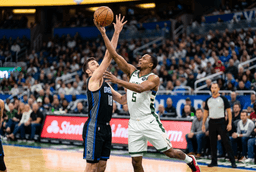
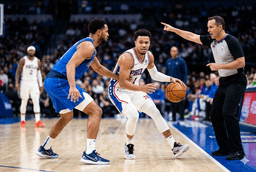
When an NBA player attacks the basket, collisions often happen. Deciding if it’s a charge on the offense or a blocking foul on the defense is one of the toughest calls for referees. They look closely at what the secondary defender does and whether that player gets into a legal position. Knowing how these decisions are made in real time helps explain how the NBA block/charge rule works during games.
The outcome of these fast-paced plays depends on specific NBA block/charge rules. The rules separate the primary defender, who guards the ball handler first, from the secondary defender, who usually comes over to help. The secondary defender steps in after the offensive player gets past the first defender. Both roles are important in deciding block or charge calls.
Secondary defenders have to meet tougher standards than primary defenders to draw a charge. Knowing these different requirements is key to understanding block and charge calls.
The Role of the Help-Side Rotation
Most of the time, the secondary defender is a center or power forward who steps in quickly when a teammate gets beaten. Their job is to rotate and set up a legal barrier between the offensive player and the basket. If they get there late or are still moving sideways when contact happens, it’s almost always called a blocking foul.
Because these plays happen so fast, the rule is very important. The secondary defender has to get their body in front of the driver before the offensive player starts going up for the shot. If the defender is in the air or still moving sideways when they make contact, the call usually goes in favor of the offense.
The Impact of the Restricted Area
The NBA added the "restricted area," a four-foot arc under the basket, which changed things for secondary defenders. This arc limits where and how they can try to draw a charge, helping keep players safe and the game moving smoothly.
According to NBA rules, a secondary defender cannot draw a charge if their feet are inside or touching the restricted area line. Even if they are set and not moving, any contact will be called a blocking foul unless the offensive player makes an extremely violent or unnatural move. In that rare case, a charge can still be called no matter where the defender is standing.
Legal Marketing Position and Movement
To avoid being called for a block, a secondary defender has to get to the spot before the offensive player and set up legal position. This means being still, with both feet on the floor, and facing the opponent before the shot starts. Once set, the defender can jump straight up but cannot move into the path of the driver.
This rule is hard for referees to judge. Even with video replay, it can be tough to see if the defender was set before the offensive player picked up the ball or if they were still moving sideways. If the secondary defender moves into the offensive player when they collide, the defense gets called for the foul.
The Difficulty of Officiating the Secondary Defender
In the end, the rule about secondary defenders is meant to keep the game fair. It rewards good help defense but also protects offensive players who have already gotten past their first defender.
The difference between primary and secondary defenders is key to NBA block/charge rules. Primary defenders can keep their position and move with the offensive player. Secondary defenders, on the other hand, have to rotate into place and meet stricter rules. They must get there before the shot starts and be fully set to draw a charge. This way, only good, timely help defense is rewarded, not late or unsafe plays.
Stay on top of every fast break and buzzer-beater with TigerScores, your home for live NBA and college hoops updates. From real-time box scores to season-long player stats, we provide the essential data every basketball fan needs to follow the game.


PVL Attendance Records: Volleyball’s Rise in the Philippines
Greatest Premier League Comebacks of the 2020s
The High-Risk Rewards of the Sweeper Keeper
NBA Block/Charge Rules: The Secondary Defender Guide
NBA Bird Rights and Cap Exceptions Explained
UCL Semi-Final Tactics: Key Strategic Matchups
Pampanga Stats: Evaluating the Reigning MPBL Champs
Haaland vs Mbappe Stats: The 2026 Golden Shoe Race
How the PBA 4-Point Rule Reshaped the Scoring Meta
Magnolia, Converge Seek Clarity in Key PBA Matchup