Understanding the Backcourt Violation in Basketball
Basketball is a fast-paced game that combines strategy, athletic skill, and clear rules. Fans, players, and coaches all benefit from knowing the details of the rulebook. One important set of rules covers how teams move the ball from defense to offense, which helps keep the game fair and exciting.
Understanding backcourt violation rules is important for managing the game. These rules encourage teams to keep their offense moving and stop them from stalling. They define where the offense can play, set a time limit for crossing midcourt, and divide the court into 'frontcourt' and 'backcourt.'
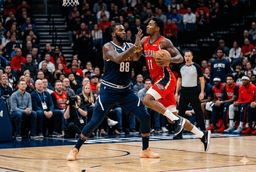
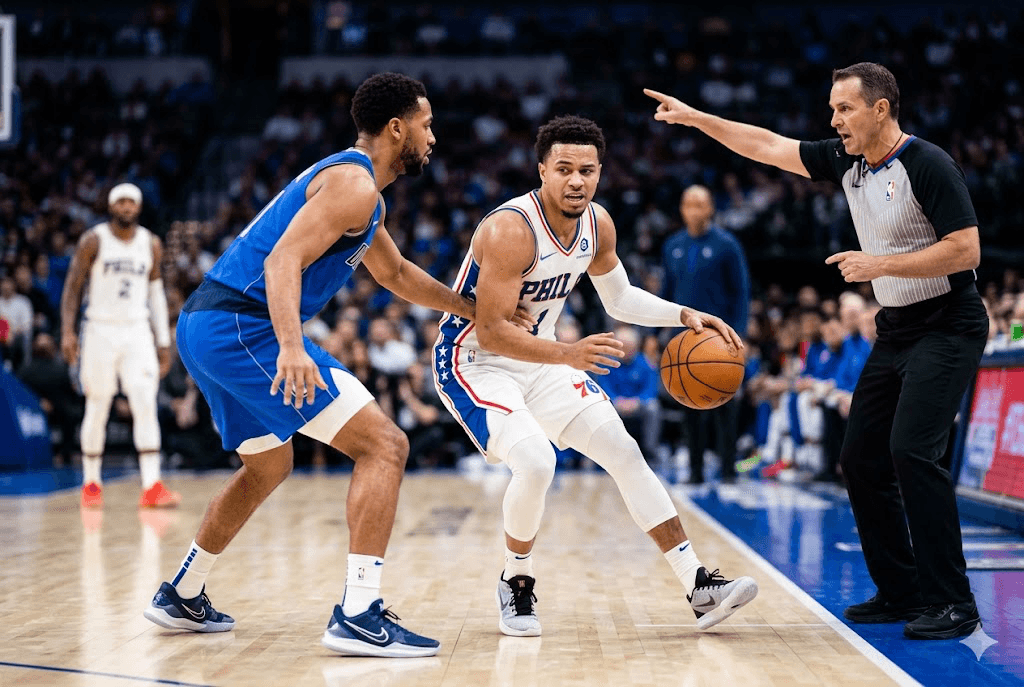
Learning these rules, which are explained in basketball guides, helps you understand why some plays lead to turnovers while others do not. The picture below from a major game shows an example of this rule in action.
The Fundamentals: Backcourt and Frontcourt
To understand a backcourt violation, you need to know the court’s sections. The backcourt is the half with the opponent’s basket, while the frontcourt is the half with the basket your team is attacking. The midcourt line is the thick stripe in the middle that separates the two sides.
The midcourt line counts as part of the backcourt. A player must move both feet and the ball fully over the line to be in the frontcourt. Once this happens, the backcourt is closed, and new rules take effect.
The 8-Second Rule: Advancing the Ball
In professional leagues like the NBA, the offense is timed. When a team gets the ball in its backcourt, it has eight seconds to move the ball past midcourt into the frontcourt. If they do not make it in time, the referee calls an 8-second violation and the team loses possession.
This rule has a few goals. It pushes teams to play quickly, stops the offense from holding the ball too long, and keeps the game moving fast. The 8-second count is also a key moment for strategy, as defenses often press hard to disrupt the offense and force mistakes.
Backcourt Violations after Frontcourt Possession
Another common situation happens after a team crosses midcourt into the frontcourt. Once they are there, they cannot bring the ball back into the backcourt.
A backcourt violation happens if two things occur at once: the offensive team is the last to touch the ball in the frontcourt, and then a player from that team is the first to touch it in the backcourt before any defender does.
So, if the ball is in the frontcourt and an offensive player is the last to touch it before it crosses back over midcourt, and then the same team gets it in the backcourt without a defender touching it, that is a violation.
This means a player cannot dribble from the frontcourt back over the midcourt line or pass the ball from the frontcourt to a teammate in the backcourt. If a player jumps and catches the ball, whether they are in the frontcourt or backcourt depends on where they last touched the floor and where they land.
If the defense knocks the ball into the backcourt, the offense can recover it without a penalty. In this case, the defense was the last to touch the ball in the frontcourt, so the backcourt rule does not apply. The 8-second clock does not reset; the offense keeps whatever time was left, unless they just got the ball.
The Penalty and Game Impact
If a backcourt violation occurs, it counts as a turnover. The other team gets the ball and puts it back in play at the spot closest to where the violation happened, unless the league uses a different rule.
Backcourt violations are important moments in a game. For the offense, they mean lost chances to score and can stop a team’s momentum. One backcourt turnover late in a close game can change the outcome. For the defense, causing a violation, especially with an 8-second count or by forcing a bad pass, is both a mental and tactical win. It can excite the crowd and boost defensive energy.
Critical Lines and Consistent Flow
Anyone who follows basketball should understand backcourt violation rules. These rules set the zones for play, enforce time limits, and keep the offense moving. The midcourt line and the 8-second clock add strategy, requiring players to control the ball carefully and stay aware of the situation. When teams master these rules, the game flows better, and fans can appreciate the excitement and order of professional basketball.
TigerScores provides a comprehensive look at the sports world with live results, detailed player analytics, and the latest trending news. Browse our website to access a complete database of scores and stats designed to keep every fan fully informed and engaged.

PVL Attendance Records: Volleyball’s Rise in the Philippines
Greatest Premier League Comebacks of the 2020s
The High-Risk Rewards of the Sweeper Keeper
NBA Block/Charge Rules: The Secondary Defender Guide
NBA Bird Rights and Cap Exceptions Explained
UCL Semi-Final Tactics: Key Strategic Matchups
Pampanga Stats: Evaluating the Reigning MPBL Champs
Haaland vs Mbappe Stats: The 2026 Golden Shoe Race
How the PBA 4-Point Rule Reshaped the Scoring Meta
Magnolia, Converge Seek Clarity in Key PBA Matchup