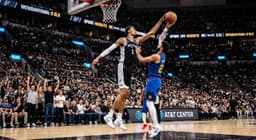
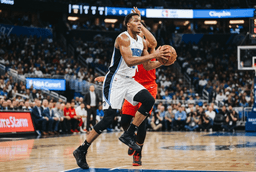
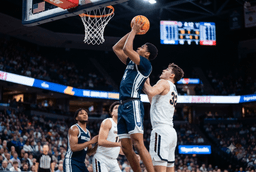
Mastering Defensive Rebounding Technique: The Analytics, Art, and Drills of Board Control
Defensive rebounding is rarely about luck. While athleticism certainly plays a role, the primary determinant of success under the basket is a disciplined defensive rebounding technique. Securing the ball after an opponent’s miss requires precise anticipation, physicality, and, most importantly, superior positioning. For players looking to elevate their game and fans wanting to decode the advanced metrics of modern basketball, grasping the geometric angles of boxing out is essential. It is the fundamental skill that separates average defenders from elite rim protectors who command absolute basketball board control.
Establishing Early Contact: The Physics of the Box Out
The battle for the rebound begins not when the ball hits the rim, but the moment it leaves the shooter's hands. Elite defenders do not wait to see if the shot goes in; they immediately locate their assignment. This initial contact is crucial. Establishing a wide base and making immediate body contact with the opponent prevents them from getting a running start toward the basket. Modern masters of positioning—like Josh Hart (who consistently ranks among top guard rebounders) and Domantas Sabonis—prioritize identifying their man over watching the ball flight.
Once contact is made, the defender must maintain it while pivoting. This is where many players fail. They make initial contact and then release the opponent to watch the ball. Instead, a player executing proper defensive rebounding technique must keep an arm bar or their back against the offensive player, feeling their movement. This tactile awareness allows the defender to adjust their position without losing sight of the shot's trajectory.
The Geometry of Boxing Out and Basketball Board Control
Boxing out is essentially establishing legal physical leverage. The goal is not just to face the basket, but to turn and seal the opponent, creating a literal wall between them and the ball to maintain basketball board control. The proper execution involves a reverse pivot, stepping back into the opponent while maintaining a low, powerful center of gravity.
A common misconception is that the box out should always be a direct, head-on collision. In reality, it is entirely about angles:
Strong-Side Angles: If an offensive player is positioned on the strong side, the defender must use their body to angle them further under the basket or push them toward the baseline.
Momentum Leverage: This narrows their path to the ball and maximizes the defender’s rebounding radius.
The Jokić Effect: Elite centers like Nikola Jokić study these angles meticulously, understanding exactly how to leverage their hips against an opponent’s forward momentum to render a taller, higher-jumping athlete completely ineffective.
Rebound Anticipation Strategies: Reading the Rim
While technique is vital, data-driven anticipation separates the good rebounders from the great. Implementing advanced rebound anticipation strategies requires understanding how the origin of the shot dictates the physics of the bounce. Statistical tracking shows that the angle of the shot largely determines where the rebound will land. A shot taken from the corner, for instance, has a high probability of resulting in a "long rebound" that bounces out toward the top of the key or the opposite corner.
Shot Origin vs. Rebound Trajectory Quick-Reference
| Shot Location | Expected Rebound Trajectory | Defensive Positioning Strategy |
|---|---|---|
| Corner 3-Pointer | Long carom to the opposite corner / top of the key | Box out deep, prepare to release early for a long chase. |
| Top of the Key | Short, vertical drop directly into the paint | Establish deep base under the rim; prioritize vertical space. |
| Baseline Mid-Range | High arching, off-side rim bounce | Use hip leverage to push the offensive player under the backboard stanchion. |
Conversely, shots taken from the top of the key often result in rebounds that drop directly back into the "paint" area near the basket. Understanding these statistical probabilities allows a defender to release their box out at the exact micro-second required to pursue the ball. However, this release should only occur once the defender has successfully impeded the opponent’s path.
Essential Basketball Boxing Out Drills
To translate these geometric concepts and rebound anticipation strategies into muscle memory, players must move past theory. Integrating specific basketball boxing out drills into regular practice routines builds the physical habits required to dominate the glass.
1. The Bubble Drill (Focus: Sustained Contact)
Setup: Three defenders position themselves inside the paint facing three offensive players on the perimeter.
Execution: A coach or player fires a shot from the top of the key. The moment the ball leaves the hands, defenders must locate their man, execute a reverse pivot, and hold the box out.
The Rule: No one is allowed to touch the basketball until it bounces twice. This forces defenders to sustain physical contact rather than releasing early to hunt the ball.
2. The Wall-Seal Drill (Focus: Leveraged Hips)
Setup: A defender and an offensive player stand block-to-block along the key.
Execution: The coach throws an intentionally missed floater off the backboard. The defender must step up, use their hips to seal the offensive player deep under the rim stanchion, and extend their arms vertically at the apex of their jump.
Coaching Point: Focus on maintaining a low, wide base. If the defender stands up straight, they lose their leverage.
Controlling the Glass: The Ultimate Competitive Edge
Rebounding positioning is a relentless pursuit of leverage, physics, and angle. It is a grueling skill that demands constant physical engagement and mental focus. Players who master these basketball boxing out drills and strategic principles become invaluable to their teams, consistently ending defensive possessions and creating instant transition opportunities. Understanding the geometry of the box out is the first step toward dominating the boards. It is the fundamental difference between simply being on the court and truly controlling it.
Stay on top of every fast break and buzzer-beater with TigerScores, your home for live NBA and college hoops updates. From real-time box scores to season-long player stats, we provide the essential data every basketball fan needs to follow the game.


Vintage Philippine Hoops: The Golden Era of Philippine Basketball History
Mastering Defensive Rebounding Technique: The Analytics, Art, and Drills of Board Control
Paolo Banchero Stats: Projecting the Magic Star's Offensive Load
UEFA Squad Cost Ratio Explained: 2026 Financial Sustainability Rules & Team Impact
Early Season Football Shocks: European League Surprises and Flops
Pep Guardiola Tactics: How Erling Haaland Transformed Manchester City’s Striker Role
Real Madrid vs Real Sociedad Analysis: Mbappé Hat-Trick Dominates La Liga Opener
Navigating NBA Salary Cap Strategy: Luxury Tax Thresholds & Second Apron Penalties Explained
PBA Roster Updates: How Governors' Cup Injuries Are Reshaping Team Rotations
PBA Finals Game Winners & Historic Basketball Moments: The Ultimate Guide to Iconic Buzzer-Beaters