NBA Roster Rules: Understanding Two-Way Contract Salary & G League Player Development (2026-27)
The landscape of professional basketball is constantly evolving, driven by the Collective Bargaining Agreement (CBA) between the league and its players. For the 2026-27 NBA season, masterfully navigating NBA roster rules remains vital for team success. Among these mechanisms, the two-way contract serves as a crucial bridge between developmental systems and the sport's highest level. Understanding two-way contract salary mechanics, cap implications, and G League player development is essential for grasping how modern franchises master basketball talent management in an increasingly competitive environment.
NBA Roster Rules: How Two-Way Contracts Function
A two-way contract allows a player to provide services to two distinct teams under one umbrella: an NBA parent club and its designated NBA G League affiliate (such as the Santa Cruz Warriors or South Bay Lakers). Unlike standard player contracts, which occupy full roster spots and carry guaranteed cap figures, two-way deals are designed specifically for roster flexibility.
Key Roster Parameters for 2026-27
Roster Allocation: Teams can sign up to three two-way players alongside their traditional 15-man active roster (for an 18-player total maximum).
Game Limitations: Two-way signees are eligible to be active for up to 50 regular-season NBA games. They spend the remainder of their time practicing, traveling, and playing in the G League.
Service Time Eligibility: These slots are reserved exclusively for players with fewer than four years of NBA service time (i.e., entering their 1st, 2nd, 3rd, or 4th season). This ensures the mechanism serves its core intent: nurturing young prospects rather than housing veterans on discounted rates.
Under-15 Roster Restriction: If a team is carrying fewer than 15 players on standard contracts, its two-way players are restricted to a combined maximum of 90 "under-15" games on the active roster.
Two-Way Contract Salary and Salary Cap Breakdown
One common point of confusion among fans involves how two-way players are paid under the current CBA. Unlike earlier league structures that used split daily rates between the NBA and G League, modern guidelines use a standardized compensation model.
1. Flat Salary Rate
For the 2026-27 season, a two-way contract salary pays a flat rate equal to exactly 50% of the minimum NBA salary for a player with zero years of experience, which equals $678,882. A player receives this fixed salary regardless of how many days they spend in the G League versus the NBA active roster. If a player signs a two-way deal mid-season, their compensation is prorated based on the remaining calendar days left in the regular season.
2. Salary Cap and Luxury Tax Exemption
For general managers, the greatest advantage of a two-way contract is its financial neutrality. Two-way salaries do not count against the NBA salary cap or luxury tax thresholds. In an era dominated by strict luxury tax aprons, securing high-performing depth that carries a $0 salary cap hit is one of the most effective tools in modern front-office management.
Comparing Roster Types: 2026-27 Season
| Feature | Standard NBA Contract | NBA Two-Way Contract |
|---|---|---|
| Max Roster Slots | Up to 15 players | Up to 3 players |
| 2026-27 Pay Rate | Min. ~$1.35M+ (0 yrs exp) | Flat $678,882 |
| Salary Cap / Tax Hit | Full cap hit | $0 (Completely Exempt) |
| NBA Active Game Limit | 82 regular-season games | Max 50 regular-season games |
| Playoff Eligibility | Eligible | Ineligible (Unless converted) |
The Role of G League Player Development
Effective G League player development is no longer an afterthought; it is an essential pipeline for championship-caliber teams. Franchises use their G League affiliates to run identical offensive and defensive schemes to the parent club, allowing prospects to build muscle memory and chemistry before making their NBA debut.
Transitioning from Developmental Prospects to NBA Stars
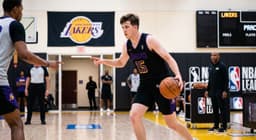
History shows that two-way contracts frequently produce high-impact rotational talent and core starters. Notable success stories include Austin Reaves (Los Angeles Lakers), who was originally signed to a two-way deal before having his contract converted prior to his breakout rookie campaign, Jose Alvarado (New Orleans Pelicans), who leveraged elite defensive intensity on a two-way deal to lock down a permanent rotation spot, and players like Lu Dort (Oklahoma City Thunder) and Naz Reid (Minnesota Timberwolves), who used developmental pathways to transform from undrafted prospects into long-term core pieces and award winners.
Playoff Conversion Deadline Rules
Crucially, players on two-way contracts are not eligible to participate in the NBA playoffs or Play-In tournament. If a two-way player proves vital to a team's success during the regular season, the franchise must convert their deal into a standard NBA contract before the final day of the regular season to make them postseason-eligible.
Strategic Basketball Talent Management for NBA Franchises
From an operational perspective, proactive basketball talent management requires managing calendar deadlines and roster slots with precision throughout the year:
January 7–10 Guarantee Lock: All standard and two-way contracts become fully guaranteed for the remainder of the season if the player remains on the roster past this early-January window.
March 4 Signing Deadline: March 4 marks the final day of the regular season that a team can sign a player to a two-way contract.
Pre-Playoff Conversion Window: Front offices holding open spots on their 15-man roster will typically convert their top two-way performer onto a multi-year standard contract right before the postseason begins.
The two-way contract is a low-risk, high-reward ecosystem. It protects developmental assets from rival teams, offers young players professional compensation and elite coaching, and provides parent teams with financial relief under tight CBA salary constraints.
The Future of Roster Construction
As teams navigate the 2026-27 campaign, the skill with which front offices manage two-way player slots will heavily influence both regular-season depth and long-term roster sustainability. Fans should expect a steady flow of talent shuttling between G League arenas and primary NBA floors—a direct reflection of how vital developmental pipelines have become to modern basketball strategy.
Stay on top of every fast break and buzzer-beater with TigerScores, your home for live NBA and college hoops updates. From real-time box scores to season-long player stats, we provide the essential data every basketball fan needs to follow the game.


Mastering Volleyball Setting Techniques: Setter Distribution Strategy & Tempo Tactics
Erling Haaland Goals & European Campaign Preview: Manchester City Striker Targets Glory
Terrafirma Dyip Roster vs Macau Giant Pandas Match: PBA International Game & Basketball Showdown Analysis
NBA Roster Rules: Understanding Two-Way Contract Salary & G League Player Development (2026-27)
Inside Luka Dončić's Historic Usage Rate & Offensive Creation
Basketball Fundamentals: Master the Box Out Technique & Defensive Rebounding Drills
Lamine Yamal Stats & Development: How Barcelona Protects Its Premier Young Talent
The Evolution of Anthony Edwards: How His Playmaking Transforms the Minnesota Timberwolves Offense
UEFA Champions League Draw Analysis: League Phase Fixtures & Contenders
Decoding the Game: What is Net Rating in Basketball Analytics?