Basketball Rebounding Technique & Drills: Mastering Glass Control
Possession changes instantly when a shot hits the rim. While scoring often grabs the headlines, securing the missed shot remains the defining action of defensive basketball. Elite rebounding positioning separates championship-caliber teams from average ones. It is not merely about hustle or vertical leap; it is a precise calculation of angles, leverage, and timing.
Whether you are a player refining your skill set or a coach building a modern defensive system, mastering the fundamentals of defensive rebounding is non-negotiable. This comprehensive guide breaks down physical mechanics, court geometry, spatial tracking data, and actionable practice drills.
1. Mastering Boxing Out in Basketball: Sealing Your Opponent
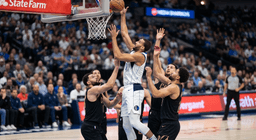
The fight for the rebound begins the moment the opposing player releases the ball. Defenders cannot wait to see if the shot goes in; they must immediately transition from guarding their man to securing space.
The primary objective is simple: establish a barrier between the opponent and the basket. Successful execution of boxing out in basketball relies heavily on footwork, leverage, and immediate body contact.
The Four Steps of a Flawless Box-Out
Step 1: Locate & Make Contact. Do not back up into the offensive player. Step into them with your forearm or chest to absorb their momentum and establish your footprint.
Step 2: Pivot and Seal. Execute a crisp front or reverse pivot to turn your back to the opponent. Use your hips and broad back as an immovable wall.
Step 3: Maintain a Wide Base. Keep your feet wider than shoulder-width, lower your center of gravity, and hold your hands high at shoulder level to prevent over-the-back fouls while keeping a wide seal.
Step 4: Pursue Ball at Highest Point. Secure the rebound forcefully with a two-handed snatch at peak height.
2. The Critical Angles of Pursuit: Reading Shot Trajectories
Once contact is initiated, the defender must read the trajectory of the ball. Understanding basketball rebounding technique requires a firm grasp of court geometry and spatial analytics. The distance and angle of the shot dictate the location of the bounce.
Spatial Tracking Insight: Modern optical tracking data shows that approximately 70% of missed corner jump shots rebound to the opposite (weak-side) key, while short-range paint attempts yield immediate, vertical bounces.
| Shot Location | Primary Rebound Trajectory | Strategic Positioning Objective |
|---|---|---|
| Corner 3-Pointer | Weak-Side Elbow / Paint (Long Rebound) | Seal opponent, then carve out weak-side lane space. |
| Top of the Key | Free-Throw Line Extended / Long Bounce | Box out wide; guards must crash back to secure high bounces. |
| Wing Jump Shot | Opposite Wing / Opposite Block | Carve out angle leverage across the rim midline. |
| Paint / Layup Miss | Immediate Rim Proximity (Short Bounce) | Hold strict low-post box-out seal; jump vertically. |
Elite rebounders continuously adjust their positioning relative to the rim and their opponent. If an offensive player attempts a swim move or spin around your seal, move your feet to stay on their chest line—never let them get between you and the rim.
3. Essential Defensive Rebounding Drills for Practice
To convert technical theory into automatic muscle memory, coaches and players must integrate high-repetition defensive rebounding drills into their training schedule.
Drill 1: The War Drill (Contact & Seal Discipline)
Setup: Place three defenders inside the key facing three offensive players on the perimeter.
Execution: The coach shoots from the wing. On release, defenders must call out "Shot!", turn, locate their assignment, make physical contact, and hold a box-out seal for 3 full seconds.
Coaching Cue: "No ball retrieval until the whistle blows—prioritize holding the seal over chasing the ball."
Drill 2: Weak-Side Trajectory Pursuit
Setup: Position a shooter on the left corner and a defender starting on the right defensive block.
Execution: The shooter intentionally misses off the back iron. The defender must read the long angle, sprint to the weak-side elbow spot at the apex, catch the ball at peak height, and chin the ball securely.
Coaching Cue: "Read the flight path early and attack the high point."
Drill 3: 2-on-2 Shell Rebounding
Setup: Two offensive players at the top and wing, guarded by two defenders in proper shell positioning.
Execution: Offense passes twice before taking a shot. Defenders must execute dynamic rotation, close out under control, box out, and capture the board without allowing a second-chance point.
Coaching Cue: "Close out with high hands, absorb contact low."
4. Securing the Ball at the Apex and Clearing Traffic
Establishing superior rebounding positioning is only half the battle. The final step is securing the possession cleanly.
Many players lose rebounds because they attempt to catch the ball at eye level or as it falls toward the waist. This allows active perimeter players to poke the ball loose from behind.
Key Execution Rules
Attack at the Highest Point: Jump vertically with both arms fully extended. Snatch the ball forcefully with two hands at the absolute peak of your jump.
Chin the Ball: Upon landing, bring the ball instantly to your chest with elbows flared outward. Never bring the ball down to your waist where perimeter guards can strip it.
Pivot and Outlet: Pivot away from defensive pressure immediately and look up-court to trigger a fast break or clear the ball to your point guard. Note that under modern shot-clock rules (resetting to 14 seconds on offensive boards), rapid transition decisions off defensive stops are more critical than ever.
5. Daily Checklist for Controlling the Glass
Consistently controlling the glass is the hallmark of elite teams. Use this tactical summary during team film sessions and individual workouts:
React on Release: Move the instant the ball leaves the shooter's hand.
Find & Make Contact: Touch your opponent before pivoting to establish position.
Own Your Space: Stay broad, keep your center of gravity low, and keep your hands ready.
Calculate the Angle: Anticipate long rebounds from long shots (especially corner 3-pointers).
High-Point the Catch: Grab the ball at full extension with two hands and chin it firmly.
By committing to these fundamental positioning habits and running disciplined defensive rebounding drills daily, any team can transform their frontcourt into a dominant rebounding force.
Stay on top of every fast break and buzzer-beater with TigerScores, your home for live NBA and college hoops updates. From real-time box scores to season-long player stats, we provide the essential data every basketball fan needs to follow the game.


Shai Gilgeous-Alexander Offseason Blueprint: How the NBA MVP Candidate Trains
Lamine Yamal Stats: How Opposing Defenses Are Tracking Barcelona’s Star
Classic PVL Out-of-Town Matches: A History of Provincial Volleyball in the Philippines
Evaluating NBA Draft Lottery Protections: Front Office Trade Strategy and Roster Construction
Mastering the Jump Float Serve: Volleyball Float Serve Mechanics & Guide
The Commercial Rise of Philippine Volleyball: PVL Professionalization and Industry Growth
Macau Giant Pandas vs. San Miguel Beermen Post-Match Analysis: PBA Governors' Cup Review
Paolo Banchero Usage Rate & Scoring Efficiency: Orlando Magic Stats Analysis
TNT vs Titan Ultra: Post-Match PBA Analysis & Key Takeaways
Breaking the Press: Master Football Build-Up Phase Tactics