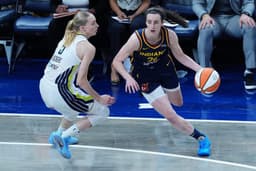
The Clark Effect: How Caitlin Clark’s Range Changed WNBA Defense
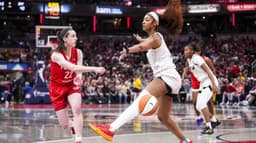
WNBA coaches are dealing with a new defensive challenge, and it’s all because of Caitlin Clark. Since joining the league, her ability to shoot from far beyond the three-point line has changed how teams defend. Now, teams can’t stick to their usual strategies when playing the Indiana Fever. It’s not just about stopping one player from scoring—her presence changes how the whole defense has to play.
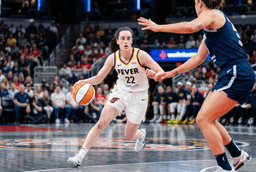
Every game shows how teams adjust their strategy as soon as Clark crosses half-court. Now, defenders have to guard her near the logo, not just at the three-point line. Fans watching WNBA games can see that the results often depend on how well teams handle these bold new tactics. If a defense hesitates, they pay the price.
Clark’s ability to shoot from deep gives her what coaches call "extreme gravity." Since she’s so accurate from 30 feet out, defenses have to pay attention to her as soon as she crosses midcourt. She changes the way the court is used, unlike most three-point shooters. When teams double-team or blitz her far from the basket, it pulls the defense out of shape.
Reconfiguring the Geometry: The End of "Drop" Coverage
The first thing to go because of the Clark effect is the usual "drop" coverage on pick-and-rolls. In this setup, the defender guarding the screener drops back near the basket to protect the rim, making the ball-handler take a tough mid-range shot or a risky pass. This works well against most shooters. But against Clark, using drop coverage is a big mistake.
If the main defender tries to get over the screen, which is the usual response, but the second defender drops back, Clark just steps back or uses the space to take an open 28-foot shot. She makes these long shots with the same confidence and accuracy as if she were practicing layups. Because of this, WNBA defenses have to try tougher options:
• Showing and Recovering: The defender guarding the screener has to step out past the screen to challenge Clark’s deep shot, making the main defender race back to get in position. This takes top-level teamwork and endurance.
• Trapping or Blitzing: Both defenders rush at Clark as soon as the screen is set, trying to make her give up the ball early. The team then counts on the other three defenders to rotate fast enough to cover the rest of the offense. This gives the offense a brief 4-on-3 advantage somewhere else on the court.
• Switching Everything: Now, even tall forwards and centers have to guard Clark 30 feet from the basket, which often works in her favor because she’s quick with the dribble and step-back.
The Ripple Effect: Space for Others
Clark changes the way her teammates move on the court, both side-to-side and up-and-down. When two defenders follow her 35 feet from the basket, big open lanes appear. Her great passing skills help turn those openings into easy scoring chances for the Fever.
Forwards who cut to the basket often find themselves wide open because the other team’s center has to step out and guard Clark on a high pick-and-roll. Other Fever shooters also get more space, since defenders are slower to help and don’t want to leave Clark open, even for a moment. The offense gets tougher to defend because teams have to rethink their usual help defense just for her.
Redefining Defensive Urgency
This change isn’t just about strategy—it also makes WNBA defenses work harder, both physically and mentally. With Clark on the floor, defenders never get a break. They can’t relax or take it easy when running back on defense.
Teams have to be perfect in transition defense. If they lose track of Clark for even a second, she’ll get an open three-pointer before the defense is ready. Staying alert like this all game wears players down, both mentally and physically.
Now, teams practice defending way beyond the three-point line. They work on switching 30 feet from the basket and having guards fight through screens near the logo. There’s no room for mistakes.
The New Defensive Paradigm in the WNBA
WNBA defenses are still adjusting. Instead of trying to completely stop Caitlin Clark, teams now focus on containing her and making her work for every shot. This kind of change has happened in other leagues when a special player changes how the game is played. Defending just the three-point line isn’t enough anymore. Now, teams have to start their defense much farther from the basket, which really tests their stamina, teamwork, and planning. In the long run, every player will need to be able to defend more space than ever before.
Stay on top of every fast break and buzzer-beater with TigerScores, your home for live NBA and college hoops updates. From real-time box scores to season-long player stats, we provide the essential data every basketball fan needs to follow the game.


51-Point Explosion: Dončić Reveals Buzelis’ Trash Talk Lit Him Up
Cade Cunningham on MVP chatter: “It means everything to me”
What Is WASL Basketball And Why Are Fans Following It Closely?
Will the Favorite Fall? Pistons vs. Grizzlies – Suspense Until the Final Buzzer
Serie A Data Drop | Udinese vs Juventus - Over 2.25 Goals? Let’s Crunch the Numbers!
La Liga Hot Take | Real Madrid vs Elche - Data Overload Alert!
Pep Guardiola hails one ‘incredible’ Real Madrid star after UCL clash
Mastering the PVL Challenge: Strategy and Impact
Titan Ultra Giant Risers Impress in Debut Win Over Terrafirma
Vinicius Jr.: Is He the Modern-Day Ronaldinho?