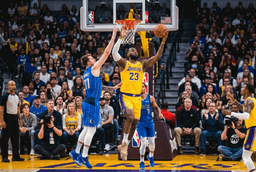
Does Scoring Efficiency Stats Still Define Success in the NBA?
Many people use basic stats to judge NBA success, but the connection between individual awards and team wins isn’t always clear. Big scoring games get a lot of attention, so it’s easy to think that more points always lead to more wins. Since teams now focus more on three-point shots, it can seem like the team with the best scorers will always win the championship.
However, advanced stats show that the story is more complex. Scoring a lot of points isn’t enough on its own. Winning teams not only score, but do so efficiently and make the most of each possession. A star who scores 40 points is impressive, but if it takes too many shots or disrupts the team’s flow, it might not help the team win.
This difference is clear when you look at live NBA scores during the long regular season. In close games, teams that can run high-percentage plays under pressure stand out from the rest. Instead of just counting points, it’s important to see how effectively those points are created within the team’s offense.
The Evolution of the Effective Field Goal
For many years, field goal percentage (FG%) was the main way to measure a player’s shooting accuracy. But this stat doesn’t show the extra value of three-point shots. Now, with more focus on analytics, coaches and team managers look at Effective Field Goal Percentage (eFG%) and True Shooting Percentage (TS%) instead.
Effective Field Goal Percentage (eFG%) adjusts regular FG% to show that a made three-pointer is worth one and a half times more than a made two-pointer.
True Shooting Percentage (TS%): Often considered the ultimate measure of efficiency, TS% factor in field goals, three-point field goals, and free throws.
These advanced stats help show a clearer picture of a player’s impact on offense. For example, a guard who shoots 42% but makes a lot of three-pointers can be more valuable and efficient than a big man who shoots 52% but only takes two-point shots. Teams that focus on players with high eFG% and TS% are usually better at keeping a strong offense throughout the long season.
The Myth of the Volumetric Scorer
Even though top scorers get a lot of attention, many high-volume scorers haven’t led their teams to playoff success. NBA scouts call these players “empty calories” scorers. These are players who put up big numbers, often 25 or 30 points per game, but do it with low efficiency and usually play for teams that lose more than they win.
According to Harvard Sports Analysis Collective, there isn’t always a direct link between a player’s high usage rate, or the share of team plays they use, and the team’s winning percentage. Relying too much on one big scorer can make an offense predictable and easier to stop in a playoff series. The best offenses are balanced, using a star’s presence to open up easy chances for teammates instead of depending only on that player to create shots against tough defenses.
Balancing Pace, Possession, and Production
A team’s scoring totals often depend on their pace, or how many possessions they have each game. Teams that play fast will score and give up more points than teams that play a slower, half-court style. To measure offense more fairly, analysts use Offensive Rating, which shows how many points a team scores per 100 possessions.
Modern teams win by playing both fast and efficiently. The aim is to get as many possessions as possible and score as much as possible on each one. Teams do this by moving the ball, finding mismatches, and focusing on the best shots, like layups, dunks, and corner threes.
Advanced stats have completely changed how people look at pro basketball. You can’t judge a player just by their points per game anymore. Teams now use detailed data to see how, where, and how efficiently players score within the team’s system.
Defining What Truly Wins in the Postseason
Scoring a lot in the regular season is fun to watch, but winning when it counts takes real efficiency. The teams that compete for championships know how to get good shots, avoid turnovers, and make the most of every possession on offense and defense. Big scoring numbers might make the highlights, but smart, efficient play is what wins titles. In the end, it’s not about who scores the most, but who scores the smartest.
TigerScores provides a comprehensive look at the sports world with live results, detailed player analytics, and the latest trending news. Visit our website to access a complete database of scores and stats designed to keep every fan fully informed and engaged.


Atlético Madrid to meet Tottenham Hotspur in Champions League last 16
Barcelona vs Villarreal: La Liga – preview, team news, start, lineups
Ayo Dosunmu escaped one of the biggest tank jobs of the NBA season
Casio, Wilson Shore UP MPBL Relaunch of Basilan
Aston Villa: Premier League title dreams over as Unai Emery tries to salvage top-five hopes
PBA: Rensy Bajar to call shots for Titan Ultra beginning Commissioner's Cup
Ishie Lalongisip, Cignal look to keep top spot in PVL All-Filipino vs Akari
McCain Continues Hot Streak: 6-of-8 for 14 Points in Thunder’s 127-121 OT Win Over Nuggets
Tatum Sidelined 41 Weeks, Celtics-76ers Game Moved Fueling Return Speculation
Tatum Sidelined 41 Weeks, Celtics-76ers Game Moved Fueling Return Speculation