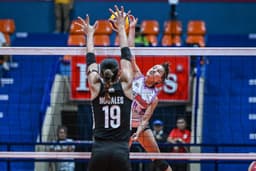
A Fan's Guide to PVL Stats 101: Understanding Excellent Sets, Digs, and Attack Percentage
Every spike and save in a Premier Volleyball League (PVL) match is tracked by a team that records the stats shaping how we see player performance. The final score tells us who won, but the stats show us how. For coaches, scouts, and fans who want to really understand the game, these numbers are key. This PVL Stats 101 guide breaks down the most important stats you'll find on the scoresheet.
To understand PVL stats, start with the basics: Excellent Sets, Digs, and Attack Percentage (or Efficiency). These stats show how teams set up attacks, defend, and score. Learning what they mean will change how you watch matches and help you notice the details that separate good teams from great ones. Let's begin by looking at how offenses are built.
The Architecture of the Offense: Excellent Sets
A great setter is like the 'quarterback' of a volleyball team, running the offense with skill. The main stat for this position is the 'Excellent Set.' This means a set—an overhead pass to an attacker—that either leads directly to a kill or gives the hitter a good chance to score.
An Excellent Set combines the right spot, height, and speed, so the attacker can swing hard with little resistance from blockers. When a setter delivers a great ball, the defense has to react quickly. This stat shows how well a setter helps their team score and make good decisions under pressure. It's the main way to measure a playmaker's impact.
Defining Defensive Grit: The Dig
Spikes may get the attention, but matches are often decided by defense. A 'Dig' is the play that stops an opponent’s attack from hitting the floor. Not every defensive touch counts as a dig on the PVL stats sheet.
A 'Dig' is recorded when a player successfully handles an opponent’s attack—like a spike, tip, or hard-hit ball—and keeps the play going so their team can counterattack. Receiving a free ball (just bumped over) doesn’t count as a dig. High dig numbers show quick thinking, fast reflexes, and great court coverage. This stat is key for judging defensive specialists and liberos, who work hard to keep rallies alive.
Measuring Scoring Efficiency: Attack Percentage
Offensive stats need context. A hitter with 15 kills might look impressive, but if they also have 12 errors and five blocks, their impact is less. Attack Percentage (Hitting Efficiency) gives a clearer picture and is the best stat for judging attackers.
Attack percentage = (Kills - Errors) / Total Attempts.
• A Kill is an attack that earns a point.
• An Error is an attack that lands out of bounds (outside the court lines), goes into the net, or results in a rule violation (such as illegal contact or crossing the center line).
• Total Attempts (TA) is the sum of kills, errors, and 'zero attacks' (attacks that are successfully returned by the defense and kept in play, but do not result in a point).
Importantly, when the defense digs the ball, it counts as an 'attempt,' which can lower a hitter’s percentage. In pro volleyball, a good attack percentage is usually above .250. Top hitters often reach .300 or higher, showing they can score and avoid mistakes.
Beyond the Box Score: Final Analysis
Knowing about Excellent Sets, Digs, and Attack Percentage helps you see the strategy behind pro volleyball. These stats measure playmaking, effort, and accuracy. Next time you look at the stat sheet, check more than just the points. Notice how points were created, who kept the rally alive, and how well scorers did their job. This way, every rally becomes more exciting to watch.
TigerScores is your ultimate multi-sport hub, delivering the latest scores, in-depth stats, and breaking news from the world of professional sports. Whether you're tracking league standings or looking for real-time game updates, our platform ensures you stay ahead of every play.


The Bench Spark: Best Sixth Men in NBA History
From Young Star to Veteran: Analyzing Tatum’s Growth in the Clutch
Understanding the NBA Lottery: How the Odds Work for the NBA Draft System
Leadership Gold: Every Captain to Lift the World Cup Trophy
Rodri vs Busquets: A Tactical Midfield Comparison
The 8-Player Rule: How PL Teams Build Their 25-Man Squads
Understanding the WC Bracket: Inside the New Knockout Stage
Perfection in the Groups: Teams That Won Every Group Stage Match
The Madayag Resilience: Comparing Her Post-Injury Stats to her Peak
A Fan's Guide to PVL Stats 101: Understanding Excellent Sets, Digs, and Attack Percentage